
















Head and neck tumors are relatively common in cats. An understanding of the differentials in this anatomic location is very important as the diagnostic and therapeutic approach may vary.
Head and neck tumors are relatively common in cats. An understanding of the differentials in this anatomic location is very important as the diagnostic and therapeutic approach may vary.
FLUTD refers to a spectrum of diseases that result in pollakiuria, hematuria, stranguria, dysuria and/or periuria in the cat.
Feline chronic gingivo-stomatitis represents a painful oral condition in cats that therapeutically has only responded predictably to surgical extraction of all premolars and molars.
The cardinal rule of feeding a malnourished or anorectic patient is "use the gut if at all possible."
A review of the classic signs of hyperthyroidism, the best testing strategies and when to use them, and the advantages and disadvantages of surgical and non-surgical therapies.
Over the last several years, there has been a shift in the mineral content of uroliths in cats from predominantly magnesium-ammonium phosphate to calcium oxalate.
Classic signs of anemia include lethargy, weakness, inappetence, pale mucous membranes or icteric membranes if hemolysis is occurring.

Urolithiasis is common in dogs and cats, causing morbidity and, occasionally, mortality.
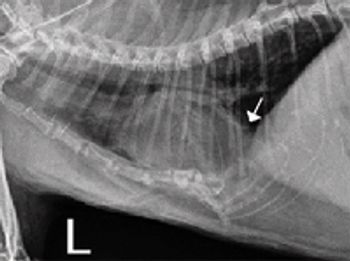
This condition often goes unnoticed for years, and many cases are discovered incidentally on radiographs.
Dr. Cathy E. Langston discusses what is an appropriate diet for cats and dogs with renal disease.
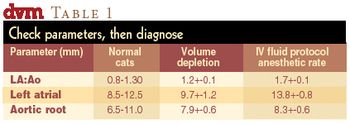
In a recent article (The Effect of Hydration Status on the Echocardiographic Measurements of Normal Cats, by Campbell, F.E. & Kittleson, M.D. J Vet Intern Med 2007), the authors examined the effect of hydration status on echocardio-graphic findings in normal cats.

Injection-site sarcomas are associated with high recurrence rates, even with wide surgical excision.
Denver -- Hill's Pet Nutrition donated $1 million to the Morris Animal Foundation, along with pioneering genetic research data from Hill's laboratories, to assist the foundation in its cat health studies.
The human genome is composed of about 3 billion base pairs, of which only about 2% forms coding DNA (genes); the rest is non-coding and serves various functions, such as gene regulation.
Kittens make up a significant proportion of the patient population in both general small animal and feline specialty practices.
Long term administration of oral medications can be problematic in cats.

Vomiting is the forceful ejection of stomach and proximal duodenal contents through the mouth.

By definition, an idiopathic disorder defies clear identification of an etiology.

The 2 major differentials for elevated body temperature (> 102.5 F) are fever (pyrexia) and hyperthermia.
Feline leukemia virus (FeLV) and feline immunodeficiency virus (FIV) are retroviruses that represent two of the most important infectious diseases of cats worldwide.

Lower respiratory tract disease produces typical clinical signs in cats, including chronic cough and wheeze as well as dyspnea that may have a sudden onset.

Chronic kidney disease and failure is invariably progressive; however, stable disease and a reasonable quality of life can be obtained for some time in most cats.

Demodicosis is a common dermatosis in dogs and is now a more recognized problem in cats.

Capitalize on three things to increase visits by cat owners.

Feline healthcare is in crisis stage, says CATalyst's director.