When December feels like a grind, a waterfront venue, 60-degree weather, and a top-tier education lineup may be just what your team needs to recharge.
Author Adam Christman, DVM, MBA, discusses how intuition comes into practice.
Your gut knows things before your brain catches up. And in veterinary medicine, on both sides of the exam table, that truth matters far more than we like to admit.
Veterinary medicine is built on science, data, diagnostics, and evidence-based decision-making. But there is another pillar that quietly supports everything we do, one that rarely gets the credit it deserves—intuition.
That quiet, persistent feeling that something isn’t right, even when the numbers look acceptable on paper. The unease you can’t yet explain. The moment when a client says, “My pet is just off, doc. I swear I’m not making this up!” and something inside you says, “Listen more closely, lean in, and investigate a little further.”
We are trained to look for patterns, rule out differentials, and follow protocols. But we are also trained to read between the lines, to notice subtle changes, and to feel when a case doesn’t sit right deep in our chest. Like you, I have lain my head on the pillow at night, often thinking to myself, “I should have run this test instead,” or “I wonder whether we should have done surgery sooner.”
That isn’t weakness; that is clinical maturity. And this is why it’s called general PRACTICE.
It’s not that we as veterinarians intend to minimize a client’s concern. Sometimes it’s just that it may not necessarily fit neatly into a SOAP note because that’s how our brain is trained. They aren’t quantifiable or objective—at least not yet.
But the reality is this: Pet owners live with their animals every single day. They notice microchanges long before disease announces itself loudly, such as a slightly decreased appetite, a hesitation before jumping, or a subtle change in energy or expression that doesn’t match yesterday.
That isn’t anecdotal noise. Those are early data. And in my experience, 99% of the time, they are right. Our responsibility is not to dismiss that intuition. Our responsibility is to dive into it, to ask better questions, to investigate further, and to say, “Let’s figure out why this doesn’t feel right...TOGETHER.”
Listening is not passive. Listening is an active diagnostic skill.
Select the test that will give you clarity rather than reassurance. Run the radiograph that confirms or challenges your suspicion. Recommend the ultrasound that adds another layer of information or peace of mind. Consult with a trusted colleague who brings a fresh perspective. Advocate for referral when your instincts tell you the case warrants it. Not because you are reckless but because you are responsible.
Intuition does not replace science. It directs it.
Think back to the day you took the North American Veterinary Licensing Examination, that familiar internal debate. “My first instinct was A…but maybe it’s B?” You choose B. The correct answer was A. You may have never known!
Your gut recognized the pattern before your anxiety interfered.
That instinct didn’t disappear after graduation; it evolved, sharpened, and became informed by years of cases, outcomes, and lessons learned the hard way. Ignoring it does not make you more scientific. It makes you less honest. This lesson became deeply personal for me with my own dachshund, Clark W. Griswold.
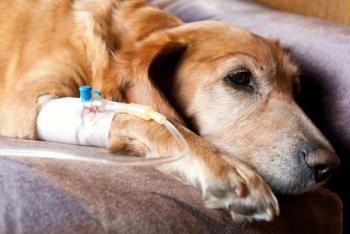
Earlier this year, I came home from work and found him pained in his crate. His rear legs were weak, and his posture was guarded. That look was unmistakable.
I watched him walk, and in that moment, I didn’t need a differential list or time to convince myself. I knew it was intervertebral disc disease (IVDD). This was not a case for watchful waiting or conservative management. This was a herniated disc. And this was surgical, not medical. Yes, some IVDD cases can absolutely be managed medically, but I knew it was beyond that. I trusted my instinct, and I advocated fiercely.
I pushed for the MRI without hesitation. I refused to downplay the clinical signs. I did not wait and hope. And my colleagues listened and trusted my intuition and experience. The MRI confirmed it: an L1-L2 disc herniation. Clark underwent a hemilaminectomy and recovered beautifully. A sincere shout-out to Austin Kerns, DVM, MS, DACVIM (Neurology), Clark’s neurologist at Philadelphia Animal Specialty and Emergency, whose expertise and care made all the difference.
Because I went with my gut, Clark’s recovery was safer, faster, and more straightforward. There were no unnecessary delays, no preventable setbacks, and now he will be surrounded in bubble wrap!
I wasn’t just acting as a veterinarian, I was acting as a pet parent who trusted intuition and leaned fully into science. I followed my mantra, which I always share with my clients: Decisions from the heart must be smart. Emotions can run high, but we also need to use our emotional intelligence and follow the science while following intuition.
When we ignore intuition—our own or our clients’—the consequences are not theoretical, they are real: delayed diagnoses, progressive disease, clients who feel dismissed, outcomes that could have been different. And perhaps most damaging of all—the erosion of trust. Clients do not expect perfection; they expect to be heard.
When a pet owner says, “Something isn’t right,” they are inviting us into partnership. They are asking us to take their intuition seriously while we bring our expertise to the table. That is not emotional medicine; that is collaborative medicine.
Going with your gut is earned intuition. It is built through repetition, exposure, and experience. It is pattern recognition refined over time. Your gut remembers cases your brain has forgotten. It remembers outcomes. It remembers regret. When something feels off, it usually is.
Trust yourself more. If a case lingers in your mind after the appointment ends, pursue it. If a client’s concern sticks with you, honor it. If your instinct tells you to dig deeper, do exactly that. Ask for help when your intuition tells you collaboration matters. That is not weakness; that is leadership.
As pet parents, your intuition matters, too. You know your pet better than anyone. If something feels wrong, say it clearly. Be the best advocate your pet needs you to be. Because trust me, you will be on the other side of that exam table one day.
So whether you are a pet parent and/or a veterinary professional, going with your gut is not about being impulsive. It is about being present. It is about listening to clients, to patients, and to yourself.
Sometimes the most powerful diagnostic tool you have is the one you feel before you see. When you honor it, lives change, including yours.
6 months ago
The BOAS Man6 months ago
When rejection is redirection7 months ago
Veterinary conference calendar (April 2026)7 months ago
Exploring exotic emergencies8 months ago
Flex Forecast: March/April 2026