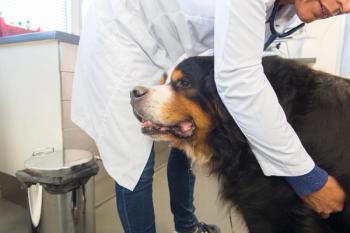
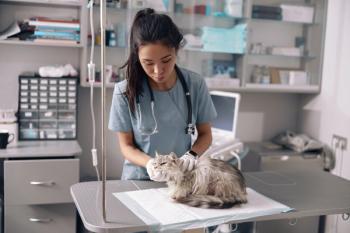
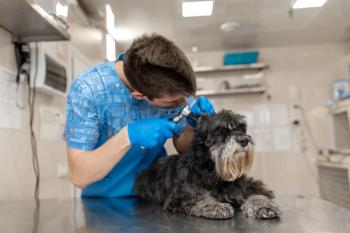
Veterinary professionals may face physical strain from routine tasks such as floor exams, dental procedures, patient restraint, and lifting. Here are 6 common sources of ergonomic risk and strategies to help reduce the strain.
Aaron Shaw, OTR/L, CHT, CSCS, explains how creatine supports rapid energy production and discusses why the supplement may benefit veterinary professionals facing physically and mentally demanding work.
Is creatine just for bodybuilders and athletes? According to cohosts Aaron Shaw, OTR/L, CHT, CSCS, and Jennifer Edwards, DVM, ACC, CPC, ELI-MP, the answer is no. In this episode of The Resilient Vet: Mind and Body Strategies for Success, the hosts discuss what creatine is, how it helps replenish the body's energy stores, and why it may benefit veterinary professionals facing physically demanding workdays and cognitively intensive clinical decisions. In Part 1 of this 2-part miniseries, they break down the science behind creatine, dispel common misconceptions, and examine its potential role in promoting career longevity in veterinary medicine.
Below is a partial transcript, which has been lightly edited for improved clarity.
Jennifer Edwards, DVM, ACC, CPC, ELI-MP: You said something earlier, Aaron, that really stuck [with] me, and I share my own personal experience with this. But you mentioned the brain and cognitive function, which, of course, no matter what role somebody plays in veterinary medicine in the clinic or on the farm, it is a cognitively demanding job, just as it is a physically demanding job. We have to think quickly. We have to know a lot of information. We have to notice things. We have to pay attention [and] be present. It just does not stop. But again, I think mostly because of marketing, that's not something we typically think about when we think of creatine. So, tell me more about the cognitive aspects of this.
Aaron Shaw, OTR/L, CHT, CSCS: Yes, and I will give the little caveat with this: The research on the cognitive side of things is still emerging, but it is promising and encouraging that there is a relationship here. We do know that the brain uses ATP [adenosine triphosphate], and it also stores creatine. So there is some emerging research that shows benefits that may include memory, mental fatigue, cognitive performance, stress resilience, and even sleep deprivation.
To connect this to veterinary medicine, everything I just said sounds like veterinary medicine: 10-hour shifts or long shifts, busy [emergency department], complex cases, high stress, stressful conversations you may have to have. There is a mental endurance component to this, even thinking about the example you gave, where you're contorting yourself to do an assessment. One component is the physical side—kneeling down in this weird lunging position for the 100th time of the day or 300 times [in] the week, and you finally get yourself contorted into position to look at the underbelly. Once you're finally there, that is when the work begins. That's when you have to start focusing on what's going on and disregard any sort of discomfort and physical effort going on.
Even if there's fractional benefits—the strength and physical performance stuff is well documented—but even if there's a fractional benefit of cognitive attention you could gather with a little bit more ATP utilization in the moment, that would be great. But again, I don't want to overstate that because I can't really reference anything other than saying there is some emerging research, but it's encouraging.
Edwards: Well, I can share my own personal experience. Completely anecdotal, not evidence-based other than my own experience, but I started taking creatine a while back, and my partner has also. Both of us absolutely experience a difference, and I can even tell the days I take it and the days I don't. Not only do I feel more awake—not energized like I just took caffeine, I just feel more awake, almost like I don't desire the caffeine—there's a mental clarity there that's really hard to put into words.