Banner - Fetch Kansas City 2026
Feature|Articles|March 17, 2026

dvm360

  • dvm360 March-April 2026
  • Volume 57
  • Issue 2
  • Pages: 26

Exploring exotic emergencies

Fact checked by: Yasmeen Qahwash

An overview of common cases in birds, reptiles, and small animals that warrant immediate veterinary care.

Emergency veterinary care is needed for many animal species, some of which veterinarians may encounter in their practices. Although canines and felines are often seen by many companion animal veterinarians—in the US, 56.3 million households own dogs and 43.1 million own cats, according to an American Veterinary Medical Association (AVMA) 2025 survey of more than 7500 individuals1—many other pet species can present with cases requiring immediate attention.

As a practitioner, S. Emi Knafo, DVM, DACZM, clinical assistant professor of zoological medicine at the University of Tennessee in Knoxville, sees a variety of zoological companion animals, such as rabbits, rats, and ferrets, as well as aquatic and wildlife species.

“Most of the species that come in are going to be pet rabbits, parrots, [and] chickens. We do see reptiles, like tortoises, aquatic turtles, [and] a variety of lizards. Probably the smallest proportion is going to be our amphibians and fish. However, we still do see those, and sometimes even invertebrates like tarantulas or pet hissing cockroaches,” Knafo said in a dvm360 interview.

Although canines and felines are more common than exotic companion animals, the AVMA survey found that 2.1 million households in the US own pet birds, 1.1 million own small mammals such as gerbils and hamsters, 0.9 million own poultry, and 0.8 million own rabbits.1 Additionally, the American Pet Products Association (APPA) National Pet Owner Survey found that approximately 6 million US households own reptiles.2

Pete Scott, president and CEO of APPA, said there is a “growing enthusiasm and deeper engagement from today’s pet owners” for exotic companion animals. “Generational growth and new purchasing patterns demonstrate these categories expanding in meaningful ways and creating fresh opportunities for the pet care industry,” he said in a news release.3

Medical emergencies in exotic pets

Although animals may present clinical signs of illness unique to their species, some presentations are concerning for most animals.4 According to Katherine Quesenberry, DVM, MPH, DABVP (Avian), chief medical officer at Schwarzman Animal Medical Center in New York, New York, anytime an animal is not eating or drinking, the patient is considered to be an emergency case. However, what causes a loss of appetite can be any of many different things and is unique to each species.

“A bird’s metabolism is so fast that if they go for an extended period of time with not eating, they can get sick very fast. Same thing for herbivores like rabbits and guinea pigs that are normally grazing all the time. If they go for a while with[out] eating, that causes physiological changes. So it can be any number of things that cause them not to eat, but not eating, in and of itself, can be a problem after a while that causes its own metabolic problems in these species,” Quesenberry said in a dvm360 interview.

Along with inappetence, Knafo refers to rabbit gastrointestinal syndrome in small animals, which is a collection of signs that may include reduced fecal output, which can lead to dehydration. “It can be as mild as a little upset stomach. They’re not eating quite as much, or they haven’t eaten at all in several days, and they’re potentially septic or obstructed and need to go into the critical care unit,” she said. “It really runs the gamut of how severe that could be and is probably the most common thing we see.”

Other clinical signs in need of emergency care include weakness, lethargy, rapid or labored breathing, loss of consciousness, unusual changes in mood, diarrhea, vomiting, blood in vomit or feces, and drastic weight loss or gain.4-5

For birds, signs of potential illness include staying at the bottom of the cage4 and egg binding. “Egg binding is common in female birds, particularly in cockatiels, parakeets, birds that lay a lot of eggs, [and] backyard chickens,” Quesenberry said.


Common traumatic injuries

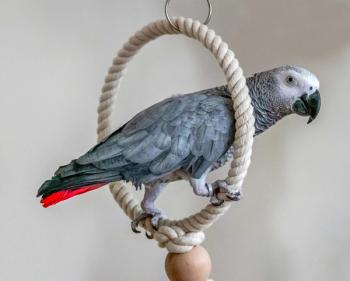
Birds

Both Quesenberry and Knafo cited a pair of “classic hazards” for birds that often result in injury: ceiling fans and sitting on top of an open door. "It is healthy for a pet bird to be able to fly; however, owners need to be careful to avoid using ceiling fans and to prevent flying into a glass window,” Quesenberry said.

In other cases, people don’t realize a bird is perched on top of a door and close it, causing injury. Exposure to aerosolized toxins such as Teflon can also warrant emergency care for birds, Knafo said. Quesenberry added that “occasionally, you’ll get a bird that flies into a pot of water on a stove.”

Small animals

Common injuries in rabbits include bite wounds from other rabbits. “Even though they can be sweet little rabbits, they can be fairly aggressive,” Quesenberry said.

Rabbits and other small mammals, such as chinchillas and hamsters, often present with fractured legs. “They can always get their legs caught in something. Most of the time, it’s a back leg when they fracture their leg…. A lot of the traumas that we see are injuries of the legs, either cage injuries or, with hamsters, a wheel injury,” Quesenberry added.

Knafo said that handling mishaps can also lead to injuries in small animals, especially from small children who aren’t well versed in handling them. “These small mammals can be a little bit flighty. We can see broken legs [or] broken backs [because] they get dropped, or they leap out of arms,” she added.

Reptiles

Reptiles and amphibians have many types of physical trauma. Getting stepped on could mean an injured tail for a lizard, a broken leg for a frog, or a cracked shell for a turtle. Injuries can also occur from falls, getting hit by a car, and, for some, including chelonians, attacks from raccoons or dogs, according to Quesenberry and Knafo.

“The shell [is a] living bone, so when they come in with these fractures or punctures that have exposed bone, it’s super painful, and [there is] a risk of osteomyelitis,” Knafo said. “We consider those [to be] emergencies. We need to get treatment initiated promptly.”

Takeaway

The APPA’s 2025 Bird, Small Animal, and Horse Report found that 37% of small-animal pet owners have a rabbit.3 “Rabbits are rapidly becoming very, very, very popular and very common,” Quesenberry said.

Guinea pigs account for 23% of small animal pets, and hamsters are the third most popular, with 18% of exotic small animals owned as pets.3 Although the APPA’s 2025 Fish and Reptile Report shows turtles and tortoises as the top reptile pets (43%), lizards are often seen by veterinarians.

“[The most popular] reptiles have changed. We used to see a lot of iguanas. Now, bearded dragons are probably the most popular reptile pet,” Quesenberry said.

Meanwhile, aquatic animal owners are adding more pet fish to their tanks, with 77% keeping 2 or more. Saltwater fish owners are also expanding their tanks, with those holding 126 gallons or more increasing by 17% since 2023.5

“Younger generations are shaping the future of pet ownership, and fish and reptiles are at the center of that evolution,” Scott said in another news release.5 “From larger, more sophisticated habitats to strong emotional bonds and thoughtful long-term care, these pets play a meaningful role in millions of lives and create new opportunities for the pet care community.”

REFERENCES

  1. US pet ownership statistics. American Veterinary Medical Association. Accessed February 24, 2026. https://www.avma.org/resources-tools/reports-statistics/us-pet-ownership-statistics
  2. From bigger tanks to stronger bonds: fish & reptile ownership evolves in 2025. American Pet Products Association. September 24, 2025. Accessed February 24, 2026. https://americanpetproducts.org/news/from-bigger-tanks-to-stronger-bonds-fish-reptile-ownership-evolves-in-2025
  3. APPA releases comprehensive 2025 report on bird, small animal and horse ownership. American Pet Products Association. December 3, 2025. Accessed February 24, 2026. https://americanpetproducts.org/news/appa-releases-comprehensive-2025-report-on-bird-small-animal-horse-ownership
  4. How to recognize an emergency in exotic pets. Avian and Exotic Philly Vet Medical Surgical Clinic. Accessed February 24, 2026. https://avianexoticphilly.com/emergency/
  5. Singler E. Exotic emergencies for general practitioners. American Animal Hospital Association. November 14, 2023. Accessed February 24, 2026. https://www.aaha.org/newstat/publications/exotic-emergencies-for-general-practitioners/

Latest CME