

Dr. Don Waldron demonstrates this procedure, which is indicated in veterinary patients that may be anorectic postoperatively or are otherwise anorectic.
Dr. Don Waldron demonstrates this procedure, which is indicated in veterinary patients that may be anorectic postoperatively or are otherwise anorectic.
It's a bird, it's a plane-it's a tick?Have you heard people say the ticks were falling from the trees? Watch as Dr. Susan Little discusses where to expect questing ticks.
The Gulf Coast tick vector of Hepatozoon americanumAmblyomma maculatum may be called the Gulf Coast tick, but its name hasn't stopped it from moving to interior states and the east coast. In this video Dr. Mike Dryden also shares the interesting (and a little bizarre) life cycle of Hepatozoon americanum.
Antigen testing can result in a false negative.Are you seeing patients you are sure have heartworm infections, but they are testing negative? Dr. Susan Little explains what might be going on – and what can be done about it.
Communicate dangers and protect against vectors with this useful tool.The Companion Animal Parasite Council iPad app Make talking to clients about parasites easy and fun. Watch as Cathy Michaelson, Business Manager at Aumsville Animal Clinic, describes how they use this tool in their clinic to help communicate the dangers of vectors as well as how to protect.
The client's mood is in your hands.Even the best receptionists can let the weight of the day affect their tone on the phone. Karyn Gavzer, MBA, CVPM, describes how to take the power back and keep the message intact.
Dr. Don Waldron demonstrates his method of choice for this definitive treatment for dogs with GDV.
Once a pet has been frightened, it never forgets the experience.
Dr. Lisa Radosta discusses three ways you can help alleviate stress in each patient that steps into your clinic.Veterinary behaviorist Dr. Lisa Radosta discusses three ways you can help alleviate stress in each patient that steps into your clinic, including one specially tailored for cats.
With the right training and guidance-and just a little bit of encouragement-you can help clients understand that this common disease is actually quite manageable.
Smart policies are goodeven for those who make them.
Usher in change at the clinic the easy way.
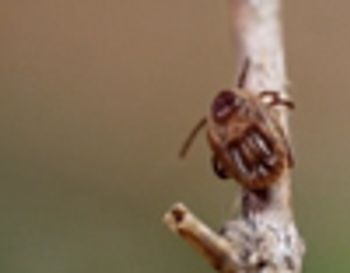
The American dog tick is the primary vector for several diseases
Find out who is "woefully underpaid."
One way to create mass confusion in on a social platform
Hold your own in a tumultuous economy with the right staff in place.
Find out how you scored on the No Baloney BizQuiz.
Crucial team members are facing a mountain of work.
Dr. Wade Gingerich explains how the right instruments can make all the difference when performing feline oral surgery and dental procedures.
Give your veterinary patients the royal treatment they deserve.
This golden retriever looks like a "poster child" for hypothyroidism, but you might be surprised at the skin issues she was actually diagnosed with-listen in as Stephen White, DVM, DACVD explains.
Stephen White, DVM, DACVD, discusses how the clinical presentation of pyoderma can sometimes mimic pemphigus foliaceous. Check out his visual examples, in both cats and dogs.
Listen as Stephen White, DVM, DACVD, reviews the diagnostic steps he takes when presented with a patient with signs of fungal skin disease.
Watch as Heather Lewis, AIA, explains why there's no better place to get information for your hospital design project.
No ticks on cats? Uh huh ... Now, here are the facts.
The CAPC Forecast Maps -- a client education tool for your clinic.
Annual parasite forecast maps can help you plan your strategy for addressing vector borne disease.
The Lone Star tick is expanding its range and the risk for vector-borne diseases.
Special report from CVC Washington, D.C.