










Hepatic lipidosis accounts for approximately 50% of feline liver disease.
Hepatic lipidosis accounts for approximately 50% of feline liver disease.
Complementary and alternative medicine (CAM) is viewed by many veterinarians as an "us against them" proposition.
The National Center for Complementary and Alternative Medicine (NCCAM), a component of the National Institutes of Health, defines CAM as "a group of diverse medical and health care systems, practices, and products that are not presently considered to be part of conventional medicine."
This article presents new drugs and procedures that have been very helpful in leading to recovery, from lasers, to electromagnetic resonance, to hyperbaric oxygen chambers that do not cost an arm and a leg.
Generally, coping with disorders in small animal reproduction, is a rewarding subspecialty in veterinary medicine.
Dystocia is defined as difficulty in the normal vaginal delivery of a neonate from the uterus. Dystocia must be diagnosed in a timely fashion for medical or surgical intervention to improve outcome.
Round cell tumors are commonly detected as cutaneous or subcutaneous masses. However, the majority of these tumors also appear in other locations.
The information presented here on practical readiness is provided to help clinicians and staff manage patients in the most efficient way possible.
When a patient first arrives we have all been taught the ABCs of emergency care.
When presented with animals with evidence of renal dysfunction (as evidenced by elevated serum creatinine concentration), there are a few considerations.
Compounding is and always has been a critical component to the provision of individualized drug care to the small animal patient.
Commonly affecting the large-breed deep-chested breeds, gastric dilatation and volvulus syndrome has the potential to be a life-threatening problem.
The practice of ovulation timing has become increasingly useful to veterinarians who recognize its value in improving reproductive services.
The concept that microbes might be beneficial, rather than simply detrimental, to health, enjoys a long history of anectodal evidence.

Systemic inflammatory response may be present in animals with a consistent history and clinical characteristics, and with any three or more of the following findings.
Cytology is useful for establishing a diagnosis or can narrow the list of differentials for effusions, masses, lymphadenopathy, or organomegaly.
A review of several cases that were "the worst of the worst" concerning their level of injury or illness. Without aggressive care they all were predicted to have died.
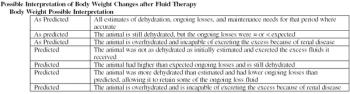
In this lecture I will outline how to formulate a plan for fluid therapy for supportive care of sick animals using the three classic goals of fluid therapy.
Inflammatory lesions can occur due to infectious or non-infectious causes. Compared to tissue cells, inflammatory cells are readily collected by aspirates and scrapings.
Practical management of severe wounds and open fractures begins with initial assessment and management.
Anemia is a common blood work abnormality in many species, including cats. Determining the regenerative nature of the anemia guides the workup of the case.
Normally, only a small amount (milliliters) of fluid are present in the thorax and abdomen.
Mycobacteria do not stain with routine cytologic stains and can be difficult to visualize.
A test is available to detect the MDR-1 genetic deletion that leads to P-glycoprotein deficiencies in collies and related breeds.
Increasingly, the veterinary practitioner will find that the favorite drug of choice is no longer a viable option. The role of resistance in therapeutic failure of antimicrobials is well established.

Dr. Haug shares tips on managing pet birds that bite.
The periparturient period can be associated with high morbidity and even mortality for the dam and neonates.
Cardiac arrest leads to dysoxia in the brain mitochondria... energy failure.
Fine needle aspiration (FNA) cytology is an excellent adjunctive tool for evaluating internal organs.
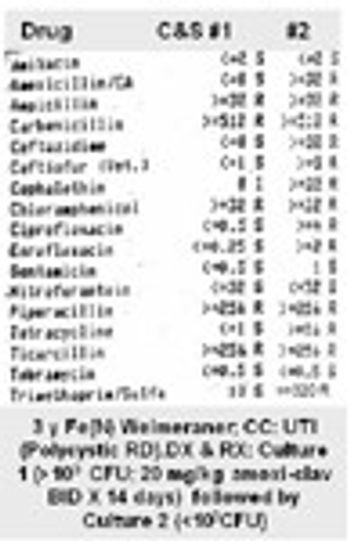
The goal of antimicrobial therapy for UTI is to resolve clinical signs of infection, eliminate bacteruria, and also avoid resistance.