








News
All series
All News
Advertisement

Eight cats at a shelter in northwest Indiana have tested positive for H3N2 canine influenza – the first such confirmed outbreak in the United States, said experts at the University of Wisconsin (UW) School of Veterinary Medicine.

Product failures with new topical and oral flea treatments are probably caused by failure to use the products correctly rather than product resistance, according to a recent review article.

A study investigates whether this intervention helps save lives in cases of traumatic blood loss.
Experts in feline medicine have identified 25 behavioral signs of pain in cats.

The American College of Veterinary Internal Medicine has released a consensus statement on the management of seizures in dogs.

A veterinary study finds that concurrent administration may be OK, depending on which fluoroquinolone you reach for.
The cancer registry includes records of 51,322 cats with 18,375 diagnosed tumors, spanning the years between 1965 and 2008.

The average life expectancy of a dog depends on its specific breed and weight; however, rarely do dogs live longer than 15 years. Fortunately, scientists at the University of Washington are working on a project that aims to prolong the number of healthy years in a dog’s life by 2 to 5 years, or more.

Reading to dogs may improve reading performance in children but more studies are needed, say the authors of a recent systematic review published in PLOS One.
Advertisement

The American College of Veterinary Internal Medicine (ACVIM) recently published an updated consensus statement on screening canine and feline blood donors for blood-borne pathogens.

The latest guidelines for rabies prevention include 2 significant changes in the recommended management of dogs and cats exposed to rabies.

1st Pet Veterinary Centers in Mesa, Arizona, our 2016 Hospital of the Year winner, adopted a bright teal-and-orange color theme throughout the hospital. The result is cheerful but still sophisticated.

A recent report shows that including dogs with cancer in studies of oncology drugs can speed the drug development process.
Digest this advice from a feline expert on how to handle a common cat crisis.
The best architectural and building practices are showcased in the Veterinary Economics Hospital Design Competition winners circle.
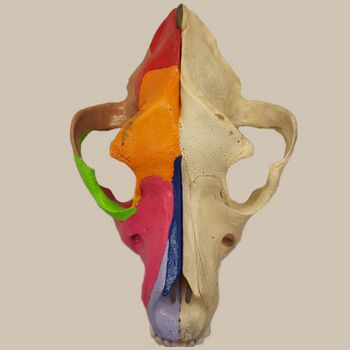
Test your memory of anatomical features with these fun, brightly colored study tools.

Kittens can be adorable, insane bundles of energy come nighttime. Veterinary behaviorist Dr. John Ciribassi discusses tips to give clients exhausted by their new pals.
A recent study has found that low rectal temperature at the time of hospital admission is a significant predictor of death in pet rabbits.

A tip to show off your veterinary patients-and get even more to frequent your practice.

Adding controlled physical exercise to a weight loss program for pet dogs helps preserve muscle mass more effectively than calorie restriction alone.
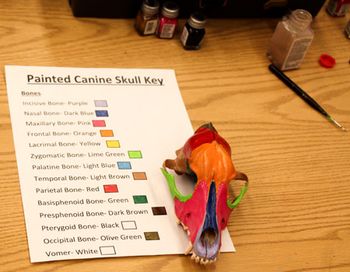
Anatomy students at the University of Illinois now have brightly painted skulls to help them learn difficult structures.
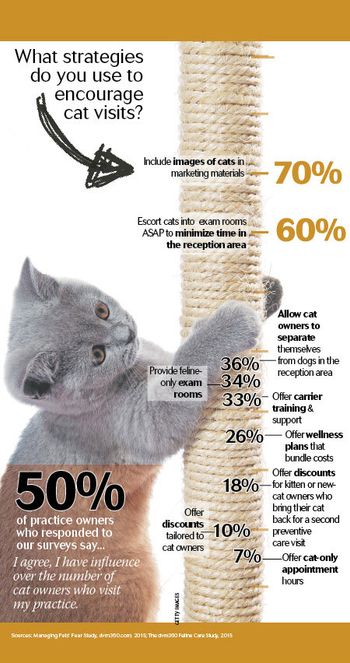
What are you doing to get cats into your practice? Here's what your peers said.
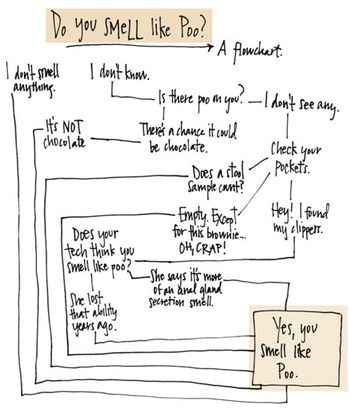
It's the scourge of veterinarians and veterinary team members everywhere. Ask yourself: Do you smell like poo?

Chimpanzees that socialize more have a greater diversity of bacteria in their gut.
Forget designer babies; let's talk about disease-resistant pigs.

Researchers from Kansas State University College of Veterinary Medicine, Iowa State College of Veterinary Medicine, and the Department of Animal Science at Texas Tech University recently ruled out beta agonists.

The FDA approved a breakthrough therapy to fight a rare disease, and some may be surprised to learn that chickens are the main source of this life-saving medicine.

Recent advances have led to immunotherapy that is not only changing the standard of care for human cancer patients, but also moving to the forefront of cancer treatment options for veterinary patients.
Advertisement
Advertisement
Trending on dvm360
1
Bird flu hits Oregon dairy cattle for the first time as Washington’s infected herds climb into the dozens
2
Arizona issues dog and cat travel guidance as New World screwworm cases reach 6
3
FTC sues to block Covetrus' merger with MWI Animal Health
4
Don’t wait for the bad days: Rethinking quality-of-life assessment for senior pets
5