
Senior pets rarely come in with just one problem. Nutrition that addresses cognitive decline, joint pain, and coexisting conditions together can help keep aging patients sharp, mobile, and engaged.
Cognitive dysfunction in dogs and cats becomes more common with age and often mimics other conditions, according to a Texas A&M veterinary neurologist, who says a detailed history is key to diagnosis.
Cognitive dysfunction is becoming more widely recognized in aging dogs and cats as pets live longer and owners are getting better at spotting the signs, according to Joel White, DVM, DACVIM (Neurology), a clinical assistant professor of neurology and neurosurgery at the Texas A&M University College of Veterinary Medicine and Biomedical Sciences.1
"As veterinary medicine advances, many dogs and cats are living longer than they previously did, which increases the likelihood of developing this disease," White said.1 "In addition, [veterinarians and owners] are becoming more aware of this disease and are likely better at recognizing and diagnosing it."
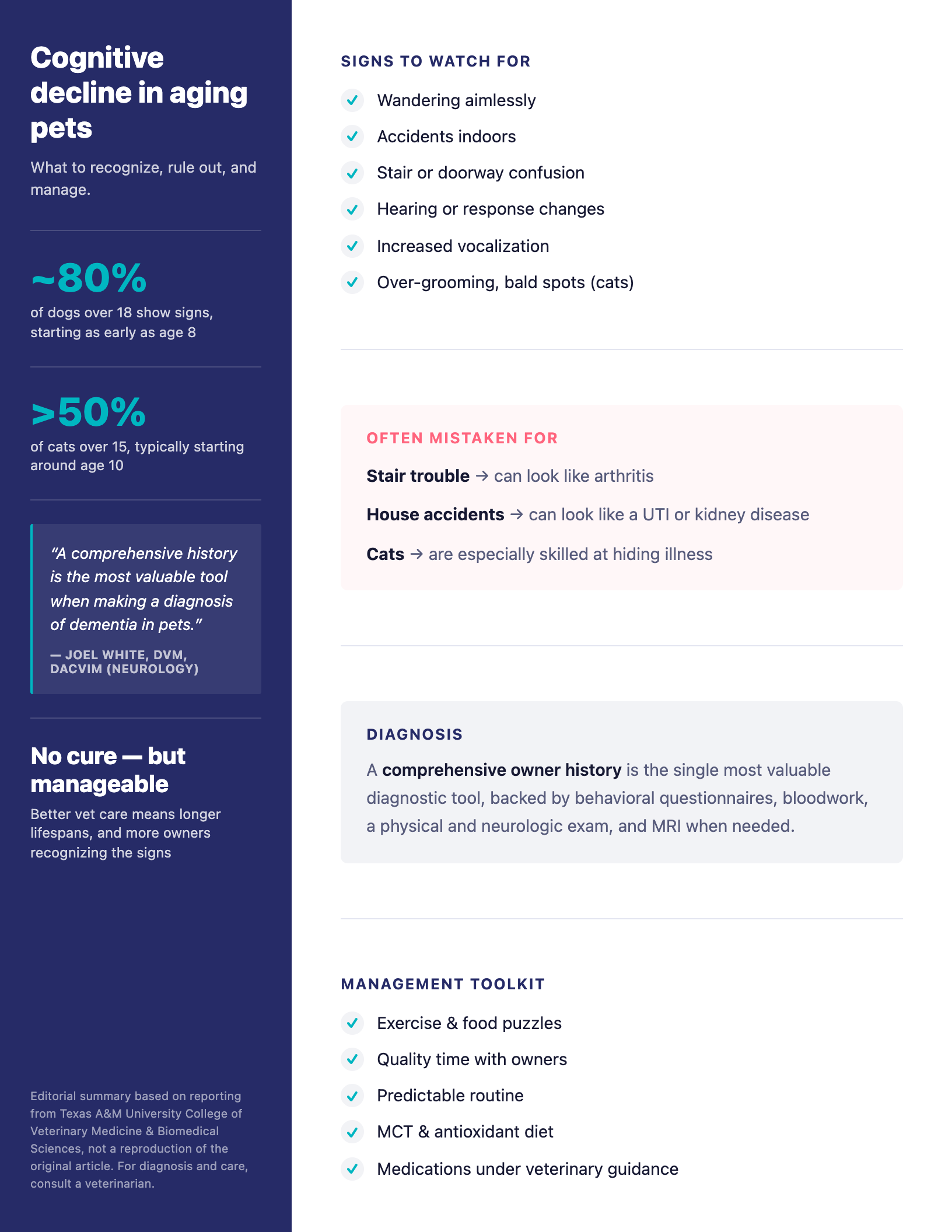
In dogs, signs can appear as early as age 8, affecting approximately 10% of dogs at that age, with prevalence rising steadily thereafter.1 "Prevalence rises steadily with age, reaching about 80% in dogs over 18," White said.1
Cats tend to show signs a bit later, typically around 10 years of age, but the disease becomes similarly widespread with age: More than half of cats older than 15 years display signs consistent with dementia.1
Common signs in both species include aimless wandering, accidents indoors, difficulty navigating stairs or doorways, hearing changes or reduced responsiveness, and increased vocalization; cats with cognitive dysfunction may also groom themselves excessively, resulting in bald spots.1
Because many of these signs overlap with other conditions common in older pets, White cautioned against making a cognitive dysfunction diagnosis based on behavior alone. "Difficulty with stairs might look like arthritis, while accidents in the house could be a sign of a urinary tract infection or kidney disease," White said.1 "Cats are excellent at hiding illness from their owners and veterinarians, which can make them more challenging to diagnose."
Ruling out those mimics starts with taking a detailed history, White said, supported by blood work, a physical and neurologic exam, and imaging when indicated. "A comprehensive history is the most valuable tool when making a diagnosis of dementia in pets," he said.1 "This can be challenging when a pet has other health problems, such as severe arthritis." Behavioral questionnaires built on owner observations typically guide the workup alongside blood work and neurologic exams, whereas an MRI can provide a more definitive evaluation of dementia-related changes in the brain.1
There's no cure, but White said several strategies can manage symptoms and support quality of life: regular physical exercise (walks, fetch, food puzzles, interactive toys), consistent quality time with owners, and a safe, predictable environment.1 Diets containing medium-chain triglycerides and antioxidants, along with veterinarian-approved supplements or medications when appropriate, may also help manage clinical signs.1
White also urged patience with the behavioral fallout because it isn't voluntary on the pet's part. "It may be easy to forget that your pet is not choosing to cause problems, like waking you up at night or having an accident on the rug, especially when these things happen repeatedly," White said.1
Reference