
















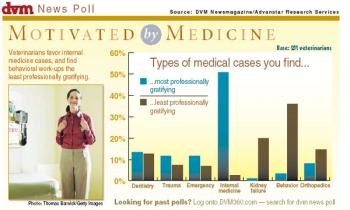
What types of cases do you find most professionally gratifying?

What types of cases do you find most professionally gratifying?

This on-demand course is an intensive study of modern dentistry techniques for dogs and cats. (13.5 CE credits)
Check out our latest issue for stories on dentistry, efficiency, life balance, and much more.
Topeka, Kan. - As part of the Pet Dental Health Month, Hill's Pet Nutrition is co-sponsoring the 15th annual Pets Need Dental Care, Too campaign.
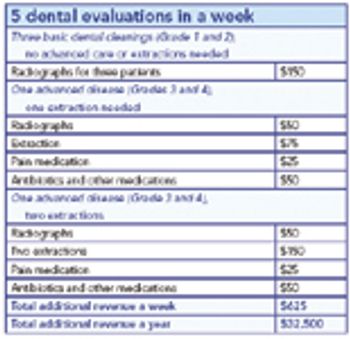
The right equipment can make any dental program successful.
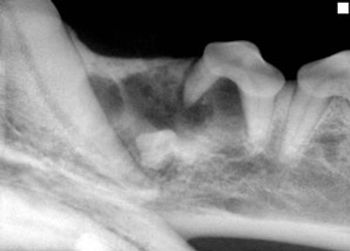
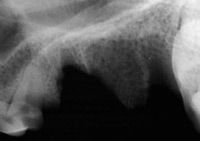
Q: How should I treat dentigerous cysts?
See a handout adapted from the one Dr. Scott Linick, FAVD, gives to clients to teach proper toothbrushing techniques.
Clients need to brush their pets teeth to prevent dental disease and other illnesses.
Tips from doctors who offer dentistry as demand for other services declines.
Topeka -- Hill?s Pet Nutrition Inc. and a number of veterinary organizations will kick off the 15th annual Pets Need Dental Care, Too campaign on Sunday.
Pet dental health campaign offers free client-education kits and a chance to win a chunk of change.

Bring in a part-time dental specialist to generate revenue and promote dentistry services.
Dental radiology is the cornerstone of quality veterinary dentistry.
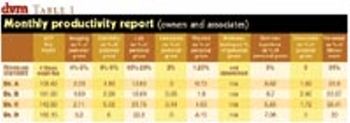
When our grandfathers sat us down and told us about the good old days, their memories were very selective.
Kara answers questions about dental health
When discussing dental procedures and home care with a client before a dental appointment, I give the client an OraVet (Merial) brochure with a packet of swabs and an insert on how to introduce the swabs to pets.
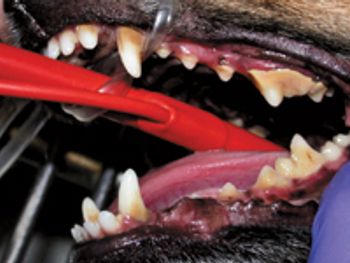
To help clients fully appreciate the benefits of dental prophylaxis, we take before-and-after digital photographs.

Offering dental care is a great way to generate revenue in a tough economy.
Disease of the oral cavity is a common problem, particularly in middle-aged to older cats.
Many of us rely on verbal messages in the exam room as the sole means of communication. In so doing we fail to effectively reach the other 60% of clients that learn best by visual means.

The utilization of regional nerve blocks for oral surgery in dogs and cats is synonymous with quality patient care.
Proper professional dental prophylaxis and detailed periodontal therapy is a must for every small animal practice.
Oral fracture repair in dogs and cats has traditionally taken many different forms. Pins, plates, screws and external coaptation devices are all methods previously employed that are relatively invasive.
Simple extractions in some cases are not always simple as their name implies.
Feline chronic gingivo-stomatitis represents a painful oral condition in cats that therapeutically has only responded predictably to surgical extraction of all premolars and molars.