









Whenever possible the inciting cause should be removed. However, as indicated above this may be difficult to accomplish as most cases of canine and feline pancreatitis are idiopathic.
Whenever possible the inciting cause should be removed. However, as indicated above this may be difficult to accomplish as most cases of canine and feline pancreatitis are idiopathic.
Zoonotic disease has always been an area where veterinarians have been involved. Zoonotic infections can be viral, bacterial, fungal and parasitic in origin.
Mechanisms of gastrointestinal smooth muscle contraction have been a longstanding area of research interest. Our laboratory has been particularly interested in the role of myosin light chain phosphorylation in the regulation of contraction.
Small intestinal disease can be acute or chronic. Acute small intestinal disease is most commonly dietary due to ingestion of food that leads to adverse reactions, infectious due to Parvovirus enteritis or other enteric pathogens, or mechanical due to foreign bodies, intussusceptions, or torsions.
For most diagnostic tests, the 'titer' is the minimum dilution of a substance that is required to yield a positive result.
In human medicine, fever of unknown origin (FUO) is defined as pyrexia of greater than two to three weeks duration (i.e. sufficient time for self-limiting infections to resolve) during which repeat physical examinations and standard diagnostic testing have failed to reveal an underlying cause.
It is known that high blood pressure is associated with renal disease in many species including cats and dogs. That this is important is known from many studies including ones involving dogs.
Constipation is a frequent complaint middle aged to older cats. In some cases the disease becomes refractory enough to treatment that either subtotal colectomy or euthanasia have to be considered.
Hyperadrenocorticism remains one of the most common endocrine disorders diagnosed in the geriatric dog population. It is a disease that is seen in almost every veterinary practice.
Endocardiosis is the most common cause of heart failure in small breed dogs and the most common cause of heart failure in dogs in general.
Vomiting is among the most common clinical signs in companion animals. Although a protective mechanism associated with removal of noxious ingested substances, it is also associated with many diseases. Due to the multitude of causes it can be a challenge for veterinarians to diagnose and manage vomiting.
Cobalamin (vitamin B12) is a cyclic tetrapyrrol that contains a corrin ring with a cobalt atom in the center. Cobalamin is actually made up of a group of compounds and is exclusively derived from bacterial sources.
Diarrhea is one of the most common clinical signs seen in dogs. There are many different approaches for the work-up of chronic diarrhea.
Nontraumatic inflammatory joint disease is a relatively common, but under-recognized, cause of fever and morbidity in dogs. In one review of 66 dogs referred for fever of unknown origin to a veterinary teaching hospital, approximately 8% were diagnosed with immune-mediated polyarthritis.
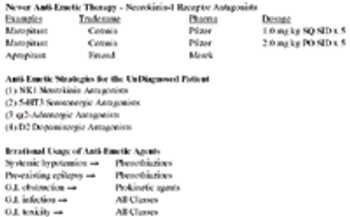
A complete and detailed history is the first step in establishing a correct diagnosis of a vomiting disorder. The patient's signalment will usually establish some level of probability for many of the differential diagnoses.
There are many potential causes of acute diarrhea in cats, but a smaller number of etiologies are associated with the development of feline chronic diarrhea.
he incidence of exocrine pancreatic disorders is quite large in both dogs and cats. In a large retrospective study of necropsy findings 1.5% of 9,342 canine and 1.3% of 6,504 feline pancreata showed significant pathological lesions.
Dogs with immune-mediated thrombocytopenia (ITP) usually present with platelet counts low enough to be considered life-threatening, although overt signs of bleeding are uncommon.
Over 90% of the potassium in the body is located within cells. External balance for potassium is maintained by matching output to input.
This session will deal with case examples where blood pressure measurement is indicated. This is meant to be an interactive session with participation of the attendees. Your diagnostic skills will be tested as will your knowledge on blood pressure issues.
The volume and tonicity of body fluids are maintained within a narrow normal range by regulation of sodium and water balance. The volume of extracellular fluid (ECF) is determined by the total body sodium content, whereas the osmolality and sodium concentration of ECF are determined by water balance.
Immune-mediated hemolytic anemia is one of the most common reasons for referral to veterinary internists. The most common presenting complaint is that the patient is inadequately responding to appropriate immunosuppression.
Blood pressure measurement is often not a routine part of small animal practice. This partially has to do with the equipment available to measure blood pressure as well as our patients (they tend not to hold still like we have to).
Leptospirosis may be one of the most under-diagnosed diseases in veterinary medicine. We expect to see the classic triad of clinical disease: acute renal failure, hepatic failure, and intravascular hemolysis (usually low-grade).
Hemorrhage in the gastrointestinal tract may have a number of different pathogenetic mechanisms. Specific therapy for gastrointestinal hemorrhage will depend upon the etiopathogenesis as well as the site of hemorrhage.
The liver is an important organ, responsible for breakdown of nutrients and for the synthesis of many molecules such as albumin, coagulation factors, cholesterol, glucose, and many others. The liver has an enormous regenerative capacity.
IBD has been defined clinically as a spectrum of gastrointestinal disorders associated with chronic inflammation of the stomach, intestine and/or colon of unknown etiology.
Fluid therapy is supportive. The underlying disease process that caused the fluid, electrolyte, and acid-base disturbances must be diagnosed and treated appropriately.

Diarrhea is one of the most common clinical signs of intestinal disease in companion animals and sometimes one of the most frustrating conditions for veterinarians to diagnose and successfully manage.
There is no question that glucocorticoids (GCs) remain the mainstay of immunosuppressive therapy in small animal medicine. However other drugs are available that can be used in conjunction with GCs in order to provide synergistic immunosuppression and thus allow lower GC dosage, more specifically target certain arms of the immune system, and provide proven superior immunosuppression to GCs in a few diseases.