


Lisa Freeman’s team identified a urinary biomarker linked to phospholipidosis that may explain how pulse-rich diets contribute to dilated cardiomyopathy in dogs.
Lisa Freeman’s team identified a urinary biomarker linked to phospholipidosis that may explain how pulse-rich diets contribute to dilated cardiomyopathy in dogs.

Dr Sykes outlines why new evidence on leptospirosis epidemiology and safer vaccines led to a recommendation for annual vaccination of all dogs.

Vicky Ograin, MBA, RVT, VTS (Nutrition) recommends assessing and optimizing a patient’s nutritional plane before elective surgery and sending patients home on a complete, digestible GI diet to improve outcomes.
Christopher Lee, DVM, MPH, DACVPM, DACVM (Parasitology), argues for year-round isoxazoline use, noting that interrupting the flea life cycle protects both pets and people.
Pamela D. Jones, DVM, DACVIM (Oncology), explains why lymphoma isn’t just one disease and how phenotyping, client goals, and teamwork guide individualized treatment.

Discover effective strategies for staff meetings and process improvement in veterinary practice management with insights from Peter Weinstein, DVM, MBA.

Research reveals a connection between pulse-rich diets and dilated cardiomyopathy in dogs, underscoring the importance of nutritional assessments in veterinary care.

Peter Weinstein, DVM, MBA, urges veterinary teams to adopt WONJI (Working On, Not Just In) by scheduling regular time away from day-to-day duties to build vision, values, and strategy.

Heidi Lobprise, DVM, DAVDC, discusses the importance of dental care for senior pets, addressing periodontal disease, stomatitis, and tooth resorption.

Catharine Scott-Moncrieff, Vet MB, MA, MS, DACVIM-SAIM, DECVIM-CA, explains when she prescribes insulin vs SGLT2 inhibitors, how to monitor for ketosis, and which factors most influence diabetic remission in cats.
Susan Little, DVM, PhD, DACVM (Parasitology), explains how transmission timing differs by pathogen, demonstrates safe tick removal, and shows why year-round systemic tick control plus targeted vaccines best protect pets.
Pamela D. Jones, DVM, DACVIM (Oncology), DACVR (Radiation Oncology), shares strategies for diagnosing and treating canine lymphoma, emphasizing personalized care and emerging therapies.
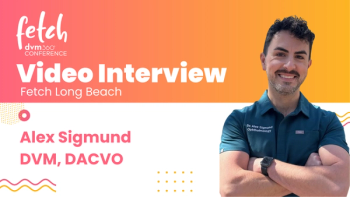
Alex Sigmund, DVM, DACVO, explains how to evaluate senior patients’ eyes, weigh medication and surgical risks, and use simple exams to guide compassionate and practical care.
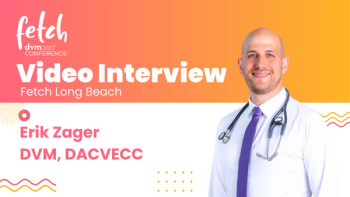
Discover key insights on decision-making biases in veterinary care from Erik Zager, DVM, DACVECC.
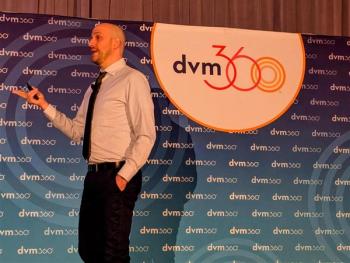
Erik Zager, DVM, DACVECC, kicks off Fetch Long Beach with an evidence-based framework for everyday clinical decision-making.
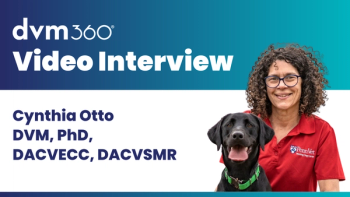
Cynthia M. Otto, DVM, PhD, DACVECC, DACVSMR, explains what competing techniques the research team looked at and how they can further this research.

These practical, case-focused sessions at Fetch Long Beach promise to deliver immediate, clinic-ready skills.
Otto breaks down the physiology and field data behind the head dunk technique and why active cooling is preferable to passive rest in hot conditions.

Learn 3 essential vaccine management tips from Christopher Lee, DVM, MPH, DACVPM, DACVM (Parasitology), focusing on epinephrine use, hypersensitivity reactions, and optimal vaccine locations.

The FDA’s new draft guidance outlines when monoclonal antibody developers can reduce or eliminate 6-month primate studies
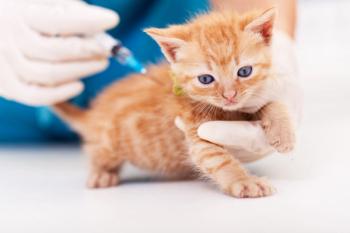
In a dvm360 interview, Christopher Lee, DVM, MPH, DACVPM, DACVM (Parasitology); Cert: FFC, CFV, RECOVER-ALS, recommends prioritizing epinephrine and species-specific administration to improve patient outcomes.
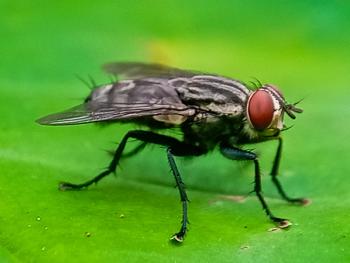
A concise Q&A for veterinarians summarizing the identification, reporting, treatment, prevention, and practical next steps as the New World screwworm approaches the US border.

blendVET founder Niccole Bruno, DVM, explains how hands-on veterinary programming, distributed mentorship, and hybrid clinic-school partnerships can diversify the veterinary pipeline and expand access to care

Cornell University is enrolling client-owned cats in an 11-week trial of AKS-562c, a once-weekly GLP-1 Fc-fusion candidate designed to reduce appetite and produce clinically meaningful weight loss while closely monitoring safety and tolerability.
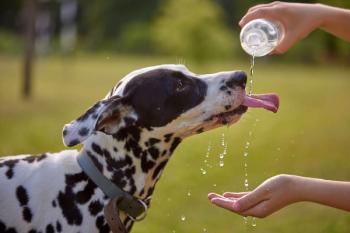
Penn Vet Working Dog Center trials show that a trained, 30-second, voluntary head dunk can rapidly lower core temperature in cooperative dogs.

Kathleen Allison-Black, DVM, explains how veterinary clinics can use AI scribes and closed LLM tools to streamline documentation, improve client communication, protect patient data, and retain clinician oversight while reducing after-hours charting.

Gallant is developing FDA-regulated, off-the-shelf mesenchymal stromal cell therapies to rapidly modulate inflammation, support tissue repair, and make stem cell treatment broadly available to cats and dogs.

Inertial measurement unit sensors with machine‑learned risk scoring can flag a tiny group of Thoroughbreds at much higher risk of fatal musculoskeletal injury, enabling targeted clinical evaluation.
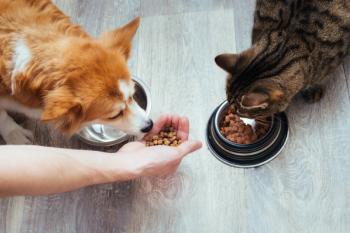
Specific feeding instructions increase owner adherence and simplify diabetes management for dogs and cats.