Jones said the simplest way to initially diagnose lymphoma is typically through fine needle aspiration. However, she offered practical advice for improving diagnostic yield, noting that the harvested cells are "fragile, fragile cells.” She urged practitioners to stain and review just 1 slide in-house to confirm they have a diagnostic sample, emphasizing the importance of avoiding the "absolute worst" phone call to a pet parent: a "nondiagnostic" result.
Jones described immunophenotyping as a key refinement in diagnosis, noting it began receiving widespread attention at the beginning of the century. She emphasized that looking at immunophenotype is essential because "T and B cells have different prognoses," a fact she said drives treatment decisions. Jones explained that traditional methods for immunophenotyping include biopsy and immunohistochemistry, but medical oncologists today increasingly utilize flow cytometry. She noted that flow cytometry offers detailed analysis but requires the sample to contain "live cells" and proper handling, and she mentioned newer approaches like polymerase chain reaction for antigen receptor rearrangements.
Practical staging and intentional testing
Jones said staging determines the extent of the disease and is crucial for prognosis and treatment planning. She said that although lymphoma patients often present as clinically well (substage A), the majority of canine lymphoma cases are diagnosed at stage 3, 4, or 5. Jones stressed the importance of intentional diagnostic testing rather than defaulting to a "minimum database.” When running basic lab work, she advised looking for early indicators such as hypercalcemia, which is associated with lymphomas, as well as cytopenias, which can suggest bone marrow infiltration.
Standard staging tests, Jones said, include thoracic radiographs and abdominal ultrasound. She said she often relies on abdominal ultrasound to assess visceral involvement, explaining that the liver and spleen are often involved in later stages. Jones pointed to evidence suggesting that once common tests such as thoracic x-rays and abdominal ultrasounds are performed, adding a bone marrow aspirate often "didn't really change anything as far as staging" or "move the needle much.”
Treatment customization and novel therapies
Jones said treatment of lymphoma requires finesse, likening it to an art, because achieving different goals for pet parents requires high variability. She described treatment options as spanning a spectrum from highly aggressive, multiagent protocols, such as CHOP (cyclophosphamide, doxorubicin, vincristine, and prednisone), to single-agent regimens and palliative care. Jones noted that multiagent protocols are often considered the "gold standard" but represent a significant financial and time commitment for the family. Jones stated that conversations must establish that "There's no right or wrong here. The only answer here is what's best for you, your family, and your pet," taking into account the family's capabilities and dynamics.
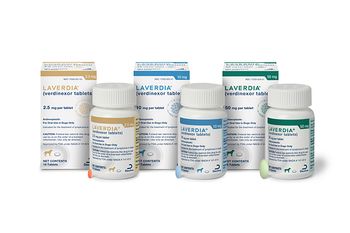
Jones described an emerging treatment option, verdinexor (Laverdia CA-1; Dechra), as a conditionally licensed drug that is orally bioavailable and does not cause resistance to other chemotherapy types. She explained that it functions as a selective inhibitor of nuclear transport, preventing tumor suppressor proteins from being exported from the nucleus and degraded. Jones reported that verdinexor has demonstrated a 37% overall response rate and may be particularly effective for T-cell lymphoma.
Regarding patient quality of life, Jones reassured attendees, saying, "The majority of studies say no, it doesn't impact quality of life.” She added that quality of life must be assessed through the lens of the pet parent's subjective perception.
Developments in cancer detection
The final part of the session addressed a common question clinicians receive: "Can't you just do a blood test and tell me [whether] my dog has cancer?” Jones introduced IDEXX Cancer Dx, a blood-based platform developed to screen specifically for lymphoma, with plans to expand its coverage to more than 50% of canine cancers in the future. She framed the test as aiming to diagnose cancer earlier.
Jones reported that a key metric for the test is its high accuracy in ruling out disease, explaining that Cancer Dx demonstrated a 99% specificity. She cautioned that the test should be used in an appropriate screening population to maintain accuracy, recommending its use in pets 7 years and older, or 4 years and older for at-risk breeds. Jones warned that using it on very young, low-risk dogs would result in unnecessary false positives. She suggested that integrating early screening into wellness protocols—similar to heartworm testing or human colonoscopies—marks the future of cancer care.
Reference
- Jones PD. Confidence in cancer care: practical approaches to lymphoma diagnosis and management. Presented at: Fetch dvm360 Conference; December 5-6, 2025; Long Beach, CA.
To read more news and view expert insights from Fetch Long Beach, visit dvm360’s dedicated site for conference coverage at https://www.dvm360.com/conference/fetch-long-beach