From catheter size and vessel selection to common placement mistakes, Alyssa Mages, BS, CVT, FVTE, shares practical guidance on venipuncture and IV catheter placement for veterinary technicians.

Discover key insights on decision-making biases in veterinary care from Erik Zager, DVM, DACVECC.
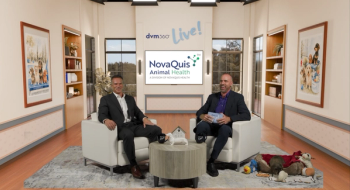
Cognitive biases quietly steer many clinical choices. In this dvm360 interview, Erik Zager, DVM, DACVECC, breaks down blind-spot, hindsight, false-consensus, and affective biases and offers practical steps to combat these intellectual shortcuts that may hamper proper decision making.
Erik Zager, DVM, DACVECC: I think one of the first ones that comes to mind is blind-spot bias. Blind-spot bias is either not knowing how we are biased on a day-to-day basis or believing that we are not susceptible to the biases that everybody as human beings is susceptible to. Our brains work in a certain way. /they’ve evolved to take shortcuts to make things as easy as possible for ourselves. But unfortunately, when we get to more complicated issues those evolutionary advantages start to become disadvantages. And when we don’t believe that we are susceptible to those biases. When we don’t believe that we are the ones who will be affected by, you know, outcome bias, availability bias, etc, that is the first step in a losing battle where we are not going to make the right decisions for our patients.
My favorite bias, which I talk about probably on almost a daily basis in my hospital, is hindsight bias. This is when the outcome of a case determines how we feel about the decisions leading up to that outcome. In medicine, just like in life, there is no perfect solution and there is no perfect answer; things happen. We can do everything right for a patient and still have a poor outcome. That’s just the way things go. What we can’t do is start to beat up on ourselves and think we made the wrong decisions, that we’re bad people or bad doctors, even if we made all the right decisions leading up to a poor outcome. This one really affects our mental health as health-care providers. Because bad outcomes are inevitable, if we take every single one as some sort of personal failure—even if we can look back and say, “I did everything I could for this patient”—we are going to burn out very quickly.
This bias is also a barrier to learning. If we have good outcomes despite making poor decisions, we might not re-evaluate our thought process. In order to learn and grow as clinicians, we need to dissociate the outcome of a case from our judgment of the decisions that led to it and not judge ourselves as “good” or “bad” doctors solely by the outcome instead of by the clinical steps we took.
One danger we can fall for is false-consensus bias, especially as doctors, because we are used to people agreeing with us. Our technicians or clients may sometimes feel intimidated and not want to disagree if we say something about a patient’s history or about a diagnostic impression that might not be accurate. If we do not create psychological safety for our clients and colleagues, we will have false-consensus bias: we’ll believe that everyone thinks the way we do more than is actually true. We need to make sure that every step of the process we are open to criticism, because that is how we grow. And we need to respect our colleagues and clients enough that, if they have questions about what we are doing, what our thought process is, or what our treatment plan is, we respond by explaining our reasoning and building a team-based approach.
Affective bias is almost in a category of its own because it is so dependent on our emotional and physical state. As medical professionals—like many jobs—we are constantly in situations where we feel, “I don’t have time for this,” or “I don’t have time for self-care.” Because some people think self-care is selfish, they skip it—but self-care actually helps our clients and patients, because we’re better able to make appropriate decisions if we are not tired, hungry, or ill. I’ve told staff before: “If you’re sick and have a fever, go home,” not only for your own sake but for the sake of the patients. If you’re hungry, try to eat something. Try to schedule at least five to ten minutes in your day to sit down, collect your thoughts, and be quiet for a moment—lock the door if people keep coming in and asking you things. You need that time for yourself, so you don’t succumb to affective bias, where your emotional and physical state negatively affects your decisions and patient care.
To read more news and view expert insights from Fetch Long Beach, visit dvm360’s dedicated site for conference coverage at