

We tend not use the word "mutation" anymore, we say “DNA variance,” but that variation is good.
We tend not use the word "mutation" anymore, we say “DNA variance,” but that variation is good.

Amy L. Pike, DVM, DACVB, chief of the Behavior Medicine Division at the Veterinary Referral Center of Northern Virginia, says when dealing with pain, veterinarians need to use a multimodal treatment approach.

Because of how electroceuticals function throughout the brain, it reduces stress level.

A program that offers support for both clients and staff is extremely important.

Practice pride keeps teammates satisfied.
Just one team member can spark a full on conversion in the clinic.

Do cats have as many orthopedic problems as dogs?

One of the things that clients are looking for in in their apology, in addition to compassion and understanding that they've been injured, is honesty.
Insults! Defamation! Bullying! Pet owners and animal activists can misbehave on social media with the best of them.

In terms of veterinary rehab, it very much follows human rehab.

The pros and cons of multimodal analgesia and anesthesia are often in the physiologic changes that occur.
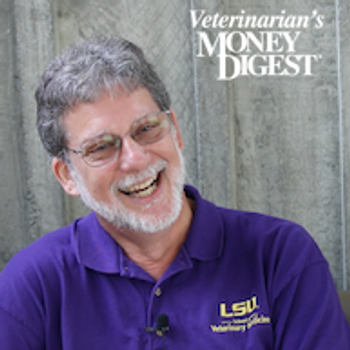
Joseph Taboada, DVM, DACVIM, professor and associate dean at Louisiana State University School of Veterinary Medicine, says that incoming veterinary students who want to be successful need to remember two things.

A common question asked by researchers: Are the same mechanisms that are relevant in the human disease also relevant in the animal disease?

How do we make a veterinary practice model that works for everybody?

Utilizing lower doses, a variety of drugs, and different techniques is the definition of balanced anesthesia.
Current veterinary education curriculum is reverting back to how it was 25 or 30 years ago, when students were exposed to primary care cases.
Neurophobia is a phrase to describe a student's fear of the neural sciences and clinical neurology.

Vickie Byard, CVT, VTS (Dentistry), veterinary technician dentistry specialist at PetED Veterinary Education and Training Resources, explains why intraoral radiographs are necessary for dental exams.
In this current market, veterinary employers need to be more proactive and do more than just use online job advertisements if they want more success.

Heidi Lobprise, DVM, DAVDC, veterinary dental specialist at Main Street Veterinary Hospital and Dental Clinic in Flower Mound, Texas, talks about the importance of dealing with urinary incontinence in pets.

There are several new technologies that are coming into both human medicine and veterinary medicine that have the potential to transform medicine.
Stem cell therapy and platelet-rich plasma applications can be used across disciplines.

Both the pulse oximeter and the capnograph—those tools are both probably most effectively used in patients under anesthesia.

At first, Amanda Landis-Hanna, DVM, senior manager of veterinary outreach for PetSmart Charities, didn't understand the benefit of having a client shop at a retail store.

Do you recommend annual vaccinations or boosters every 3 years?
Elizabeth B. Strand, PhD, LCSW, director of veterinary social work at the University of Tennessee College of Veterinary Medicine College of Social Work, conducted her own research on mental health in the veterinary profession.

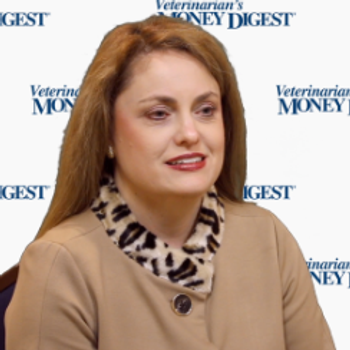
Wendy Hauser, DVM, assistant vice president of veterinary relations for Crum + Forster Pet Insurance Group, gives some advice on the importance of providing employees with feedback.

It's mostly going to be supportive care when we talk about inhalation toxicity in birds.
Veterinary practices typically don't do a great job of protecting themselves from malpractice.

Hospice care in veterinary medicine allows veterinary professionals to provide the best possible care for patients at the end of their lives.