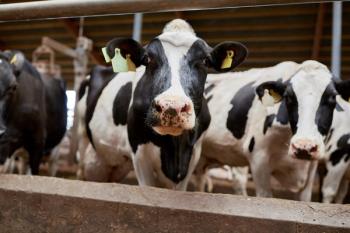
Two herds tested positive after cattle showed signs of illness, marking the state’s first confirmed livestock cases.
In September 2025, the FDA issued a conditional approval for another drug indicated to prevent and treat New World screwworm (NWS) larval infestations in cattle.
FDA officials have granted emergency use authorization (EUA) for a parasiticide to help prevent New World screwworm (NWS) infestation in cattle. Ivermectin injectable solution (Ivomec 1%; Boehringer Ingelheim Animal Health) is an over-the-counter drug that was previously approved by the FDA to treat and control more than 30 parasite species and stages in cattle, as well as uses for swine, reindeer, and American bison.1,2
NWS is a “devastating pest” that infests warm-blooded animals, according to the US Department of Agriculture (USDA). This parasitic fly lays larvae that burrow into the flesh of living animals, including livestock, pets, wildlife, and, in rare cases, humans. These maggots cause severe wounds and complications that can lead to death.3,4
Adult screwworms are approximately the size of the common housefly. They are identifiable by their orange eyes, metallic or green bodies, and 3 dark stripes on their backs, according to the USDA.4 In a dvm360 article, author Christopher Lee, DVM, MPH, DACVPM, DACVM (Parasitology), said NWS can also be identified by the “prominent hooks on its anterior end—imagine a vampire maggot.” He noted that although many maggots have hooks, NWS have large ones.5
Mammals and birds with NWS larvae infestation may show signs such as irritated behavior, head shaking, and a smell of decay.4 Signs of infestation, evidence of a fly strike, and the presence of maggots in wounds should be reported by animal health professionals to state animal health officials and Animal and Plant Health Inspection Service Area Veterinarians in Charge. Animal owners should also report these findings to their veterinarian.4,5
“Having worked in regions where [NWS] is endemic, I’ve seen firsthand that effective readiness depends on access to preventive tools and strong producer education,” said Gustavo Sabatini, PhD, MBA, MS, global technical manager for ruminant parasiticides for Boehringer Ingelheim.6 “Screwworm strikes cattle when they are most vulnerable, including at birth, and demands more labor‑intensive management on the ground. That’s why prevention is essential—not only to protect animal health, but also to safeguard the food supply and the livelihoods of cattle producers.”
Based on available scientific evidence, FDA officials found that ivermectin may be effective for preventing NWS larvae infestations in cattle when the drug is administered within 24 hours of birth, at the time of castration, or when a wound appears. The known and potential benefits outweigh the drug’s known and potential risks, according to the agency.1
The drug should not be used in female dairy cattle producing milk for human consumption, nor in calves that will be processed for veal, according to the FDA. The slaughter withdrawal period for cattle is 35 days.1
“[EUA] for Ivomec [ivermectin] 1% injection provides cattle producers and veterinarians with an important preventive tool against [NWS]. We appreciate the proactive approach of the FDA and USDA in response to this emerging animal health threat and remain dedicated to supporting veterinarians, producers, and government as we work together to protect cattle herds,” said Steve Boren, vice president, US livestock for Boehringer Ingelheim.6
In September 2025, the FDA issued conditional approval for a drug indicated for the prevention and treatment of NWS larval infestations in cattle. Doramectin injection solution (Dectomax-CA1 Injectable; Zoetis) is also indicated for the prevention of NWS reinfestation in cattle for 21 days.7
“[NWS] has the potential to bring unprecedented economic and animal health harm to livestock producers,” Mike Lormore, DVM, MS, MBA, head of cattle and pork technical services at Zoetis, said.7 “Our top priority is to support keeping animals healthy and provide timely, efficacious solutions to our customers and partners.”
Additionally, the FDA has issued EUAs for other drugs for the prevention of NWS infestation in companion animals. These include lotilaner (Credelio; Elanco) for treating NWS infestation in dogs8 and lotilaner chewable tablets (Credelio Cat; Elanco) for treating feline infestation of NWS larvae,9 both of which require a prescription.
Furthermore, lotilaner, moxidectin, praziquantel, and pyrantel chewable tablets (Credelio Quattro; Elanco) received FDA conditional approval for the treatment of NWS larval
To address the threat of NWS infestation in the US, Texas Governor Greg Abbott issued a statewide disaster declaration in January 2026, following cases reported in northern Mexico. "Although the [NWS] is not yet present in Texas or the US, its northward spread from Mexico toward the US southern border poses a serious threat to Texas’s livestock industry and wildlife," Abbott said in a news release. “With this statewide disaster declaration, the Texas NWS response team can fully utilize all state government prevention and response resources to prevent the reemergence of this destructive parasite. Texas is prepared to fully eradicate this pest if need be.”12
The US is also addressing the threat of NWS infestation by opening a sterile fly dispersal facility in Mexico, which was announced in November 2025. The facility allows the USDA to disperse sterile flies aerially across northeastern Mexico, thus preventing infestation in the US.7
Two methods are used to disperse sterile insects: aerial dispersal and ground release chambers. “Aerial operations are preferred because they allow for dispersal at a steady rate through a large area, and because sterile insects may be dispersed in areas that are unreachable from the ground,” USDA officials said in a news release.7
The USDA is also responding to the threat of NWS infestation by constructing a domestic sterile fly facility at Moore Air Force Base in Edinburg, Texas. This facility is projected to open and begin sterile fly production in 2026.7
References
6 months ago
The BOAS Man6 months ago
When rejection is redirection6 months ago
Veterinary conference calendar (April 2026)7 months ago
Exploring exotic emergencies7 months ago
From the CVO: Where medicine meets intuition7 months ago
Flex Forecast: March/April 2026