













Drugs are not a new aspect of veterinary behavioral medicine, but coming more into the forefront.
Drugs are not a new aspect of veterinary behavioral medicine, but coming more into the forefront.
Virtually all family veterinarians are commonly asked to recommend a breed of dog that is best for a particular client.
Compared with looking for a new puppy, looking for a new kitten is usually quite a different matter.

Aversive corrections are likely to make aggressive dogs worse.

Biting in puppies is a normal, though undesirable, behavior. Here are relatively easy ideas that you can pass along to clients to help them get through this period of puppy development.
There's nothing like personal experience to highlight the importance of exposing puppies to a variety of people and situations.
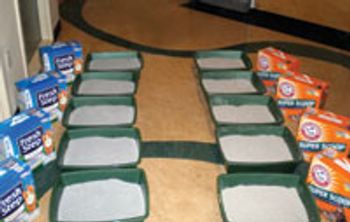
Dr. Jacqueline Neilson highlights research on cats' litter and litter box preferences.
In this video, Dr. Benjamin L. Hart provides two tips for acclimating kittens to a new home.
Lakewood, Colo. -- A new guide to help veterinarians counsel pet owners about behavior problems has been developed by the American Animal Hospital Association (AAHA).
Used correctly, food is an excellent primary reinforcer - not a bribe.
Los Angeles -- All veterinarians have had a patient who is less than thrilled to see them.

Dogs and cats are often observed eating grass and other plants of no apparent value.
I read with great interest and admiration Dr. Valarie Tynes' article "10 life-threatening behavior myths" in the September 2008 issue of Veterinary Medicine.
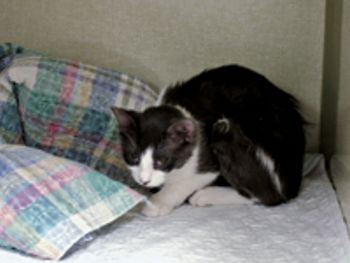
Our understanding and treatment of pain in cats has lagged behind that in dogs.

Dr. Benjamin Hart discusses the surprising gender-specific behavior differences between these two species.
A veterinary visit should be the starting point for each behavior case. The first step would be to rule out any medical factors that might be contributing to the behavioral signs.
Many pet owners are misinformed or naive when it comes to understanding the behavioral development and training of pets.
How a dog responds to a stimulus will be based on its genetics, socialisation and previous experience.
Domestication and selective breeding (genetics) may lead to increasingly affectionate, socially dependent and infantilized dogs with excessive owner attachment and intolerance to being left alone.
Inappropriate elimination, both housesoiling and urine spraying (vertical marking) are the most common feline behavior problems seen at behavior referral practices.
In some situations, practitioners are left trying to determine whether an animal's behavioral change reflects a medical issue or a behavioral problem.
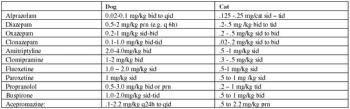
Psychotropic drugs and natural alternatives might be used to help reduce the signs associated with phobic, panic or chronic anxiety states and to improve trainability especially in situations where the pet is too anxious, fearful or impulsive to control its responses.
Aggression is the most common reason that dogs are seen at behavior referral practices.
Environmental enrichment is an important and essential aspect of most animal management programs.
Feline housesoiling still represents the most common reason cat owners seek behavioral advice from their veterinarian.