























Diet, supplements, drugs and cognitive and physical stimulation all play roles.
Diet, supplements, drugs and cognitive and physical stimulation all play roles.

A tip to momentarily distract a cat in order to quickly retrieve an item from its cage.

There is no way around it: collecting a behavioral history is time-consuming. But never boring. Given a chance, pet owners will share every detail of every episode that they can recall. Most people are also eager to offer their theories regarding the development of the problem. A systematic means of politely limiting the information flow can be developed with experience.
The veterinary technician with an interest in behavior can help build and maintain a behavior practice within a general practice setting. Technicians are in an ideal position to promote behavior services. Clients will appreciate having a skilled person guide them through the treatment steps outlined by the veterinarian.
Most medical conditions lead to changes in behavior. Veterinary visits are scheduled when pets are "not acting right". Behaviors of concern might include limping, coughing, and vomiting.
Dogs these days are treated as children. They are expected to be social, and to have good manners. Unfortunately, some dogs are just not comfortable with children. Puppies purchased from breeders as well as adults adopted from shelters may present for aggressive behavior toward children.
There's an old expression that goes something like this: "Your words may come back to bite you." Such is the case with terminology in medicine. Striving to communicate, we are inclined to label phenomena before we fully understand what it is we are actually describing.
Remember Lassie? How about all those clever Dalmatians? People are inclined to adopt dogs of certain breeds when they see a dog of that breed behaving in an appealing manner. It is tempting to watch a border collie speed gracefully through an agility course and think, "Wow, I would like a dog like that."
Many cats lose their homes and lives simply because they eliminate in areas other than their litter boxes. Cat owners are often unaware that treatment is available. In fact, the prognosis for resolving housesoiling in cats is often very good.
Factors to consider before prescribing a psychoactive drug.
Cats were once described as solitary animals. Cats typically hunt alone and they do not wander about in packs. It was reasonable to conclude that cats were not a social species.
There are many professionals available to work with behavior problems in dogs. Each has a role, but sometimes, boundaries may seem less than clear.

After completing this unit, you will be able to explain to owners the complicated issues involved in canine elimination. (1 CE credit)

Through the use of examples, this module illustrates the main points necessary to change an animal's behavior in a variety of ways. (2 CE credits)
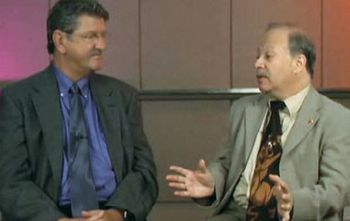
Behaviorist Gary Landsberg tells you how to identify trainers that use positive practices, not punishment, to teach desirable behaviors in pets.
Dr. Gary Landsberg explains how the first clues to an underlying illness often manifest as behavioral signs.
Veterinary behaviorist Gary Landsberg gives practical options for approaching a sensitive issue.
Make sure you readily recognize these signs to ensure patients aren't suffering.

Contributions, causes of age-related cognitive changes in dogs.
Drs. Pete VanVranken and Gary Landsberg discuss the practical application of behavior medicine in everyday practice.
Taking the BizQuiz? This is the answer to question 5 of "Are you being compensated fairly?"

Veterinary behaviorist Valarie Tynes gives her perspective on this important topic.
For advice on finding a behavior expert, check out these sources.
A new study takes a look at how dogs respond to different growls.
Incorrect answer for Image Quiz: Ophthalmology-A rockfish with a bulging eye