

Q. My old exam rooms contain tile floors and rubber baseboards. Waxing maintains the tile, but the baseboards attract dirt and cat hair, and the seam between the floor and boards gets very grimy. What can I do?
Q. My old exam rooms contain tile floors and rubber baseboards. Waxing maintains the tile, but the baseboards attract dirt and cat hair, and the seam between the floor and boards gets very grimy. What can I do?
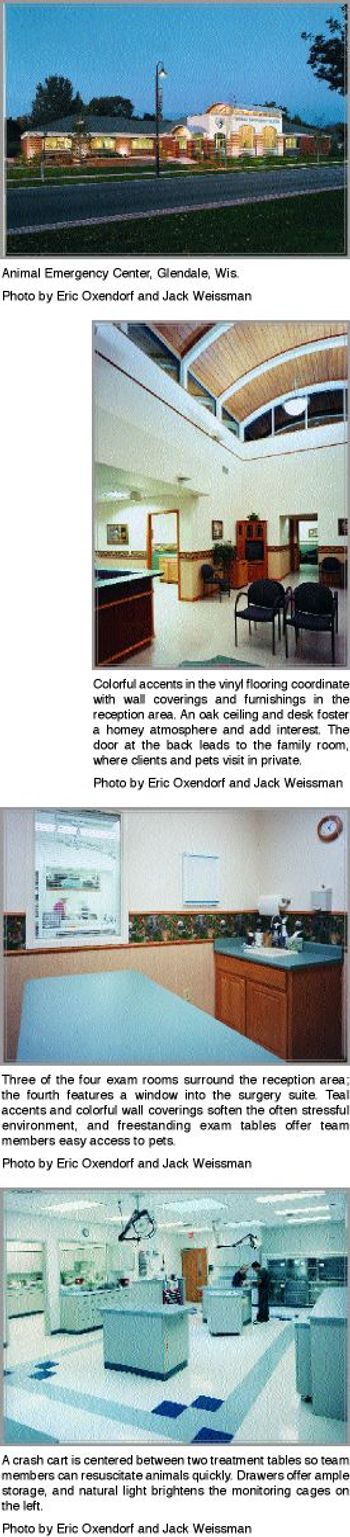
The premise of the TV show "Ed" isn't original: lawyer Ed opens a professional practice in a bowling alley. Dr. Kovacic beat NBC to the punch in 1988 when he moved Animal Emergency Center in Milwaukee into a leased space in a bowling alley. Dr. Rebecca Kirby, Dipl. ACVIM, Dipl. ACVECC, once a partner and now sole shareholder, remembers the location fondly: "We couldn't tell if it was thundering or someone made a strike," she says.

If you think constant barking is maddening, add the steady pounding of jackhammers. Then work under those conditions for a year. Partners Drs. Scott Griffin, Ann Allen Salter, and Bill VanHooser sacrificed quiet to add 6,613 square feet to their 7,295-square-foot Carriage Hills Animal Hospital and Pet Resort in Montgomery, Ala.
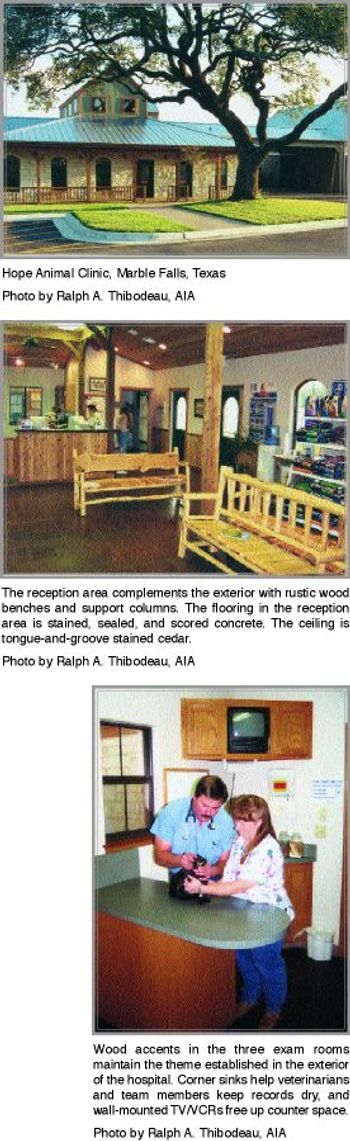
Dr. Timothy J. Thompson wanted to own a practice so much, he says he would've bought a lemonade stand with a dog run attached. So he and his wife, Dr. Shannon A. Thompson, both 1994 Texas A&M University graduates, only spent a year as associates before buying Hope Animal Clinic in Marble Falls, Texas. They leased the 850-square-foot building and within a year bought land to build the mixed animal facility of their dreams.

There's strength in numbers, the saying goes. But for the veterinarians at Findlay Animal Hospital in Findlay, Ohio, strength comes not only from the number of doctors but also from the number of hospitals they own around town.
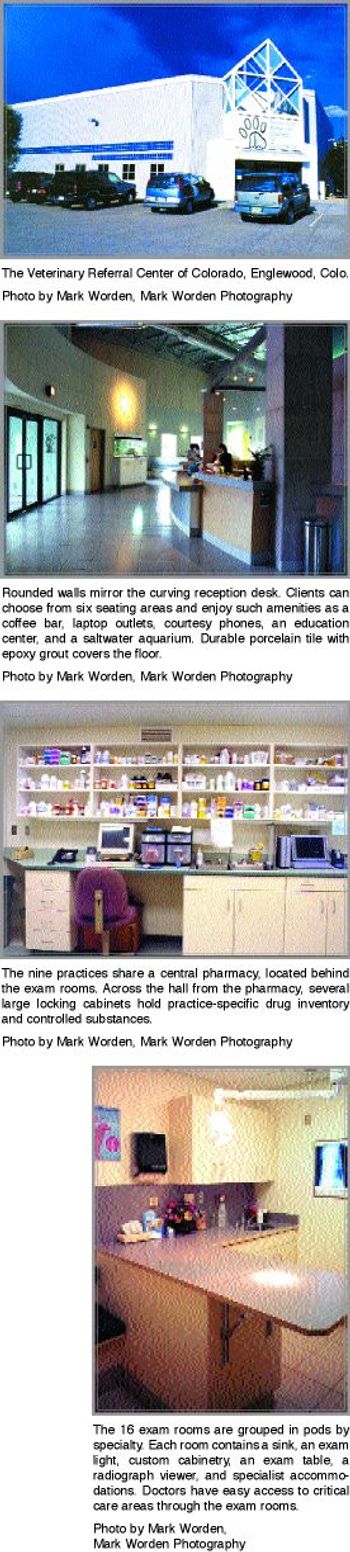
Looking at the 18,832-square-foot Veterinary Referral Center of Colorado in Englewood, Colo., it's hard to imagine the practice's humble beginnings. In 1991, Dr. Sam Romano's emergency practice merged with Dr. Steve Wheeler's internal medicine practice and Dr. Marlon Neely's mobile surgical practice in an 1,100-square-foot garage. Three years later they added oncologist Dr. Robyn Elmslie, Dipl. ACVIM, and moved into a 5,600-square-foot converted dental facility.
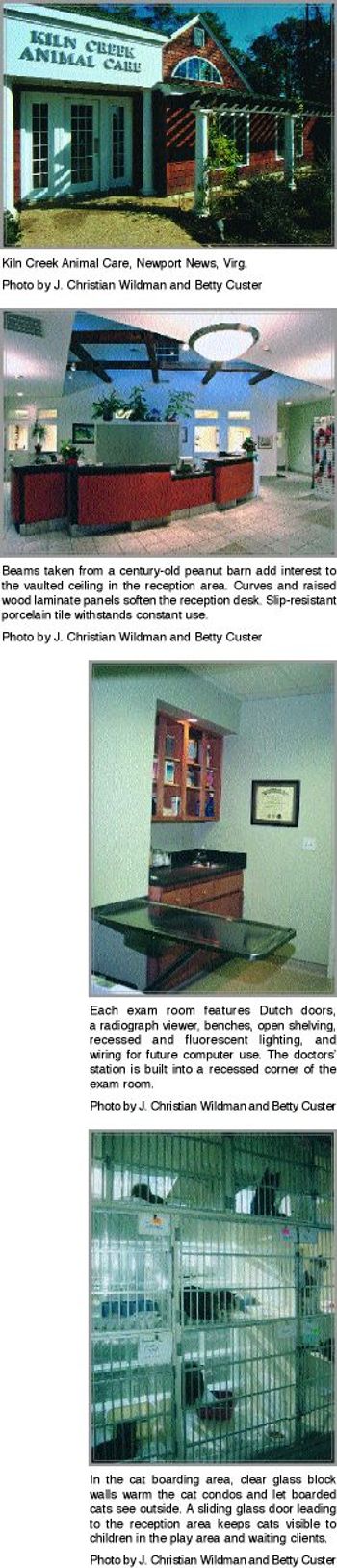
Good luck and support from her family made all the difference when Dr. Sue A. Stiff was building a new facility for Kiln Creek Animal Care in Newport News, Va. Most business owners in this seaside locale can't afford land. But fortune smiled when Dr. Stiff secured a 2.7-acre site in an exclusive golf community--for half its value. In addition, her husband, a local emergency veterinarian, kept an eye on the practice while she devoted her time to the building project.
When people shop for used cars, they kick the tires and check under the hood. When they shop for veterinary services, the evaluation is more subtle. But in both cases, they form lasting opinions based on first impressions. That's why it's critical to minimize noise and odor. Simply put, if your clinic stinks, clients may worry that your medical care stinks, too.
Your new computer is humming on your desk. So what do you do with the old one collecting dust in the corner?
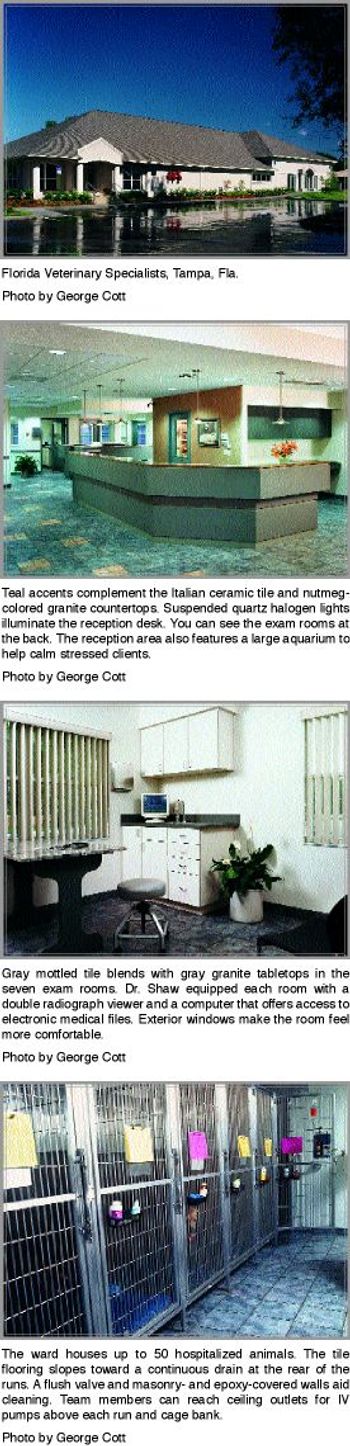
Consulting with clients over a picnic table, housing patients in the restroom, and stacking portable cages to the ceiling may sound like a bad dream to most veterinarians. Dr. Neil Shaw and his team endured this daily reality for more than two years at Florida Veterinary Specialists, a 1,500-square-foot leasehold hospital in Tampa, Fla.
Q. I'm shopping for a new radiograph machine. Which offers greater tax advantages, buying or leasing?
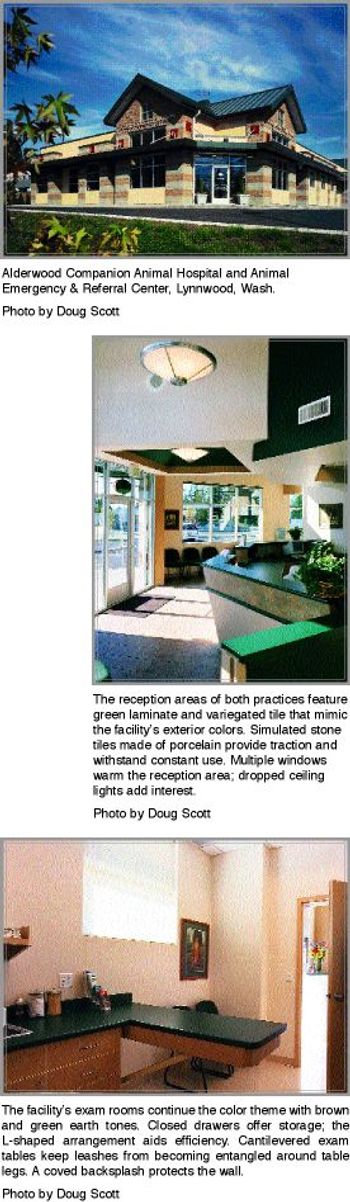
How often does a knock on the door make your dream come true? Once was enough for Drs. James McGill and Linda Miller, two veterinarians who worked in separate practices north of Seattle. Despite a virtually invisible location, Dr. McGill's 2,300-square-foot leasehold was growing 30 percent each year. And Dr. Miller wanted to offer 24-hour care, but a surgical hospital rented the facility during the day. Both doctors wanted new hospitals, but the cost held them back.

When you mention Colorado, most people picture spectacular views. But from their tiny strip-mall leasehold, staff members at Centennial Valley Animal Hospital in Louisville, Colo., could barely see the parking lot, much less the Rocky Mountains beyond.
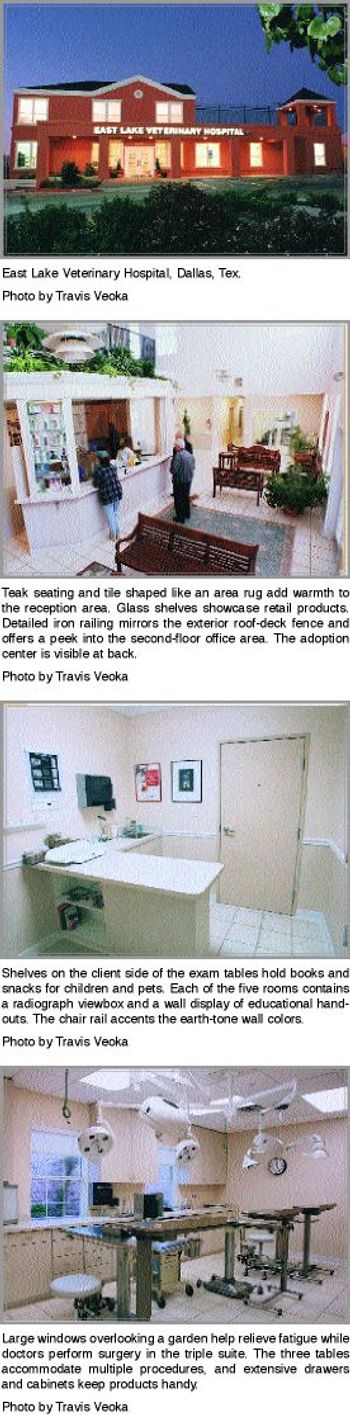
Drivers passing East Lake Veterinary Hospital in Dallas do a doubletake when they see dogs running across the roof of the facility. To offer obedience training in her new practice, owner Dr. Karen Ann Fling added a 2,500-square-foot roof deck. This amenity garners plenty of attention, especially when training classes are in full swing.
You know the benefits of offering a complete in-house lab. You--and anxious pet owners--can get quick answers on complex cases, and you can begin treatment immediately rather than hospitalizing the patient until you receive test results the next morning. In addition, owning high-tech gadgets lets you practice high-quality medicine.
Whether you're building a new facility or updating your hospital, don't overlook wall finishes. Wayne Usiak, AIA, a Veterinary Economics Editorial Advisory Board member and principal of BDA Architecture PC in Albuquerque, N.M., suggests you consider these options for your practice:
Q. In a residential neighborhood or commercial leasehold, how can I design my facility so barking dogs don't disturb neighbors?
When you dream about new equipment, also consider replacing existing units that no longer meet your needs. As you compose your wish list, ask these questions to determine whether an item is still efficient:
You've spent a year researching the benefits of laser surgery, and you think this new service will enhance your practice's surgical options. You've even selected the unit and considered financing options. But have you done all your homework? Before you buy expensive equipment, take time to calculate the financial benefits--and hidden costs.
Q. In my practice's kennel and grooming areas, staff members can encounter noise levels OSHA calls damaging. To keep noise from invading other areas, I've contained it in these sections. Short of a major redesign, how can I reduce exposure?
The World Health Organization estimates that 30 percent of buildings exhibit sick-building syndrome. How can you tell if your hospital suffers from SBS? Your staff may complain of headaches; eye, nose, or throat irritation; itchy skin; dizziness and nausea; difficulty concentrating; fatigue; or sensitivity to odors--symptoms that disappear once a person leaves the hospital. Although such symptoms may indicate another illness, studies show that indoor air pollution can exacerbate health problems.
Q. How does one calculate how much air movement is appropriate in a kennel? I'm concerned that several air exchanges per hour would pump large amounts of heat and air conditioning through the wall we so carefully sealed and insulated. A large window unit cools our kennel; should I allow it to vent at all times? Is an interior circulating fan required to move out stale air?
A cash flow analysis for new hospital building projects