Before you schedule the cherry picker to come to your practice, let's see if we can fill your basket with some of the "low hanging" fruit.

Before you schedule the cherry picker to come to your practice, let's see if we can fill your basket with some of the "low hanging" fruit.

Results of Benchmarks 2010: A Study of Well-Managed PracticesSM by Wutchiett Tumblin and Associates and Veterinary Economics reveal that a current partner, or a current or future associate is the most likely buyer in 69 percent of practices. And, one of the most important steps to take to prepare an associate for ownership is teaching them about and involving them in the business side of practice.

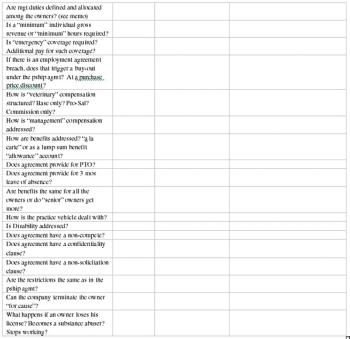
A buy-sell agreement or shareholder's agreement or operating agreement is a written statement of plans about how owners can slow down or get out of the practice at a set time or occurrence. It is the shareholder's agreement for a corporation or an operating agreement for an LLC.

Small changes in how you practice, or in how you run your business, can have a dramatic impact on your earnings over a lifetime and in keeping you and the profession economically strong.

A lower risk practice purchase means the buyer and seller both win and the practice sells. It may be obvious that win-win is best, but sales are made that are not win-win or low risk. The practice sale may be to an independent third party or to an inside person, usually an associate doctor.

Buying or selling a veterinary practice generally is a long and arduous process. Preparation and a good lawyer are key to smoothing the bumps along the way.

The time for a practice sale depends on the following items: timing, personal health, interest in work, motivation for work, age, stress, funds, alternative investments and alternative activities. Some say you need 15-20 times your current earnings in investment funds for retirement.

Co-ownership issues often arise when veterinary practitioners enter into a partnership with other owners, or when two or more associates jointly venture into practice acquisition. In most aspects co-ownership of a veterinary practice is akin to marriage, and it is vitally important to agree on the principal terms governing the relationship before getting hitched.

Non-DVM practice ownership has long been the standard in most states. This is because the practice acts require it in slightly more than half the states. The remainder of the states may or may not allow non-veterinary ownership of a veterinary practice, but do not directly address the issue in their practice acts.

Uncover new tax provisions that could save your veterinary practice money -- and help you afford that new equipment you've been eyeing.

Hanging with Hafen: It's easy being green?and lean

Find ways to generate revenue to get your practice back on track financially.

Uncle Sam has a new hassle for tax reporting for veterinarians who own rental property.

Wayne Usiak, AIA, founder of BDA Architecture in Albuquerque, N.M., shares his insights into the state of exam room design and functionality.

Creative use of space in the veterinary clinic makes money is good for the budget.

Consumers prefer brand names with repetition and alliteration, a new study finds.

Data from NCVEI shows growth for most veterinary practices in the first two quarters, but profitability still less than optimal.

A recently released June survey shows midyear optimism.

Master your veterinary practice's most challenging product and supply issues.

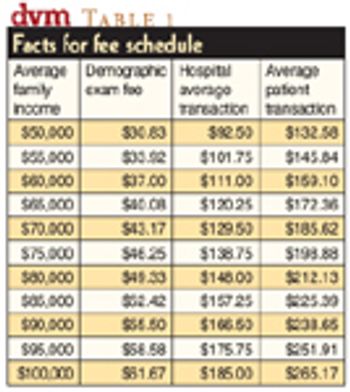
Use demographics and a little easy math to determine a profitable fee schedule for your veterinary practice

Traditional IRA to Roth IRA conversions present tax planning complexities. Here's what you need to know.

Add nutrition to exam room discussions for healthier patients at your veterinary practice.

Hanging with Hafen: Lessons from Dr. Dan

How can open-book management help my succession planning strategy?

A company now offers veterinary practice owners a chance to wander their clinic before they build.

Gary Glassman, CPA, and Dr. Richard Wilkes bring together practice owners to share financial data and best practices.

The silver lining is that most of them like their jobs, their bosses, and their co-workers.

Find out how tax increases in the next few years will affect you and your veterinary practice.

It takes a lot of money to run a veterinary practice, but when it comes to saving their own money, practice owners may take fewer risks.