Species differences, food safety requirements, and the cost of a single dose all factor in.
Two national groups want a voluntary vaccination framework for dairy cattle, starting with a pilot in willing states, as cases continue in Washington and elsewhere.
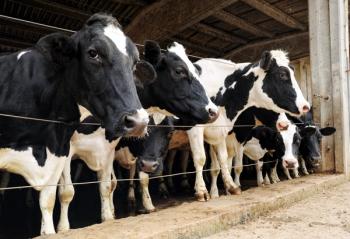
State agriculture and animal health officials are asking USDA to authorize vaccination of dairy cattle against highly pathogenic avian influenza (HPAI) H5N1 as the virus continues to turn up in herds across the country.
In a November 5 letter to Agriculture Secretary Brooke L. Rollins, the National Association of State Departments of Agriculture (NASDA) and the National Assembly of State Animal Health Officials (NASAHO) urged the agency to immediately authorize a voluntary national emergency vaccination framework for dairy cattle. The groups proposed starting with a limited pilot program in willing states.1 The organizations met with USDA officials and delivered the letter that day.2
The request comes as new cases continue to appear. According to USDA Animal and Plant Health Inspection Service (APHIS) data, there were 44 confirmed HPAI cases in cattle herds in 7 states in the last 30 days, as of November 19.3 Washington accounted for 30 or more of those cases. Colorado, Idaho, Indiana, Oklahoma, Oregon, and Texas each reported between 1 and 5.3
The most recent confirmed case, on November 14, came from an Oklahoma dairy herd.3 Oklahoma isn't new to the outbreak: USDA confirmed HPAI in an Oklahoma dairy herd in July 2024, making Oklahoma the 13th state with a confirmed case in dairy cattle.4 Federal officials confirmed
Since dairy cattle cases were first confirmed in 2024, APHIS has confirmed 1,234 cases in cattle (917 in 2024, 171 in 2025, and 146 so far in 2026). Livestock detections now span 22 states.1,3
Under the proposed framework, participation would stay voluntary. Vaccination within a state would be deployed in consultation with that state's animal health official and with the official's concurrence.1 According to the letter, the framework would let USDA, states, and industry evaluate vaccine effectiveness, surveillance protocols, implementation needs, and potential trade impacts. It would also establish a pathway for broader use if epidemiological conditions warrant.1
The groups also call for a task force that includes state animal health officials. The task force would set criteria for state participation, vaccine deployment, postvaccination surveillance, animal identification and movement, and the conditions for expanding or ending vaccination.1 The letter suggests a dairy cattle vaccination strategy could prioritize affected herds, states, and other populations based on epidemiological risk.1
According to a NASDA news release, vaccines should not replace core measures such as surveillance, biosecurity, movement management, and animal identification and traceability. Instead, vaccination would be a voluntary option state animal health officials could choose to use alongside those tools.2
NASDA CEO Ted McKinney made the case in the release.2 “The dairy industry must have effective tools to combat HPAI,” McKinney said. “Current surveillance strategies like the National Milk Testing Strategy and premovement testing have been critical in early detection, but an integrated disease control strategy must go beyond biosecurity and movement controls and include veterinary countermeasures. That’s why we are asking USDA to approve vaccines as an additional tool to help prevent and reduce the spread of HPAI in livestock.”
NASAHO President Alex Hamberg, VMD, PhD, echoed McKinney in the same release.2 “HPAI continues to loom as a significant threat to animal health, our food supply and commerce,” Hamberg said. “Veterinary and state government leaders need every available tool to protect the agricultural economy in their states and empower their farmers in combating this virus to protect their dairy herds and poultry flocks. We are asking USDA for their support in helping our farmers.”
The letter notes that while natural infection can generate protective immunity, that immunity is short-lived, leaving herds susceptible to reinfection.1 The groups warn of what could happen without further action.1 “Without a proactive, coordinated eradication strategy, H5N1 risks becoming an endemic disease in US dairy cattle, requiring USDA, State Animal Health Officials and industry to manage the disease for years while continuing to respond to costly spillover events in poultry,” the groups wrote.
According to the letter, despite aggressive supportive care, many sick cows never fully return to preinfection milk production, are culled early, die, or experience late-term abortions.1 Some affected dairies have seen gross revenue losses of up to $700,000.1
Spillover from cattle has also hit poultry. As of July 2025, at least 17 states had experienced commercial poultry losses linked to spillover from dairy operations.1 The letter also cites 115 domestic flocks infected with the B3.13 strain. Those flocks account for 28% of total poultry detections and the loss or depopulation of more than 36 million birds.1
Trade is the other pressure point. The letter notes that trading partners closely monitor animal disease events. Prolonged outbreaks can increase the risk of export disruptions, additional certification requirements, and reduced market confidence in US dairy, beef, poultry, and genetic products.1 NASDA and NASAHO say any vaccination strategy should minimize potential trade and market disruptions.1
According to the letter, USDA has said it continues to support rapid development and timely approval of H5N1 vaccines for dairy cattle. Several candidates are undergoing field trials or awaiting final approval for emergency use.1 Vaccine research is also moving forward on the poultry side. dvm360 recently reported on a USDA-funded Louisiana State University project to
For now, control efforts in dairy cattle rely primarily on surveillance, biosecurity, and movement controls.1 dvm360's
References