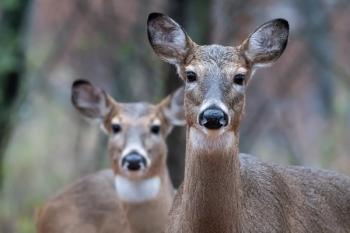
A virus spread by tiny biting midges is suspected in more than 1,800 deer deaths in southeastern Wisconsin, and has now been detected in a dairy herd.
dvm360’s Australian correspondent Phil Tucak shares updates on Qwoll, a new practice management system built for locum vets and mobile veterinary nurses and technicians; and H5 avian influenza detected in Australia
Qwoll is a web-based software-as-a-service platform designed to allow veterinary professionals to manage their businesses wherever they are, and brings together bookings, clinical notes, client communication, compliance, invoicing, scheduling, and workflow management into a central system built specifically around the realities of independent veterinary work.
Veterinary technician Philip Vidins, BAppSc (Vet Tech), ProfCert, PosPsych, co-founded Qwoll with his wife, Rhiannon, and brother-in-law MitchellManganaro, and explained to dvm360 that the platform was designed specifically for independent veterinary professionals.
“The idea for Qwoll actually came from Mitchell. At the time, I had been running my mobile veterinary nursing business, Purpose Paws, for a few years and was juggling multiple systems just to keep things running. I was using separate platforms for bookings, client notes, visits, communication, invoicing, and payments, and it was becoming incredibly time-consuming to manage the administrative side of the business,” Vidins shared.
“My wife, Rhiannon let her brother Mitchell know how much time I was spending trying to piece all these systems together and he decided to build something to simplify it. I started using the early versions of the system myself and, naturally, began making requests and suggestions based on the realities of mobile and independent veterinary work. Over time, it became obvious that this wasn’t just solving a problem for me, it was solving a problem for a growing group of veterinary professionals working outside the traditional clinic structure.”
The name Qwoll comes from the native Australian marsupial, the quoll, and Vidins said that the platform was created to support the evolving sector of the veterinary industry - that of veterinary professionals who are building flexible, community-based careers outside the traditional clinic model, but who still need the same level of structure, professionalism, and support as any larger veterinary business.
“We felt that Australia’s native quoll represented the qualities required to succeed as an independent veterinary professional - being fierce, independent, nurturing, and tenacious. Those values have become central to the identity of the Qwoll platform. While the idea originated in Australia through my own experience and frustrations as a mobile veterinary technician, the problems we were trying to solve are global,” Vidins explained.
“Independent veterinary professionals online were telling the same story - juggling multiple platforms for bookings, notes, invoicing, reminders, and communication; spending huge amounts of unpaid time on administration; and trying to force non-veterinary systems to fit a style of work they were never designed for. So with Qwoll created something streamlined, accessible, and purpose-built for independent veterinary work, a platform that reduces admin burden rather than adding to it.”
Vidins said that most existing veterinary practice management system platforms are built for brick-and-mortar veterinary hospitals, and are large, complex, and often prohibitively expensive for an independent professional or small mobile business.
“For someone doing mobile nursing, relief work, or medical pet sitting, they often only need a fraction of those systems, yet still end up paying for software that doesn’t truly support the way they work. Qwoll has always been a community-driven endeavour. We’re building it alongside the people who actually use it every day,” Vidins said.
“At its core, Qwoll is about lowering the barrier to independence. There are many skilled veterinary professionals who love the industry and love working with animals, but are looking for more flexibility, autonomy, or sustainability in their careers. Rather than leaving the profession entirely, Qwoll aims to give them a practical pathway to remain engaged in veterinary medicine, continue serving their communities, and build businesses around the work they genuinely love doing.”
Qwoll is continually being refined, with real-world feedback from a founding cohort of independent veterinary professionals.
“The response to Qwoll has grown much faster and larger than we initially anticipated, so one of our immediate next steps is expanding our development and support capacity to help us scale sustainably while continuing to improve the platform experience. Working on Qwoll has been incredibly meaningful for me. I feel very privileged to have the opportunity to build something alongside my family that is so closely connected to my own journey and values,” Vidins explained.
“Having worked in the veterinary community for the past twenty years, I became increasingly aware of some of the challenges veterinary professionals face; burnout, administrative overload, lack of flexibility, and people feeling like they have to leave the profession entirely to find balance or sustainability. Being able to work on something that people tell me has genuinely improved their working life is incredibly humbling.”
High pathogenicity avian influenza H5N1 was detected in mainland Australia for the first time in June 2026, with the first case confirmed in a Subantarctic brown skua found by a local veterinarian on a beach near Esperance on the far south-east coast of Western Australia. At the time of writing, there have now been 5 confirmed cases of H5 bird flu, with 4 in Western Australia and one in South Australia.
H5 bird flu includes the serious and highly contagious H5N1 clade 2.3.4.4b strain which has been spreading globally since 2021 through the movement of wild birds. H5 bird flu can also affect other animals, and millions of wild animals worldwide have now died due to the virus.
Wildlife Health Australia’s Chief Operating Officer, Tiggy Grillo, PhD, AM, BVMS, highlighted the critical role veterinarians can play in detection and response to H5 bird flu.
“It’s encouraging to see the public responding to advice to avoid, record and report sick and dead wildlife. For veterinarians and wildlife carers, however, a more nuanced, clinically informed approach is required. To support the sector, Wildlife Health Australia has developed H5 bird flu resources for veterinary and wildlife settings, including practical risk mitigation toolboxes," Grillo said to dvm360.
“These provide guidance on infection prevention and control, safe handling of wildlife, use of personal protective equipment, and reporting of suspect cases, alongside risk assessment and response considerations to support preparedness and early detection. This sits alongside a suite of general and technical resources from Wildlife Health Australia in relation to H5 bird flu and wildlife."
Wildlife Health Australia’s H5 bird flu resources are available at