

Additional clips from the conversation will be published in the coming days.
News|Videos|August 14, 2026
Canine freeze-dried plasma could change when and where dogs get a transfusion
Fact checked by: Yasmeen Qahwash
A new freeze-dried plasma product developed through military-funded research could expand the settings in which veterinarians can administer plasma, including before a patient reaches a hospital, during delayed evacuation, and in clinics without their own blood banks.
Advertisement
Advertisement
When a dog is bleeding, and plasma is needed quickly, the nearest blood bank may be miles away.
Canine freeze-dried plasma (cFDP) became commercially available in December 2025 after an FDA review found no additional safety concerns. Developed by defense technology company Mantel Technologies, cFDP is a shelf-stable powder derived from screened donor dogs that can be stored at room temperature until a patient needs it, then reconstituted with sterile water and administered intravenously within minutes to control hemorrhage or treat hypovolemia.
The product does not require a freezer, thawing, or a cold chain, potentially making plasma easier to use in the field, in remote practices, and in clinics without a blood bank.
To understand how the technology could be used for emergency and critical care, dvm360 spoke with Kelly A. Mann, DVM, MS, MSS, DACVR, vice president of veterinary solutions at Mantel Technologies in Fort Collins, Colorado, and affiliate faculty at Colorado State University. A retired US Army Veterinary Corps officer who once directed the LTC Daniel E. Holland Memorial Military Working Dog Hospital, Mann has spent decades developing medical technologies for working dogs.
In the clip above, Mann discusses how lessons from human trauma care could inform the use of FDP in veterinary medicine. He describes potential uses at different stages of care, including before a patient reaches a veterinary hospital, during prolonged field care when evacuation is delayed, and after the patient arrives at a hospital. He also discusses how FDP could be useful in smaller clinics and satellite hospitals with limited staffing or without their own blood banks, as well as in veterinary trauma centers where it could be given while additional blood products are being arranged.
- Read the entire interview as a Q&A
here .
Below is a partial transcript, which has been edited for clarity.
Mann: I believe that [cFDP] and other products that are like it [are] vital to the provision of care in far-forward locations or under austere conditions. Our research and development objectives were driven by the need to create a species-specific [FDP] product that retain[s] coagulation proteins, [doesn’t] require cold chain storage, [is] ready for immediate use, [is] shelf-stable, and [is unable to] be stored in glass. When you think about transport…weight and cube is huge. When you start meeting those objectives…it allows you to have that close injury. So, prehospital care on the civilian side [and] point-of-injury care on the military side become real considerations.
In the military working dog world…it's a dangerous environment, and hemorrhage was involved in more than 80% of the nonsurvivors in one review of military working dog trauma. So the need for not only [cFDP] but other blood products in these far-forward austere areas closer to the point of injury is very real for dogs that are in these types of operational environments, and I would extend that to law enforcement and search and rescue canines. If you think about either the dangerousness of the possibility of injury and the types of injury, as well as the austere conditions...when you think about where search and rescue dogs really work, both of those things combine to make the ability to deploy blood products without cold chain closer to the patient that requires them.
When you talk about the provision of far-forward care, austere environment care, [and] things like that—my research was funded by the military, but the cFDP product actually allows the administration of fresh frozen plasma on demand to initiate care at [the point of injury]. But in the civilian world, that's also called prehospital care. You're seeing that more and more in the human medical approach to trauma care, and now it's coming to fruition, in my view, in the veterinary medical systems as well. So not only is it useful very close to the point of injury in prehospital care, but [it’s also useful] on the military side during prolonged field care while you have delayed access to [medical evacuation]. And it can be used when you're receiving definitive in-hospital care.
I feel like these use case scenarios that we're discussing fit not only the military operational environment but also into the provision of veterinary care here in the United States. A couple of [possible] examples: You have a small clinic or a satellite hospital that has reduced staffing or reduced ability to operate their own blood bank, that kind of thing. And even in level 1 veterinary trauma centers, FDP may be able to be used as the first unit of plasma that's administered while you're coordinating for additional plasma or other blood products and therapeutic interventions for that patient. So, [that’s] maybe a broader-spectrum view of not just focusing on the austere environment but [also the] continuum of care all the way through definitive care.
Advertisement
Related to this article
Alyssa Mages, BS, CVT, FVTE, outlines key considerations for veterinary technicians during triage, from rapid patient assessment and prioritization to client communication and team coordination, in this interview from the 2026 Fetch National Harbor Veterinary Conference.

Caitlyn Getty, DVM, PhD, DACVIM (Nutrition), explains how synergistic prebiotic fiber blends outperform single supplements in supporting fermentation, postbiotics, and gut health.
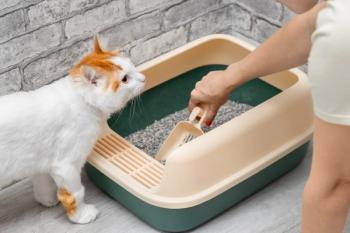
Christopher Lee, DVM, MPH, DACVPM, DACVM (Parasitology), discusses the clinical significance of Toxoplasma gondii, when veterinary professionals should consider testing, and how to communicate the risks of exposure to clients.
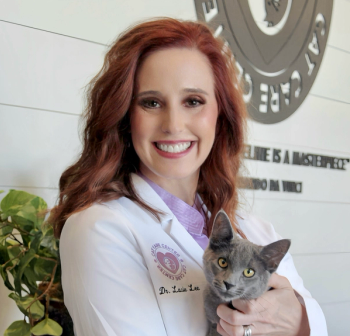
New leadership moves, recognition, and achievement.
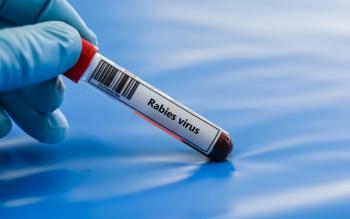
While human rabies cases remain rare, reported exposures have gone up. A longtime public health microbiologist explains what's driving the increase and how veterinarians can help clients respond.

Continuing Education on-demand anytime, anywhere, plus some upcoming live opportunities.

A pair of littermates with long limbs, lens luxation, and aortic root dilation carried a variant in FBN1, the same gene that causes the disorder in humans.

A small, spotted cat from Bolivia's cloud forests, first kept as a pet by someone who thought it was a house cat, has been confirmed as a species new to science.
Advertisement
Advertisement
Trending on dvm360
1
Researchers document first known cases of Marfan syndrome in domestic cats
2
Paws and profits: Paws and profits: FelineVMA elects Lacie Lee, DVM, as president-elect, Parnell names VP of US pet care, and more updates
3
Q&A: A rabies expert on rising exposure reports and keeping human cases rare
4