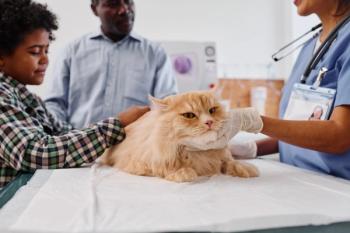
Fifteen second-year veterinary students will each receive $20,000, along with mentorship and leadership training that continues after graduation.
The coping strategies that help veterinarians survive hard cases may also be the ones that wear them down over time.
Veterinary medicine asks a lot of the people who practice it. To continue showing up for difficult cases, emotional clients, and challenging demands, many veterinarians learn to put on “emotional armor,” like humor and control. However, what happens when this “armor” stops protecting and starts wearing down? In this episode of The Resilient Vet: Mind and Body Strategies for Success, hosts Aaron Shaw, OTR/L, CHT, CSCS, and Jennifer Edwards, DVM, ACC, CPC, ELI-MP, explore how emotional armor forms, when it becomes costly, and how veterinary professionals can find a healthier balance that supports their humanity and longevity in the profession.
Edwards: When we are dealing with the difficult client, the sad case, the euthanasia, the economic situations that might prevent a patient from getting the care they need, the difficult coworker, supervisor, or employee—whatever we’re dealing with on a daily basis—the physical exhaustion, the pain, the physical pain we might be in, we need to develop these strategies or we’re not going to last.
So, it comes down to where we find this balance—where it’s constructive and helping us build resilience and get through without crossing the line into being detrimental. And like anything, one of the things I always like to ask is, do you have it, or does it have you?
By that, I mean, when we have certain strategies, personality traits, or ways that we do things, and we can do so intentionally—when we can have a choice about it, and even, just for a second, decide when it’s to our benefit to use that and when it might be appropriate to set it aside—then we have it, and it becomes a very good tool. When it has you, that means we don’t have a choice. We just do it.
A lot of us are in that zone for a lot of things about ourselves. So what happens then is we keep reacting and doing things and doing things—maybe pushing people away, walling ourselves off, shutting down our emotions, putting on a poker face, or just ignoring a coworker or not dealing with it. And that’s fine in the moment, but what happens is we’re building this shield around ourselves, and that’s maladaptive, right?
Next thing you know, you fast-forward 6 months or a year, and you’re alone, you’re not happy, you don’t have relationships, and you’re exhausted. So, when we start to think about it—and for each person we’re all different—it’s [about asking]: what are the tools you use on a daily basis, the strategies you use to withstand all the stuff that’s coming at you?
And when is it time to take a deep breath? When is it time to let the emotion out, to sit and have a cry, to share your experience with a coworker, to comfort a coworker—maybe even one that you don’t like so much? When is it time to put all those strategies and coping mechanisms down so that we can start to experience our humanity, which is really what will keep us from burning out and from hitting that point of pure exhaustion.
Transcript has been lightly edited for clarity and cohesion.