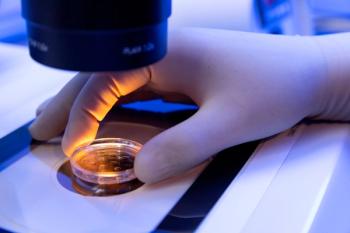
Preclinical testing at The Ohio State University found Telomir-Zn inhibited growth of canine and human osteosarcoma cell lines, prompting the company to explore a possible in-vivo study in dogs with naturally occurring tumors.
Columbia, Mo. -- Researchers at the University of Missouri (MU) College of Veterinary Medicine have started a clinical trial on a human oncology drug which may prove useful in the battle against canine cancer. The drug Attaxol?, which is made by CritiTech in Lawrence, Kan., could be ideal for use in dogs with naturally occurring cancer, says Dr. Kim Seltin, assistant professor of oncology at the MU College of Veterinary Medicine.
Columbia, Mo.
-- Researchers at the University of Missouri (MU) College of Veterinary Medicine have started a clinical trial on a human oncology drug which may prove useful in the battle against canine cancer. The drug Attaxol™, which is made by CritiTech in Lawrence, Kan., could be ideal for use in dogs with naturally occurring cancer, says Dr. Kim Seltin, assistant professor of oncology at the MU College of Veterinary Medicine.
“Cancer is one of the most common causes of death in dogs,” Selting says. “This study is important because most chemotherapy drugs available to people can be used in dogs, except for the highly successful taxanes that can keep cancer from proliferating throughout the body. The Attaxol™ formulation is built specifically for dogs and could allow taxanes to be used by veterinarians.”
MU veterinarians will assess the cancer response of dogs in the study, using and earlier safety study to determine a safe starting dose. This new study, expected to take about two years, will be used primarily to determine an optimal dose for canine use, according to the school. The Morris Animal Foundation is funding the study through a two-year grant. Joining Seltin on the project are Carolyn Henry, professor of veterinary oncology and director of the Scott Endowed Program; Sandra Axiak, assistant professor in veterinary medicine and surgery, and Charles Decedue, senior research fellow at CritiTech.