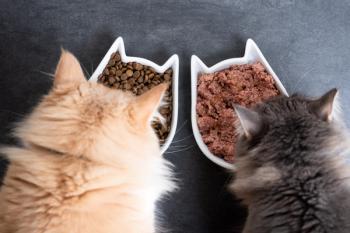
A new analysis detected heavy metals, glyphosate, and plastic-related chemicals in nearly all of the cat foods tested. This slideshow breaks down the findings, what they may mean for cats, and what remains unclear.
Why do cat wag their tails? Annie Valuska, PhD, explains this behavioral cue and more in a dvm360 interview.
What does it mean when a cat wags its tail? In a dvm360 interview, Annie Valuska, PhD, principal scientist for the pet behavior team at Purina, discussed common behaviors that cat owners may typically see and what they can mean. The interview also discussed canine behaviors as well as which companion animal behaviors sometimes lead to pets being surrendered by their owners or euthanized.
In
RELATED VIDEO:
The following is a transcript of the video:
Annie Valuska, PhD: Wagging tails are often misunderstood in cats as well [as dogs]. I think people take what they've learned or think they've learned about dogs and [think] ‘hey, a wagging tail is happy,’ which, as
Another sign you can look for that can indicate that physiological arousal and maybe that the cat needs some space, is the cat's ear position, as those ears start to rotate towards the side and back of the head, which the internet calls ‘airplane ears’. Ears to the side and pointing towards the back is another sign that the cat might be feeling a little bit overwhelmed, overstimulated. Probably not a good idea to pet them at that time. Whereas if the ears are pointing forward, like a cat Halloween headband, and there's a lot of other body language indicating that the cat is feeling calm, like that tail being up in the air, maybe the tip of the tail swishing back and forth, the cat being willing to take up a lot of space, seeming very relaxed, their eyes in a nice neutral position, that is a cat that is probably safe to approach and open to some pets.
RELATED VIDEO:
Reference
Crossley KC, Valuska A. Interpreting feline behaviors (Part 1). dvm360. December 17, 2025. Accessed December 19, 2025. https://www.dvm360.com/view/interpreting-feline-behaviors-part-1-