Researchers using the same Dog Aging Project data found substantially lower rates of aggression, fear, and separation-related behavior, but say the true prevalence remains uncertain.
Annie Valuska, PhD, principal scientist for the pet behavior team at Purina, discusses one of the most common ways for dogs to convey emotions.
How should canine behaviors be interpreted? In a dvm360 interview, Annie Valuska, PhD, principal scientist or the pet behavior team at Purina, discussed common behaviors that dog owners may typically see and what they can mean. The interview also discussed feline behaviors as well as which companion animal behaviors sometimes lead to pets being surrendered by their owners or euthanized.
In this video, Valuska discusses one of the most common canine behaviors: tail wagging. Although tail wagging may convey expressions of happiness, it can also show other emotions including those that signal a dog’s need for space. Valuska shares signs seen in tail wagging including other movements that accompany it, that can be interpreted.
RELATED VIDEO:
The following is a transcript of the video:
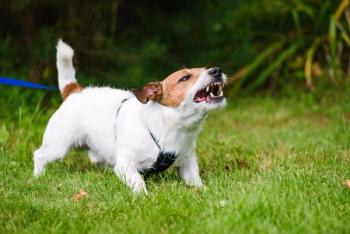
Annie Valuska, PhD: There are a lot of canine behaviors that are frequently misinterpreted. The big one that I'm always telling people about is a wagging tail. A lot of people assume that if the dog's tail is wagging, it means it's a happy dog, and that really could not be further from the truth. When you see a wagging tail, really, all that means is that something has the dog's attention, and you have to look at what that wag looks like and other body language cues to figure out how the dog feels about whatever has its attention.
So if you see a low, sweeping, loose, wiggly wag with lots of happy body language. You know, the ears are in a neutral posture, the mouth is nice and relaxed. They might even have that nice smile going, and that whole body is kind of wiggling. That's generally a happy dog. But as the tail starts to get a little stiffer, that wag gets a little tighter, maybe that tail becomes elevated over the back, and often you'll see other body language indicating that the dog is feeling some tension. They'll be standing much stiffer and still. Those ears might be perked forward; the mouth will often be in a hard line. All of that can be accompanying a wagging tail, but that kind of Tail Wagon body language is certainly not indicative of a happy, friendly dog.
RELATED VIDEO:
Reference
Crossley KC, Valuska A. Interpreting canine behaviors (Part 2). dvm360. December 15, 2025. Accessed December 19, 2025. https://www.dvm360.com/view/interpreting-canine-behaviors-part-2-