Researchers using the same Dog Aging Project data found substantially lower rates of aggression, fear, and separation-related behavior, but say the true prevalence remains uncertain.
Annie Valuska, PhD, principal scientist for the pet behavior team at Purina, discusses common ways for dogs to convey a calming signal.
How should canine behaviors be interpreted? In a dvm360 interview, Annie Valuska, PhD, principal scientist or the pet behavior team at Purina, discussed common behaviors that dog owners may typically see and what they can mean. The interview also discussed feline behaviors as well as which companion animal behaviors sometimes lead to pets being surrendered by their owners or euthanized.
RELATED VIDEO:
The following is a transcript of the video:
Annie Valuska, PhD: Other behaviors that are commonly missed, that can have an impact on human welfare and can be associated with dog bites, is a type of a behavior known as a calming signal. And these can be really subtle behaviors that dogs give that are essentially asking for space. They are indicating that they're not feeling very comfortable with what's happening. And again, they're giving these kind of subtle signals that they would like some more distance. And so once you know what to look for watching videos of particularly children and pets on the internet becomes a lot more difficult because you realize that the dogs actually look pretty stressed.
So these are behaviors like panting when they haven't been exerting themselves. You'll see a lot of really hard blinks. You'll see them avoiding eye contact. You might see a raised paw in the air. They may be turning their head or their body away from the person that's trying to give them attention. You might see lip licking. You might see them licking the person. That is sometimes called a ‘kiss’ to dismiss. That can be a way for them to ask for a distance.
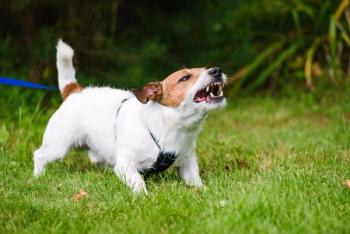
You might also see air snapping or growling as it starts to escalate. But some again, some of those more subtle signs you'll often see many of them happening at the same time, and it is a calming signal with the dog saying they're not wild about how that person is interacting with them, and they would like a little bit more space.
RELATED VIDEO:
Reference
Valuska A, Crossley KC. Interpreting canine behaviors (part 1). dvm360. December 12, 2025. Accessed December 12, 2025.