New leadership moves, recognition, and achievement.
This groundbreaking achievement was made possible by veterinarians from Chulalongkorn University’s Faculty of Veterinary Science.
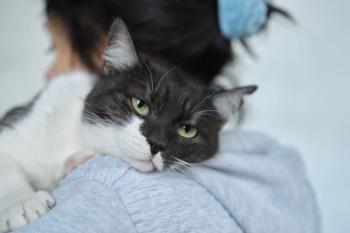
Veterinary professionals at Chulalongkorn University’s Faculty of Veterinary Sciences in Bangkok successfully performed a pacemaker implantation on Pepsi, an 8-year-old domestic shorthair cat, making it the first in Thailand’s history.
Pepsi experienced frequent fainting spells up to 4 times a day, caused by severe cardiac arrhythmia. She was initially brought into the Chulalongkorn Small Animal Teaching Hospital with lethargy, weakness, and sudden collapse, accompanied by muscle stiffness and occasional vocalizations.2 During primary testing, it was noted that she possibly had a neurological or cardiac issue, but medication did not improve her condition. After being examined further, she was diagnosed with a severe cardiac arrhythmia.
Pepsi’s condition stemmed from a blockage of electrical signals between the heart’s chambers, which prevented blood from reaching the brain. In feline patients, these arrhythmias are rare and often occur in older animals. Pepsi’s team was able to confirm through 24-hour Holter monitoring, which is a more accurate tool than standard electrocardiogram testing.1
“Normally, a cat’s heart beats about 140 to 220 times per minute, regulated by natural electrical impulses,” Anusak Kijtawornrat, DVM, PhD, said.2 “When the signal is blocked, the heart stops contracting effectively, causing syncope. Such cases are uncommon—around 10% of feline cardiac cases—but are more prevalent in older cats.”
For feline patients, implanting a pacemaker can be challenging because cats have smaller veins and thinner heart muscles, unlike canine patients in whom the pacemaker lead can be inserted through the neck. Because of these challenges, the standard technique is too risky and could potentially puncture the patient’s heart.
The surgical team needed to open the cat's chest cavity between the ribs to access the heart directly. They then attached the pacing lead to the heart’s surface and connected that to a small generator implanted under the abdominal muscles.2 The procedure in its entirety took 1 hour and involved a multidisciplinary team working in close coordination.
“This method is more complex but safer for small animals,” Kijtawornrat said.2 “It was an improved technique from our previous feline case just 2 weeks earlier. Switching from a diaphragmatic approach to a thoracic one made the implantation easier and more accurate.”
Pepsi’s pacemaker device is the same model that is used in humans. It was customized with appropriately sized leads, and for Pepsi, the pacemaker had been donated and sterilized for reuse. Following the procedure, Pepsi made a quick recovery. She no longer faints, she interacts energetically with her owner and the other cats at the home, and she eats normally. She visits the hospital every 3 months for follow-ups but overall lives a normal life.1
Feline patients who undergo this surgery can live a normal life, albeit with some minor restrictions. Owners whose pets have had this procedure must inform their veterinarians before MRI scans. A minor lead dislodgement occurs in approximately 1% to 2% of patients, but it can be corrected surgically.2
Although this procedure has been practiced outside of Thailand for years, it is rare in Thailand due to the specialized training requirements, diagnostic challenges, and equipment costs.
“This success showcases Thailand’s readiness to perform advanced procedures at an international level,” Kijtawornrat said. “Chulalongkorn’s veterinary faculty now has the expertise, technology, and multidisciplinary collaboration to match global standards.”
Kijtawornrat urged clients to seek immediate veterinary care for their pet if they show signs of weakness or fainting.
Reference