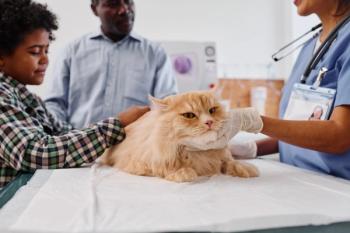
The Positive Preventive Veterinary Experience Protocol approach combines environmental changes, pain-reduction techniques, sensory distraction, and positive reinforcement to make preventive visits less stressful for pets and their owners.
The authors discuss feline behavior and how negative labels can influence patient care.
A cat that hisses during an exam is not being difficult. A cat that shuts down in the carrier is not being dramatic. A cat that growls when their abdomen is palpated is not being mean; it is quite possibly in pain.
These are not personality traits; they are forms of communication. And how we respond to them—in the moment, in the medical record, in team debriefs, and increasingly on social media—is shaped more than we might expect by the words we reach for first.
In the high-stress environment of veterinary hospitals, teams often face emotional and physical challenges, from dealing with life-and-death decisions to managing aggressive or fearful animals. Cats, with their distinct behavioral, sensory, and emotional needs, can be more easily misunderstood when their signals are misinterpreted. To cope with this, veterinary professionals might resort to humor or casual language, use terms like “spicy kitty” or “demon cat,” or even joke about gaslighting felines to manage their behavior. Although this might seem like harmless banter to lighten the mood, it can inadvertently undermine the perception of care in the clinic and have broader negative effects on both team members and pet parents.
With the rise of veterinary influencers, social media content can easily drift toward dark humor or highly engaging moments rather than education that deepens understanding. Platform dynamics often reward content that provokes quick reactions, which can unintentionally normalize language or portrayals that do not reflect the professionalism, empathy, and clinical respect we want to model. Over time, this can influence not only public perception but also the culture of care within the profession.
Social media algorithms often reward high-arousal content,1 and human attention is drawn to emotionally charged material. People have a negativity bias, meaning they are more likely to notice and react to content that feels threatening, surprising, frustrating, provocative, or rooted in schadenfreude (amusement at another’s misfortune). On social media, those reactions often translate into quicker engagement through likes, comments, and shares. In feline medicine, this can create an environment where negative or caricature-driven portrayals of cats gain more visibility than respectful, behavior-based education. Negative cat content often activates the following response patterns:
Studies on social media consistently show that negative or controversial content generates higher engagement than neutral or purely positive posts, as it often prompts discussion, debate, or emotional reactions, even when framed humorously.2,3 In veterinary hospitals, this can be further reinforced when peers engage with or normalize the content, allowing certain portrayals or interpretations to spread more easily. Behaviors that may reflect fear, environmental stressors, or a need to adjust the handling approach can become framed as inherent cat characteristics. And the standard quietly shifts. This is an opportunity for practices to be proactive by establishing social media guidelines that address patient language, clarify what requires consent, and give teams a shared framework for navigating this space thoughtfully.
We know veterinary medicine is a demanding field, with team members frequently exposed to trauma, euthanasia, and physical risks such as bites and scratches from frightened cats. Dark humor or lighthearted labels can serve as a psychological buffer, helping teams to bond and process difficult experiences. For instance, referring to an aggressive cat as spicy softens the reality of a stressful encounter, turning a potential injury into a shared joke among colleagues. This type of language emerges from the need to maintain sanity amid compassion fatigue and burnout, common issues in the profession.
Such language may be intended to portray cats in a playful, anthropomorphic way, making difficult moments feel lighter or less daunting. In high-stress clinical work, humor can sometimes function as a coping mechanism, offering brief emotional relief. However, when that humor diminishes a cat’s fear, stress, or pain in a caricature, it can undermine the empathy, reflection, and clinical precision needed to support the cat, its caregiver, and the team.
However, what begins as a coping tool can move into territory that works against the care we are trying to deliver. When language reduces a patient to a caricature, it can quietly shape how the next team member approaches that cat. Terms such as demon cat, even when used jokingly, may influence expectations before the interaction even begins. When a cat is repeatedly labeled as aggressive or difficult without context, pain, fear, or environmental factors may be overlooked, and the handling approach may not support the cat or the team.
This language can also affect public trust. Feline caregivers, already anxious about their cat's visit, may overhear staff banter or see similar messaging reflected in clinic content. What may be intended as humor can instead make the clinic feel less professional, less compassionate, and less emotionally safe. For cats, who depend on low-stress environments and careful interpretation of subtle signals, that atmosphere can heighten fear and work against better care.
The same effects extend to team well-being. Although humor can offer short-term relief, when dark or cynical language becomes the default, it may mask deeper issues such as stress, fatigue, or moral distress, potentially worsening mental health problems in a field already experiencing high suicide rates. When language replaces reflection, it becomes harder to strengthen handling, communication, and care.
When communication challenges or unresolved tension exist within a veterinary team, they can contribute to stress that extends beyond individual relationships. Over time, this can affect patient care, the caregiver experience, team morale, retention, and the practice’s overall health. In some cases, that strain may also find expression in public spaces, including social media.
Ultimately, the words we choose in veterinary medicine are more than casual shorthand; they shape culture, influence behavior, and directly impact the animals entrusted to us. Cats are not adversaries, plotters, or punch lines; they are sentient patients navigating fear, pain, and unfamiliar environments with the tools that evolution gave them. By moving away from derogatory or mocking labels and toward precise, respectful, and empathetic language, veterinary teams can reduce patient stress, foster genuine compassion among staff, and present a more professional, trustworthy face to clients.
This shift doesn't mean abandoning humor entirely. Veterinary work is demanding, and shared laughter remains an important part of team connection. However, it does mean being intentional, ensuring humor never diminishes a feline’s experience or replaces clinical reflection, prioritizing cat-friendly handling techniques to reduce “spicy” encounters, and openly discussing how language affects morale, care quality, and team well-being.
The veterinary profession is already a leader in many areas of animal welfare innovation; for example, the Feline Veterinary Medical Association’s Cat Friendly Practice program, Fear Free certification, and behavior-focused continuing education. Extending that same commitment to mindful communication is a natural next step. When we describe cats accurately—as fearful, in pain, resource-guarded, or simply expressing natural boundaries—we honor their experience and elevate the standard of care.
In the end, the goal is not simply to move through the challenges of the day; it is to build hospitals where cats feel safer, teams feel supported, and clients feel confident that their beloved companions are treated with dignity from the moment they arrive. When language reflects respect rather than ridicule, it strengthens trust, supports better medicine, and reinforces a culture of compassion that extends beyond the exam room into every public-facing space.
References