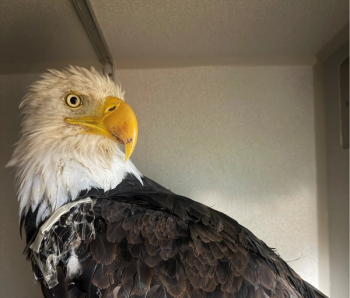
An atypical presentation of the virus led to internal bleeding, anemia, and sepsis in the famous bald eagle whose illness had puzzled her care team for weeks.
A public health investigation documented the transmission, but risk continues to remain low.
Last spring, investigators with the CDC and the Los Angeles County Department of Public Health (LACDPH) interviewed individuals that were exposed to highly pathogenic avian influenza virus (HPAI) from cats that consumed an infected raw animal product. Those who encountered the infected cats were invited to receive serologic testing and among the 25 people who volunteered, one asymptomatic veterinary professional had serologic evidence.1
A study was conducted with 19 cats who had become sick following the consumption of commercially purchased raw milk, raw meat, or raw pet food between November 2024 and January 2025. Out of the cats, 9 came back positive for positive for H5N1 clade 2.3.4.4b, genotype B3.13, which is what most human H5N1 infections have involved.2 The other 10 cases were detected through veterinary reports, commercial laboratory reports, or routine influenza A reverse transcription-polymerase chain reaction (RT-PCR) testing of brain tissue that was collected from the euthanized cats.
RELATED:
The LACDPH interviewed 11 pet owners living in 5 households with affected cats, 126 from 10 veterinary practices were 14 of the affected cats were evaluated, one person from an animal control agency involved in the transportation of the carcasses of the euthanized cats, and one person from a local health department. Everyone was monitored for symptoms initially and despite 30 reporting of the 139 people reporting flu-like symptoms, no one received a positive RT-PCR test.2
Months later, public health officials with the CDC and the LACDPH invited the people who were exposed to the cats to participate in a H5N1 serosurvey, and out of those 25 people, antibodies were detected in the serum from one of the volunteers. However, researchers stated that the person who had the antibodies—who was a veterinary professional that was not wearing personal protective equipment over their mouth or eyes during the exposure—did not report flu-like illness after exposure, and did not report any other known risk factors for the infection.
The cat that exposed this individual also received care at 4 different veterinary practices the week before the positive result from the RT-PCR feline respiratory panel, which is contributed to the lack of awareness of the veterinary staff member’s exposure risk. The researchers also stated that after the initial positive result was available, the public health significance was not communicated to the other veterinary staff members or the pet owner until LACDPH contacted them.
Following the positive result, the veterinary professional remained asymptomatic and received a negative influenza A virus test result 7 days after exposure to the cat. Because this person was asymptomatic, no interview was conducted at the time of the exposure and the information surrounding the nature of the interaction between the infected cat and infected professional was not available.
RELATED:
“Although the precise nature of exposure in the veterinary clinic is not known, this finding raises concern about zoonotic transmission of influenza A(H5N1) virus from domestic cats to humans and reinforces the need for heightened awareness among pet owners and veterinary professionals, as well as strict infection control practices in veterinary settings. The occurrence of this exposure during a seasonal influenza A(H3N2) virus outbreak highlights the risk for co-infection and potential for reassortment between seasonal and avian influenza viruses, which could lead to the emergence of a novel viral strain capable of sustained human-to-human transmission and pandemic potential,” the researchers stated in their findings.2
The researchers are also advising pet owners to not feed raw animal products to cats, and that veterinary professionals should be aware of the infection risks and use proper personal protective equipment. They also stated veterinary professionals should adhere to recommended infection control practices to reduce the risk of zoonotic transmission of influenza A.
References