





How can team members filter the friends on their practice's Facebook page to ensure nothing questionable is associated with the professional page?
How can team members filter the friends on their practice's Facebook page to ensure nothing questionable is associated with the professional page?
Survey reveals some younger adults prefer dogs to kids.
Don't be blinded by the light.
Spray pets down to spiff them up.
I'd like to increase our practice's social networking efforts but the practice owner dismisses it as a waste of time. How can I get her on board?
Now you can fill prescriptions on the fly.
I love my career as a veterinary technician, but I'm no good at reinforcing my veterinarian's recommendations to clients. I feel like a salesperson, and I have no confidence in that role. How can I improve?
Learn the tell-tale signs of a poisonous veterinary practice and get the tools to clean house.
Learn how to distribute your employees evenly.
Send a clear message to your clients about the importance of parasite prevention.
Highlights from the 2011 North American Veterinary Conference

One of the upsides of working with veterinarians, as far as I'm concerned, is that when you all get together a few dogs also find their way to the meeting. And this year's NAVC in Orlando, Fla., was no exception. These are the dogs I was lucky enough to meet.
Majority of pet owners say their dog or cat can predict bad weather, new.
Site shares success stories and tips for dog owners.
Use this sample no-gossip policy to outline your practice's expectations in an employee handbook.
Use this loophole to negate vauge or exclusive bylaws.

The votes are in. See which pet you chose to be DVM Newsmagazine's 2011 small animal calendar cover model.
Show your support for spay and neuter programs?your pet will love you for it.
Administration is looking into beverages that contain high amounts of caffeine and alcohol.
Veterinary practices commonly see poisonings in large and small animals due to rodenticide ingestion.
Animals serve many roles when it comes to energy and the planet. Their energy fields are far more expansive than ours – a dog's energy field is approximately ten times that of a human's. A horse's field will encompass a large arena, and a cat's will fill an entire property. The energy of wildlife is especially important to the survival of the planet. They create a frequency that maintains the vibrational health of the planet, and all creatures on it.
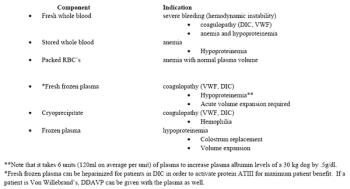
Transfusion of blood products is an important lifesaving measure performed frequently in veterinary medicine. The decision to transfuse should not be taken lightly: it is costly and can frequently be clouded by complications. Blood transfusion therapy should be limited to the treatment of anemia, hypoproteinemia, coagulation disorders, or hemodynamic instability.
The role of the veterinary technician in traumatic emergencies is pivotal to the survival of the incoming patient. The physical exam must be quick, thorough, and concise. Utilization of all technical skills from careful visualization, palpation, and auscultation is of the utmost importance.
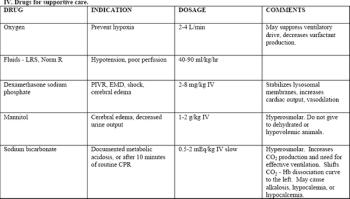
Anesthetic arrests and patients with reversible conditions should be resuscitated aggressively. Reasons for such a poor success rate include severity of underlying disease, delay in the recognition of CPA, and delay in delivery of appropriate therapy.
Energy to most of us is something that turns lights on and off and runs our cars. We don't realize we are made of energy, and that we interact with other humans and animals on an instinctive, energetic basis. Having an awareness of how we affect others allows us to be better colleagues, practitioners and care givers.
As veterinary professionals, we have been trained to create a practice environment that focuses on maintaining cleanliness and reducing disease transmission. While these are vital to the health of our staff and patients, we must also consider other aspects of healing. The emotional and energetic atmosphere our clients, staff and patients are exposed to does influence their physical, mental and behavioral well being. It is our obligation to provide a setting conducive to improving staff work life and patient health.
Capnographs are used to measure ETCO2. Most capnographs use infrared light absorption to measure CO2 levels. Capnographs allow for continuous monitoring of the patients CO2 levels. ETCO2 is reflective of the patients PaCO2 usually within a 5mmHg gradient, this gradient can be affected by pulmonary perfusion.
Idiopathic inflammatory bowel disease (IBD) is defined as gastrointestinal signs (vomiting, anorexia, diarrhea) greater than 3 weeks duration, with incomplete response to dietary trials and anthelmintics, biopsy findings of mucosal inflammation, and clinical response to immunomodulatory therapies.
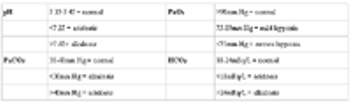
Blood gas analysis provides information about respiratory function and acid/base status. This information is vital in determining and monitoring treatment of patients with primary or secondary respiratory disease and/or metabolic disturbances. Blood gas (BG) can be assessed on arterial (ABG) or venous (VBG) samples, although oxygenation assessment is made on arterial blood only.
Veterinarians are faced daily with the therapeutic challenge of treating species and conditions for which no approved drug exists. Other challenges include the differing needs of patients that have species-specific requirements, as well as individual needs for palatability and formulation.