

Dr. Kathryn Primm sees an aversion to the moniker if not the medicine
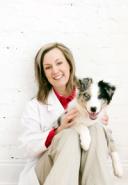
Kathryn Primm, DVM, owns Applebrook Animal Hospital in Ooltewah, Tennessee, but has a growing career as a writer, a speaker and an online voice for veterinarians and pet owners alike.
She has written and contributed content to many outlets for veterinarians and pet lovers, including the consumer magazines Womans Day and Prevention as well as Veterinary Economics, dvm360, Firstline, Vetted and dvm360.com. Her regular "Ask A Vet" column is featured on iheartdogs.com and iheartcats.com, reaching more than 3 million viewers. Dr. Primm is the author of Tennessee Tails: Pets and Their People
She was also the nation's first Fear Free certified professional.
Dr. Kathryn Primm sees an aversion to the moniker if not the medicine
Its a huge movement in veterinary medicine, but getting started is surprisingly simple.
Dr. Kathryn Primm says you can get the clients you want and only the clients you want.
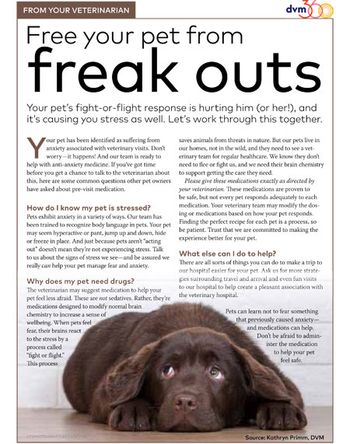
Your patient's fight or flight response has kicked in. Help veterinary clients understand why drugs might be the answer.
Another set of guidelines? Yes! This update will help keep dogs that frequent your veterinary practice footloose and disease-free.
First, I thought the revenue problem was the new associate at my veterinary practice. Yeah, it wasn't.
One Montana veterinarian was determined to get to the bottom of the cause of canine illness in his hospitals.

I scored four appointments for $20. That's pretty good marketing ROI. An old-fashioned thank-you, in the snail mail and personalized, did the trick.
After 20 years in veterinary practice, I like to think back on the first angry encounter I had with a pet ownerand how Id do things differently.

Veterinarians and pet owners should monitor patients for signs of respiratory disease, isolate affected animals at least 21 days.
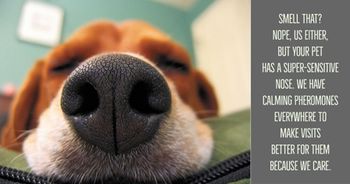
Get these image-text combos in front of pet owners eyeballs to help them learn the ins and outs of Fear Freeand schedule a low-stress visit with your hospital.
Striking a balance between staff comfort and overhead cost is key in your veterinary hospital's protocol plan.

Hey, what's it like outside today? Combine the season with dog breed considerations for a fantastic fusion of healthcare reminders for your veterinary clients.
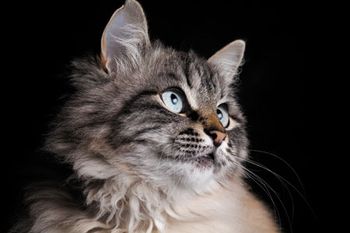
A recent study suggests that cats presenting with higher blood pressure when diagnosed with hypertension could benefit from greater doses of amlodipine.
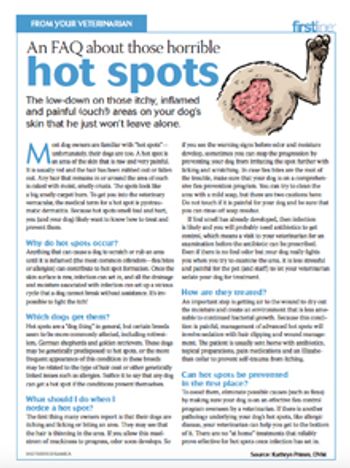
You hate to see these painful areas in your veterinary patients. Pass on this handout to help your clients overcome themand prevent them.
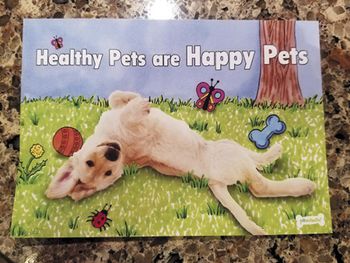
Inexpensive postcards and personalized messages from Mom beat computer-generated welcome packets any day to wow new pet owners in our area.

Veterinary practice may not be easy, but follow these tips to find some balance.

Talk of acupuncture is popping up here and there, and veterinarians want to know more. A new study compares it with a more traditional method of managing hip dysplasia pain.

Hush, hush. Keep it down now. What might pet owners might accidentally overhear and misinterpret at your veterinary practice?
Dying to work with cats, dogs, horses and other animals? Or dying because of them? Consider these strategies to live with your condition and still do the work you love.
This doctor kept it all straight, even after a bonk on the head.

Veterinary orthopedic surgeon Dr. David Dycus weighs in with client communication considerations for surgery vs. orthotics.

When it comes to obtaining thoracic radiographs of coughing dogs, diagnostic imaging specialist Dr. Rachel Pollard has tips for improving your image.
These new and improved guidelines will help shelter veterinarians and non-shelter veterinarians alike.
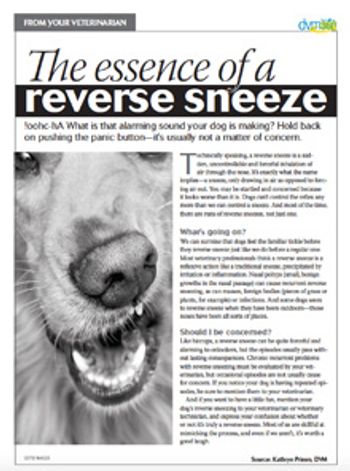
Have veterinary clients alarmed by this clinical sign? Alleviate their fears with this handout.
Study investigates owner perception of management of dogs with nonsurgical vs. surgical methods, including outcomes, complications and after care.

A new study looks at how veterinarians can comfortably step in to facilitate weight loss, borrowing from successful human programs to help.
Live streaming on Facebook or your website gives your doctors or technicians valuable face time with current and potential clients to answer general questions in a different way than articles or blogs do.

Are you an "owner type"? Find out right here. Here's what I struggle with and what I truly enjoy about owning a veterinary hospital.

Without cold, hard lab numbers and clear scientific proof, diagnosing neurologic conditions in your veterinary patients can be tough to describe, and without owner buy-in, they can be tough to treat. However, a recent review provides a starting point for providing clients with objective evidence.