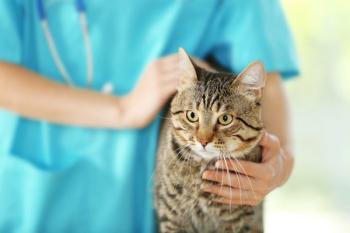
Updated international guidelines for feline infectious peritonitis (FIP) suggest that a 42-day course of oral GS-441524 may be as effective as the traditional 84-day protocol for many cats. The recommendations also incorporate the latest evidence on remdesivir and molnupiravir, reflecting the rapid evolution of antiviral therapy for a disease once considered almost uniformly fatal.1,2
The authors say a shorter treatment course could reduce costs, improve owner adherence, and expand access to care. They also highlight the importance of monitoring cats after recovery, as reports of complications, including myocarditis, immune-mediated hemolytic anemia, gastrointestinal disease, and other conditions, continue to emerge.
Lone star tick expansion brings renewed attention to alpha-gal syndrome
The lone star tick continues to expand into new parts of the United States, bringing growing attention to alpha-gal syndrome, a red meat allergy that can develop after a tick bite. The CDC estimates that as many as 450,000 Americans may be living with the condition, while researchers in states like Connecticut have documented sharp increases in lone star tick populations.3
Although alpha-gal syndrome affects people rather than companion animals, the tick's expanding range reflects broader changes in vector distribution with implications for both human and animal health.
A new Cornell University study found that as dogs are bred smaller, their skulls change shape rather than just shrink. Researchers reported that rounder skulls were strongly associated with breeds predisposed to syringomyelia, a painful neurologic disorder. For every 2.2-lb decrease in body weight, the odds of belonging to a syringomyelia-predisposed breed increased by approximately 25%.4
The authors say the findings do not establish that skull shape causes the disease. However, the findings may help veterinarians better interpret diagnostic imaging and improve understanding of which patients may be at greater risk.
References
- Tasker S, Spiri AM, Hartmann K, et al. Update on treatment of feline infectious peritonitis: European Advisory Board on Cat Diseases (ABCD) Guidelines. Viruses. 2026;18(4):452. doi:10.3390/v18040452
- Won C. New FIP guidelines highlight available antivirals, shorter treatment course. American Veterinary Medical Association. Published June 23, 2026. Updated June 26, 2026. Accessed June 26, 2026. https://www.avma.org/news/new-fip-guidelines-highlight-available-antivirals-shorter-treatment-course
- Fenster JN. Connecticut’s lone star tick population explodes, raising concern about meat allergy. CT Insider. June 23, 2026. Accessed June 26, 2026. https://www.ctinsider.com/connecticut/article/connecticut-lone-star-ticks-alpha-gal-meat-allergy-22317292.php
- Mazzolini C. Cornell study links cranial shape and body weight to syringomyelia risk. dvm360. June 25, 2026. Accessed June 26, 2026. https://www.dvm360.com/view/cornell-study-links-cranial-shape-and-body-weight-to-syringomyelia-risk