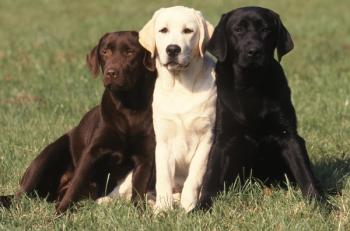
A UC Davis study is investigating why Labrador retrievers develop copper-associated hepatopathy and whether blood-based tools could help identify the disease before serious liver damage occurs.
A new study finds that miniaturization reshapes the canine skull rather than simply scaling it down, with rounder crania clustering in breeds predisposed to syringomyelia.
A new retrospective study from Cornell University College of Veterinary Medicine (CVM) reports that as dogs are bred smaller, their skulls change shape rather than simply scaling down. As a result, the breeds prone to those changes overlap substantially with breeds predisposed to syringomyelia, a painful spinal cord condition. The study, "Miniaturization in Domestic Dogs: Relationships Among Cranial Shape, Head Indexes, and Body Weight," was published in a recent issue of Veterinary Radiology & Ultrasound.1
"We wanted to better characterize what happens to skull shape when you shrink dogs down so we don't misdiagnose normal findings as pathologic processes," said Peter V. Scrivani, DVM, ACVR, a professor in the Department of Clinical Sciences at Cornell University and the study's corresponding author.2
The researchers identified the medical records of 852 dogs of varying breeds who had received CT scans of their heads at the CVM and did not have a known cranial disease. Study co-author Ian Porter, DVM, a former resident at the CVM who is now an assistant clinical professor of diagnostic imaging, performed a quantitative analysis of those images, calculating a set of head indices from the widths and lengths of the skull, cranium, and face.2
The team examined how body weight (used as a proxy for miniaturization) related to cranial shape, sorting dogs into categories ranging from archetypal to extreme round, and to 3 quantitative measures: the cranial index, skull index, and facial index. Dogs were also stratified into 2 groups: those of breeds predisposed to syringomyelia and those of breeds not considered at risk.
"This study provides strong evidence that when dogs get smaller, they don't reduce in size proportionately or isometrically; they actually have a recognizable shape change, which is allometric scaling," Scrivani said. "We're not just looking at a miniature wolf-like skull. We're actually seeing that, as the dog shrinks, the cranium undergoes ballooning of the vault that holds the brain, creating a rounder shape."2
Across the full sample, rounder cranial shapes were significantly associated with lower body weight, indicating that cranial morphology does not always scale proportionately with miniaturization—smaller dogs more frequently had rounder crania. The head indexes generally tracked together and rose as body weight fell, with some divergence in skull and facial measures among breeds predisposed to syringomyelia.1
Similar shape changes are observed in dogs with altered fluid balance in the central nervous system, such as hydrocephalus and syringomyelia, a painful condition in which fluid-filled cavities form in the spinal cord. The data showed that breeds predisposed to syringomyelia have a high cranial index regardless of nose length and weigh less than 44 lb. The condition is most common in breeds such as Cavalier King Charles spaniels, affenpinschers, Brussels griffons, Chihuahuas, and Pomeranians.2
Dogs from breeds predisposed to syringomyelia more frequently had rounder crania, weighed less, and showed higher cranial, skull, and facial indexes than their lower-risk counterparts—all differences the authors reported as statistically significant. In the regression analysis, lower body weight and higher cranial index each independently raised the odds that a dog belonged to the predisposed group, and of the 3 head measures, the cranial index showed the strongest relationship.1
"For every 2.2 lb of body weight that you reduce, there's a 25% increase in the risk of being in a group that's going to get syringomyelia," Scrivani said, "and the shorter and wider the cranium is, the higher risk you have of being in that group."2
Further research is needed to understand whether bony changes to the cranium and face contribute to syringomyelia or are a consequence of the disease process, Scrivani explained, noting that such understanding could inform treatment and breeding strategies.2
"This is a study on associations," he said. "We don't prove cause and effect, but we identify things that may be related—or that are related, at least statistically—and then we provide different possibilities for why these associations may have been observed."2
The authors note that the findings provide context for interpreting normal variation in clinical imaging, underscoring miniaturization's influence on skull morphology in domestic dogs.1
References