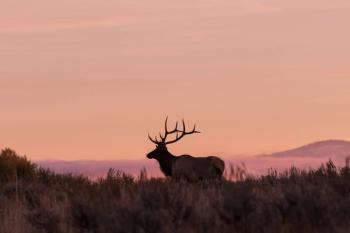
An elk harvested on a Texas game ranch marks the first wildlife case of the parasite in the US, prompting expanded surveillance and a call for hunters and wildlife professionals to report suspicious wounds.
The new USDA resources provide guidance on identifying and reporting suspected New World screwworm for hunters and wildlife professionals, while wildlife surveillance by federal and state officials remains an ongoing challenge.
The US Department of Agriculture (USDA) has launched a new webpage focused on New World screwworm in wildlife as hunting season begins across the country, giving hunters, wildlife professionals, and other outdoor users a centralized place to find information about the parasite and how to report potential cases.1
Wildlife is an important part of the surveillance effort because New World screwworm can infest any warm-blooded animal. Although the USDA classifies cattle, swine, horses, small ruminants and dogs among the animals most often affected, wildlife is also susceptible.2
The new page, available through the USDA’s screwworm website, includes guidance on what to look for in wildlife and how to report concerns. It also features a Wildlife Partner Toolkit with talking points, printable articles, social media posts, web copy, a factsheet, and wallet card. The page also links to resources from the US Department of the Interior, the federal agency responsible for managing and conserving much of the nation’s public lands and wildlife.1
Wildlife surveillance at the federal and state levels can be particularly challenging. In a session at the AVMA Convention earlier this year, Brianna Schur, DVM, MPH, associate deputy administrator of veterinary services, strategy, and policy at the USDA, said officials have used drones and trail cameras to identify wildlife that appears sick or otherwise abnormal, allowing biologists to investigate and collect samples.2 Still, authority over wildlife varies from state to state. Schur noted that these jurisdictional divisions can create gaps in surveillance—gaps that animals do not recognize.
The new wildlife resource page comes as federal officials continue to monitor the reemergence of Cochliomyia hominivorax, a parasitic fly whose larvae feed on living tissue. The USDA confirmed the first New World screwworm case in the United States in nearly 60 years earlier this summer in a calf in Zavala County, Texas. Since then, 47 animal cases have been confirmed in west, southwest and south-central Texas, including cases in cattle, sheep, goats and 2 dogs, as well as 1 confirmed case in a dog in New Mexico.2
For hunters and others encountering wildlife, an unusual wound may be one of the first signs of an infestation. New World screwworm can enter through relatively small openings, including wounds, scratches and tick bites. Unlike the maggots associated with secondary myiasis, a type of fly-larva infestation that typically affects damaged or dead tissue, New World screwworm larvae feed on healthy, living tissue. Infested wounds can become progressively deeper and larger and may have bloody discharge or a foul odor.2
The larvae themselves can provide additional clues. New World screwworm maggots have prominent hooks at their pointed end, which they use to cut into living tissue. At the blunt, posterior end, 2 dark, pigmented breathing tubes, known as tracheal trunks, may be visible inside the body. These features can raise suspicion of an infestation, but they are not a substitute for laboratory identification.3
The adult fly has a blue body, bright red eyes and 3 dark stripes across its thorax. These flies do not bite or sting—the danger comes when females lay eggs in wounds or other openings.3
In an interview with dvm360, Christopher Lee, DVM, MPH, DACVPM, DACVM (Parasitology), urged people who encounter suspicious wounds or maggots not to assume that every maggot is a screwworm.
“Just because you see something crawling across the ground does not mean it is a screwworm,” Lee said.3 “Some labs are being inundated with caterpillars right now.”
Instead, suspected infestations should be reported promptly and specimens should be submitted for testing. Veterinarians can work with state animal health officials or a USDA Area Veterinarian in Charge to submit samples to the National Veterinary Services Laboratories.2,3
The new USDA online wildlife resources are intended to broaden awareness among people who regularly encounter wildlife, and strengthen the reporting network as federal officials monitor the parasite’s spread.
References