A recently shared Pet Poison Helpline case traces how a wild mushroom eaten on a walk left a dog unable to stand within hours, and how the team treated it.
Maya, a 13-year-old canine, gave her family a major headache by eating her owner's eye mask.
Katie Vaughan from Florida decided to purchase a cooling face mask meant to help with headaches and puffy eyes. However, a purchase that was supposed to help her relax had the opposite effect when Maya, her 13-year-old dog, decided she wanted the mask—to eat.
"We have 4 dogs, and 2 are usually the troublemakers," Vaughan said in an organizational release from Pet Poison Helpline.1 "When I found my face mask chewed up, I actually yelled at the wrong dog. When Maya started vomiting up the gel, however, I realized she was the real culprit."
At first, Vaughan was not too concerned because she used to work for a dog training company and was around dogs her entire life. Because of that, she assumed Maya would vomit the mask contents up and be fine, but her husband slept on the couch to be close to Maya just in case. The Vaughans noticed Maya vomited throughout the night and then was “acting wobbly” in the morning, so they called the veterinarian.
"We are finding that some face masks have started to contain a chemical compound called acrylamide, which can be toxic to both pets and people if ingested in a large enough quantity," said Renee Schmid, DVM, DABT, DABVT, a senior veterinary toxicologist and director of veterinary medicine at Pet Poison Helpline.1 "We have seen an increase in the number of suspected acrylamide poisoning calls we receive from seemingly harmless products. National Poison Prevention Month is coming up in March, so we thought it was timely and important to highlight this case for other pet lovers."
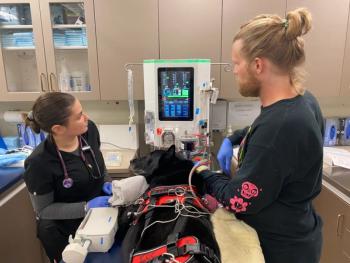
By the time Maya arrived at the Veterinary Emergency Clinic of Central Florida, she had stopped vomiting but was panting and anxious. Pet Poison Helpline advised the team at the hospital that the face mask could have acrylamide, which can cause central nervous system stimulation, depression ataxia, tremor, seizures, liver injury, and gastrointestinal upset. In many instances, acrylamide ingestion can also be fatal.
The Pet Poison Helpline team recommended treating Maya with an antiemetic, intravenous fluids, and continuous monitoring, and blood work was also recommended because of the risk of kidney and liver damage.1 The hospital’s medical team and Pet Poison Helpline discussed specific medications for tremors, seizures, and liver support that would be given based on Maya’s symptom progression.
Pet Poison Helpline is warning clients and industry professionals about the hidden dangers inside products and materials that contain acrylamide. Normally, exposure to cold packs and wraps can cause mild stomach to upset, but after ingestion of cooling migraine wraps, pets were presenting with ataxia, body tremors, seizures, and other severe neurologic signs. In some cases, patients also had liver and kidney failure, and these severe signs were even fatal in multiple cases.
"While there continues to be testing and research as to why this is happening, we have discovered a common link that may be causing the severe poisonings: acrylamide," Schmid said. "Educating the public on the potential risks of these products if ingested by pets is critical in minimizing the number of animals being exposed to this potentially fatal material."
Maya recovered and now, according to her parents, is acting like a 4-year-old again. All pet’s featured in Pet Poison Helpline’s Toxin Tails were successfully treated and fully recovered from the poisoning.
Reference