

News|Articles|June 3, 2026
New World screwworm confirmed in United States, USDA announces
Author(s)dvm360 Staff
Fact checked by: Yasmeen Qahwash
The affected animal is a 3-week-old calf in Zavala County, Texas. To date, APHIS has reported no further detections.
Advertisement
On June 3, 2026, the US Department of Agriculture (USDA) Animal and Plant Health Inspection Service (APHIS) confirmed the detection of a New World screwworm (NWS) in a bovine in Zavala County, Texas.
The affected animal is a 3-week-old calf with larvae identified in its umbilical area. To date, APHIS has reported no further detections.
For veterinarians, the detection marks the moment NWS shifts from an approaching threat to a domestic reality, especially for those practicing in or near South Texas. It arrives after nearly a year of preparation that has reshaped the clinical landscape: A slate of FDA emergency use authorizations (EUAs) now covers dogs, cats, cattle, horses, and other species, so authorized treatment options exist that did not exist a year ago. As a reportable foreign animal disease, NWS also carries surveillance and notification obligations that now move from theoretical to operational for practitioners in affected regions.
"If screwworms establish themselves in the US again, we will be facing a severe and urgent problem in veterinary and public health,” Christopher Lee, DVM, MPH, DACVPM, DACVM (Parasitology), a dvm360 editorial advisory board member, said during a 2025 interview.
NWS is a foreign animal disease reportable to state animal health authorities and the USDA APHIS. The larvae burrow into the living flesh of warm-blooded animals, most often entering through an open wound, and can be fatal to livestock if untreated. The pest affects livestock, pets, and wildlife, and less commonly, people and birds.
The USDA is urging veterinarians and producers in the area to examine livestock and pets for signs of infestation, including draining or enlarging wounds and signs of discomfort. Clinicians should inspect body openings, including the nose, ears, and genitalia, as well as the navel of newborn animals, for larvae and eggs. Laboratory diagnosis is typically made by identifying the parasites under a microscope. The specimen found in Zavala County was sent to the USDA's National Veterinary Services Laboratories in Ames, Iowa, for confirmatory testing.
Advertisement
In a statement posted to social media, US Secretary of Agriculture Brooke Rollins called on producers to remain watchful. "I now call on our producers to be vigilant and watchful," Rollins said. "The most effective thing to do right now is to put eyes on all livestock. If you see anything suspicious, contact your state animal health official."
Any veterinarian who suspects infestation should report it immediately. Although infestation in people is uncommon, anyone who notices a suspicious lesion or suspects infection should seek medical attention.
USDA and Texas officials have activated a unified Incident Command Team with the Texas Animal Health Commission, following the NWS Response Playbook. The response includes a 20-km infested zone around the detection with quarantines, movement controls, and surveillance; expedited release of sterile NWS flies via ground release chambers, in addition to the 4 million sterile flies per week already being released aerially in the area; expanded trapping along the border and outside the dispersal area; wildlife surveillance and management; and targeted local outreach. The USDA's National Veterinary Stockpile is ready to provide treatments, equipment, and logistics support as needed.
The agency said it will work with state departments of agriculture, animal health officials, industry, and producers to mitigate the economic impacts of movement restrictions, including negotiating with trading partners to regionalize trade restrictions on live animals. The USDA also noted that the US food supply is not at risk, as screwworms do not infest meat or other food sources.
A year of preparation
The Zavala County detection comes after nearly a year of regulatory and logistical preparation.
In August 2025, federal health authorities declared NWS a significant potential public health threat, giving the FDA authority to issue EUAs for animal drugs—temporarily clearing products approved for other uses or for use against NWS in other countries.
A cascade of authorizations followed: lotilaner (Credelio; Elanco) for dogs in October 2025—the first-ever animal-drug EUA for NWS—and Credelio Cat for cats in November 2025; ivermectin injectable (Ivomec 1%; Boehringer Ingelheim) for cattle in February 2026, alongside NexGard and NexGard COMBO (Boehringer Ingelheim) for dogs and cats; F10 antiseptic spray and ointment (Health and Hygiene Pty Ltd) for multiple species, including horses and birds, in March 2026; Negasunt Powder (Elanco) for livestock in April 2026; and an expanded EUA for doramectin injection (Dectomax; Zoetis) covering dairy cattle, swine, horses, sheep, and deer in May 2026.
As a result, veterinarians now have authorized treatment options that did not exist a year ago.
On the eradication side, the USDA has relied on the sterile insect technique, opening a sterile-fly dispersal facility in Mexico and another in South Texas, and breaking ground in April 2026 on a larger production facility at Moore Air Base near Edinburg, Texas, expected to produce approximately 300 million sterile flies per week once operational in 2027.
Prior to the current detection, approximately 4 million sterile flies per week were already being released aerially in the affected area, with nearly 8000 traps jointly monitored along the border.
The history of the New World screwworm
NWS (Cochliomyia hominivorax) is not a new adversary for US livestock. The parasite was endemic across the southern US for much of the 20th century before a decades-long eradication campaign—pioneered by the USDA's use of the sterile insect technique—cleared it from the country by the 1960s and from Central America in the years that followed. The approach works by releasing mass-reared, radiation-sterilized male flies that mate with wild females, producing no offspring and collapsing the population over successive generations. That program stands as one of the most successful pest-eradication efforts in agricultural history, and a protective barrier was ultimately pushed south to Panama.
The pest has resurfaced periodically. A 2016-2017 outbreak in the Florida Keys, centered on endangered Key deer, marked the first local US detection in more than 30 years before it was again eradicated. The current threat traces back to 2022, when NWS began advancing northward through Central America and into Mexico, with case numbers climbing steadily toward the southern border—the progression that culminated in the Zavala County calf.
Stay tuned to dvm360 for more coverage of this breaking news story.
Advertisement
Related to this article

With human emergency visits for tick bites at a multiyear high this spring and adult deer ticks most active in cooler months, fall gives veterinary teams a timely opening to reinforce year-round prevention.
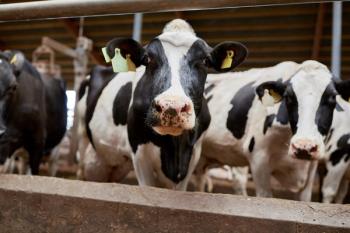
Two herds tested positive after cattle showed signs of illness, marking the state’s first confirmed livestock cases.

A new double-scored tablet lets veterinarians dose firocoxib in quarter-tablet increments, extending the NSAID to dogs as small as 7 lb.

Lean-fed Labrador retrievers had a lower estimated biological age than heavier littermates by midlife. The lean-fed dogs also lived nearly 2 years longer.

Here are this week’s headlines.
Most lost dogs make it back to their families. Research on how they get there, plus a satellite-connected tracker named to TIME’s Best Inventions of 2026, offers practical lessons for veterinary teams and their own pets.

Housing costs and surprise bills are squeezing pet owners, but in a recent survey, relatively few consumers said they would cut back on veterinary care.
Adam Christman, DVM, MBA, returns as host for season 3, featuring a roundup of recent veterinary news and an appearance by guest Steve Mehler, DVM, DACVS.
Advertisement
Advertisement
Trending on dvm360
1
The role of nutrition in extending health span for senior pets
2
Veterinary professionals cite burnout, pay, and corporate ownership concerns in dvm360 survey
3
Purina Life Span Study data used to test biological age tool in dogs
4
Consumers say veterinary care is among the last things they’d cut
5