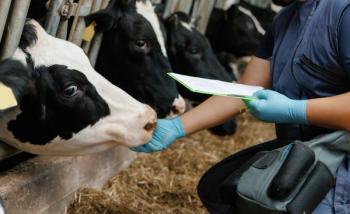

With the award, Utah State University researchers will survey rural veterinary teams about their support staff's needs, then build training and credentialing help around the results.
Workforce fixes need to widen access to accredited education, not work around it, according to the technician association.
The National Association of Veterinary Technicians in America (NAVTA) is opposing the creation of new alternate routes to the veterinary technician credential, as well as the expansion of existing ones.1,2 NAVTA's board approved the 7-page document August 15.2 The association released the statement September 23.1,3
NAVTA supports graduation from a veterinary technology or veterinary nursing program accredited by the American Veterinary Medical Association Committee on Veterinary Technician Education and Activities (CVTEA), a passing score on the Veterinary Technician National Examination (VTNE), and state credentialing as the recognized pathway into the profession.2 The association acknowledges that the profession faces real workforce problems but maintains that "workforce solutions must strengthen, not bypass, the credentialed veterinary technician pathway."1
NAVTA President Jennifer Serling, MVEd, BVSc, AAS, CVT, RVT, VTES, FVTE, told AVMA News that NAVTA supports efforts to strengthen the workforce but that those efforts should "build upon, rather than bypass, the accredited education and credentialing standards."3
The statement follows NAVTA's position in March
NAVTA defines alternate routes as pathways that bypass graduation from a CVTEA-accredited program or a formally reviewed, substantially equivalent one.2 Its examples include experience-only, nonaccredited apprenticeship-style, employer-based, supervised-work-hour, and exam-only pathways, as well as reciprocity provisions that recognize credentials earned through nonequivalent alternate routes in other jurisdictions.2 NAVTA warns that these routes could fragment professional standards, weaken title protection, limit technicians' mobility between states, and undermine long-term protection of the public and patients.2
NAVTA says its position does not target veterinary assistants or forms of training such as on-the-job learning, mentorship, and externships. The statement calls all of these essential parts of workforce development that should lead toward the recognized credentialing pathway rather than replace it. Nor does NAVTA oppose apprenticeship models that are part of a CVTEA-accredited program.2
The statement focuses on future credentialing standards and is not intended to revoke existing credentials. NAVTA supports prospectively eliminating or sunsetting existing alternate routes when state practice acts, regulations, or credentialing rules are opened for review.2 For states establishing technician regulation for the first time, NAVTA does not oppose a temporary, time-limited pathway when one is necessary, provided it is narrowly defined and has a definite sunset date. NAVTA adds that such a pathway should be tied to clear eligibility criteria and include appropriate competency assessment. NAVTA does not support permanent alternate routes, which include those with no definite sunset date and temporary routes that are reopened, extended, or kept open past the initial implementation period.2
In most jurisdictions, candidates must graduate from an accredited program before sitting for the VTNE, according to the American Association of Veterinary State Boards (AAVSB).4 The AAVSB lists 3 states (Alaska, California, and Wisconsin) that allow on-the-job training or alternate degrees for VTNE eligibility.5 The AAVSB also cautions that those routes may limit where candidates can practice.4
According to AAVSB CEO Jim Penrod, as reported by AVMA News, first-time VTNE candidates from CVTEA-accredited programs had a 70% average pass rate in 2025. The 70% figure compares with 59% for candidates from alternative paths, such as nonaccredited programs, and 54% for candidates who trained on the job.3
Washington state has opened a pathway through registered apprenticeship. In May 2022, the state's Veterinary Board of Governors backed an apprenticeship proposed by Cascade Veterinary Clinics as a route to becoming a licensed veterinary technician, which NAVTA publicly denounced.6 The Washington State Apprenticeship and Training Council approved the program in October 2022.7 In 2024, the Board of Governors amended a state rule to recognize registered apprenticeship programs as an approved postsecondary pathway to qualify for veterinary technician licensure exams.8
Earlier this fall, Alaska, the District of Columbia, and Utah had no CVTEA-accredited program, AVMA News reported.3 Matanuska-Susitna College launched Alaska's first veterinary technician program in fall 2024.9 On November 13, the college announced that the program had earned accreditation.10 According to AVMA News, the CVTEA granted the program initial accreditation at its November meeting.3
Utah State University (USU) has a new veterinary technology associate of science program that has applied for initial CVTEA accreditation.11 According to AVMA News, the program becomes eligible for its first full CVTEA accreditation site visit in 2027 or early 2028.3 USU also recently received a 3-year US Department of Agriculture grant for a project aimed at
"The veterinary technician workforce needs investment, not shortcuts," the statement reads.2 Rather than new routes into the profession, NAVTA wants veterinary medicine to clear the obstacles that keep qualified people from enrolling in accredited programs, completing them, passing the VTNE, and earning state credentials. The statement calls for expanding access to accredited programs, including distance, hybrid, and flexible accredited models for working adults and rural communities. Its other recommendations include:
NAVTA also urges better utilization, compensation, and retention of credentialed technicians, along with strong title protection.2
References