Five quick tips for approaching the poisoned patient
- Stabilize first. Confirm patient stability and check vitals before anything else. This sets the baseline for every decision that follows.
- Don't skip signalment. Species, breed, age, and weight change how a toxin behaves. Watch for the ABCB1 (MDR1) mutation, brachycephalic aspiration risk during emesis, and immature hepatic function in animals younger than 12 to 16 weeks.
- Get the full history. Ask about the toxin, route, amount, time since exposure, and any current or past conditions and medications, as each can shift risk and treatment.
- Don't overtreat. Not every exposure is toxic; assuming every case needs aggressive intervention causes unnecessary stress and mismanagement.
- Protect your staff. Use gloves, goggles, and gowns for dermal decontamination, and watch for phosphine gas from phosphide pesticides and sudden aggression in neurologically stimulated patients.
From there, signalment matters more than many clinicians realize. A dog's species, breed, age, and weight can significantly alter how a toxin behaves in the body. Certain breeds carry the ABCB1 (MDR1) gene mutation, which increases sensitivity to drugs like ivermectin. Brachycephalic breeds are at increased risk of aspiration during emesis, making veterinary supervision critical. Very young and geriatric animals may metabolize toxins differently, as hepatic function in dogs and cats is not fully mature until approximately 12 to 16 weeks of age.
Before treatment begins, the veterinary team should collect a thorough patient history, including current and past medical conditions, medications, the specific toxin involved, route of exposure, amount ingested or contacted, and the time elapsed since exposure. Each of these factors can dramatically shift the risk level and treatment plan. Not every exposure leads to toxicity. Assuming every exposure requires aggressive intervention can result in unnecessary stress and mismanagement.
Knowing where the exposure occurred can also reveal confounding factors. It is equally important to consider whether the poisoning was accidental or intentional, as this context can affect the investigation and response.
“[History] is a big one, because they [may] have long-standing medical diseases like cardiovascular disease. And did they get into a cardiovascular stimulant that could worsen that disease? Or are they on medications for any certain type of medical illness that may make the exposure worse from the clinical signs, or maybe it would mask some of the clinical signs?
“Do they have chronic pancreatitis, and they just got into macadamia nuts, or maybe a toxic dose of chocolate? And we have a concern for pancreatitis in those cases, even if we don't necessarily have that toxic concern,” she continued.
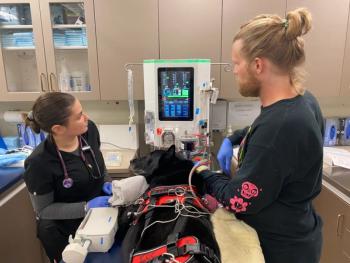
Schmid also reminded attendees that, in the case of a toxin emergency, do not forget about staff safety, as it may not be the most forefront concern when dealing with toxicology cases. In the case of a skin exposure, dermal decontamination requires gloves, goggles, and protective gowns. Staff should also be aware that phosphide pesticides release phosphine gas upon ingestion, which can trigger respiratory symptoms, nausea, and headaches in anyone nearby. Similarly, animals showing neurologic stimulatory signs may display sudden aggression even when they initially appear calm.
“Treat the patient, not the toxin”
Managing a poisoned patient is rarely straightforward, but a calm and systematic approach makes all the difference. By taking the time to fully assess the patient, gather a complete history, and match treatment to the specific toxin and exposure, veterinary teams can avoid missteps that come from reacting before thinking.
“I always say treat the patient, not the toxin. It's really important that we look at the toxin. The toxin guides us, but it's the patient that dictates what it needs. So we may have 5 ibuprofen cases, and we may prove that we [can] treat them in 5 different ways. So certainly that particular toxin is something we need to look at and helps to guide us, but it's that patient that really dictates what it needs,” Schmid concluded.
Reference
- Schmid R. How to approach the poisoned patient right from the start. Presented at: 2026 Fetch Nashville Veterinary Conference; May 28-30, 2026; Nashville, TN.