Sea You at Fetch Long Beach
|Videos|August 29, 2021

Exploring the first conditionally approved oral canine lymphoma treatment

Author(s)dvm360 Staff

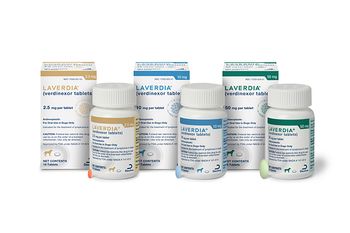
Anivive Lifesciences' Chief Commerical Officer Chad Todd, DVM, offers insight on Laverdia-CA1, the first conditionally approved oral treatment for canine lymphoma.

According to the Veterinary Centers of America, lymphoma accounts for 15% to 20% of new cancer diagnoses in dogs and is the most common in middle-aged dogs.

Veterinarians now have oral therapy in their arsenal for canine patients suffering from lymphoma. Laverdia-CA1, the first FDA conditionally approved oral treatment for canine lymphoma prevents certain proteins from leaving the nucleus of cancer cells, thus allowing the proteins to control the growth and prevent the spread of cancerous cells.

In an interview with dvm360®, Anivive Lifesciences' Chief Commerical Officer Chad Dodd, DVM, offers more insight into this relatively new and revolutionary treatment.



Related to this article

Q&A: Caregiver burden can begin early in pet illness. Are veterinary teams equipped to support clients, and how can veterinary social workers help both parties?
Caroline Cox, LSW, MSW, and Erika Krick, VMD, DACVIM (Oncology), discuss the role of veterinary social workers in supporting clients, communicating with veterinary teams, and helping practices address the human side of veterinary care in this Q&A from an interview at the 2026 Fetch National Harbor Veterinary Conference.
Inside veterinary social work
In a slideshow drawn from an on-site dvm360 interview at the 2026 Fetch National Harbor Veterinary Conference, a veterinary oncologist and a veterinary social worker walk through how the role supports owners and staff across a pet's cancer diagnosis, treatment, and end-of-life care.
Laverdia now available for purchase for dogs with lymphoma
Verdinexor tablets are now available for dogs with lymphoma after receiving full FDA approval earlier this year, offering an at-home treatment option given twice weekly and showing a longer time to disease progression than the control in a field study.