Monica Tarantino, DVM, MBA, and Lisa Lippman, DVM, explain when the senior transition begins and why joint and mobility health should be protected before signs of arthritis appear.
A Cornell University study found that 1 in 4 dogs presenting for non-neurologic reasons had postural reaction deficits, with prevalence climbing as dogs aged.
About a quarter of dogs presenting to a veterinary teaching hospital for non-neurologic reasons had general proprioceptive deficits (GPD) on examination, and the likelihood of those deficits rose steadily with age, according to a study published in the Journal of Veterinary Internal Medicine.1
The findings may help general practitioners calibrate how they interpret postural reaction deficits in older dogs, avoiding both overreaction to an incidental finding and dismissal of early progressive disease.
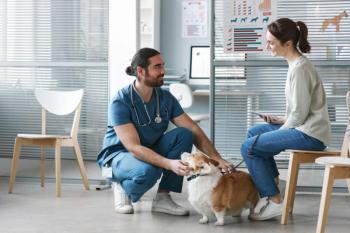
Researchers at Cornell University College of Veterinary Medicine performed neurologic examinations on client-owned dogs presented to the internal medicine, soft tissue surgery, ophthalmology, cardiology, dermatology, oncology, or dentistry services between May and July 2025. Owners reported no history of seizures, changes in behavior or mentation, or abnormal gait or posture.
Of 323 dogs examined, 277 met inclusion criteria. Dogs were excluded for gabapentin or trazodone use; previous orthopedic surgery or orthopedic disease other than osteoarthritis; or cranial nerve deficits. Dogs with osteoarthritis were not excluded. Two veterinary students and a rotating intern, trained by a neurology resident and blinded to each dog’s age, graded hopping and paw replacement.
To account for size-related differences in longevity, investigators calculated each dog's fractional lifespan (FL), or age divided by estimated lifespan based on height and weight. Dogs were grouped as adult (FL ≤0.5), middle-aged (FL >0.5 to 0.75), or senior (FL >0.75).1
Seventy-two dogs (26.0%; 95% CI, 20.9%-31.7%) had delayed postural reactions in at least 1 limb. Prevalence was 11.8% in the adult group, 27.1% in the middle-aged group, and 39.0% in the senior group. Differences were significant between adult and middle-aged dogs and between adult and senior dogs but not between middle-aged and senior dogs.¹
Each additional year of age increased the odds of GPD by 22% (OR, 1.22; 95% CI, 1.13-1.33), and each 0.1 increase in FL raised the odds by 31% (OR, 1.31; 95% CI, 1.18-1.46).1
Deficits clustered in the pelvic limbs: 65 of 72 affected dogs (90%) had pelvic limb deficits only. All affected dogs had normal spinal reflexes, and only 1 had increased limb tone. The authors noted that age-related changes in receptors, muscle fibers, and central processing may contribute, although subtle spinal cord lesions could not be ruled out.1
Neither sex nor chondrodystrophic breed status was independently associated with GPD after accounting for age. Chondrodystrophy status was inferred from breed rather than genotype, and dogs with previous neurologic episodes were excluded, which the authors acknowledged may have underrepresented affected chondrodystrophic dogs.1
Hopping appeared to be more sensitive than paw replacement: 43% of affected dogs had delayed hopping only, compared with 4% with delayed paw replacement only. The authors recommended assessing hopping in all 4 limbs during routine neurologic screening of older dogs.¹
They also suggested that an FL of 0.5, roughly the transition from adulthood to middle age, may be a practical threshold for adding postural reaction testing to wellness examinations.¹
Because examiners had training comparable to that of general practitioners, the authors argued the results apply directly to primary care. Limitations included the teaching hospital population, the lack of formal interexaminer reliability testing, and the cross-sectional design, which cannot show whether deficits progress, stabilize, or resolve over time.1
Knowing the expected background rate of GPD, the authors concluded, can help practitioners neither overinterpret incidental deficits nor normalize early signs of progressive neurologic disease in aging dogs.
Reference