









The origins of common problems encountered in aquatic medicine are discussed, with emphasis on the importance of monitoring water quality. As with other species, the goal of fish medicine should be prevention and not treatment!
The origins of common problems encountered in aquatic medicine are discussed, with emphasis on the importance of monitoring water quality. As with other species, the goal of fish medicine should be prevention and not treatment!
For similar reasons as mentioned in the invertebrate lecture, more and more people are now bringing their pet amphibians to the veterinary office either as an emergency or for a husbandry consult. As previously mentioned, the owners of these exotic pets are often friendly and helpful who definitely can play an active role in the consultation.
Educate clients early to monitor for these behavioral changes.
Guinea pigs belong to the family Cavidae. Four digits on the forepaw and three digits on the hindpaw characterize Cavidae. Guinea pigs originate from the high planes of South America therefore they tolerate cold better than heat.
Relaxed: fluffed feathers under the beak and on the head, preen, stretch, eye closing slightly, pupils normal size, head low around shoulders, vocalizing quietly, gently playing with a toy or object, one foot tucked up close to the body, rouse, flick its wings or shakes tail, scratches its own head
Sugar Gliders (Petaurus breviceps = tight rope walker, short head) are one of the newest additions to the world of fad pets. Published information on Sugar Gliders is sparse, but more is coming available as we continue to see them as pets/patients.
The African pigmy hedgehog (Atelerix albiventris) has become a very popular pet in the early 1990's. They were a fad that hit the 'get rich quick' crowd initially but now has a small but very loyal following.
The chinchilla (Chinchilla lanigera) is a small rodent originating from the Andes Mountains of South America. Chinchillas have been trapped to near extinction in their native countries.
Tumor of the beta cells in the pancreas that secrete excessive levels of insulin.
Healthy ferrets: Inquisitive, alert and curious, bright eyes, will often eat if offered favored treats
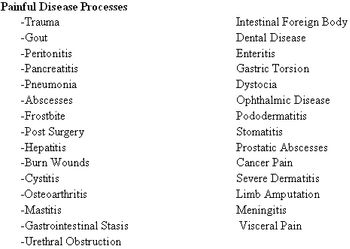
Physiologic "stress" response to pain.
Rabbits should be spayed anytime after 5 months of age. When very young, the uterine horns and ovaries are very tiny making identification challenging.
Do not aggressively palpate females with distended coeloms or over-restrain for procedures (preovulatory stasis, egg bound, egg yolk peritonitis).
When a pet is sick clients will often do some research and find that diet and environment is incorrect. Many times they make those changes just prior to their visit and report to you only the recent diet and environment. It is up to you and your staff to find out what the real situation is that the patient has been in prior to the visit.
When a pet is sick clients will often do some research and find that diet and environment is incorrect. Many times they make those changes just prior to their visit and report to you only the recent diet and environment. It is up to you and your staff to find out what the real situation is that the patient has been in prior to the visit.
Sebaceous glands are abundant along the dorsal surface of the guinea pig and around the anal opening. These sebaceous glands are testosterone dependent and the sebaceous secretions can be excessive in the adult male. May see clumping of hair and can lead to dermatitis in this region.
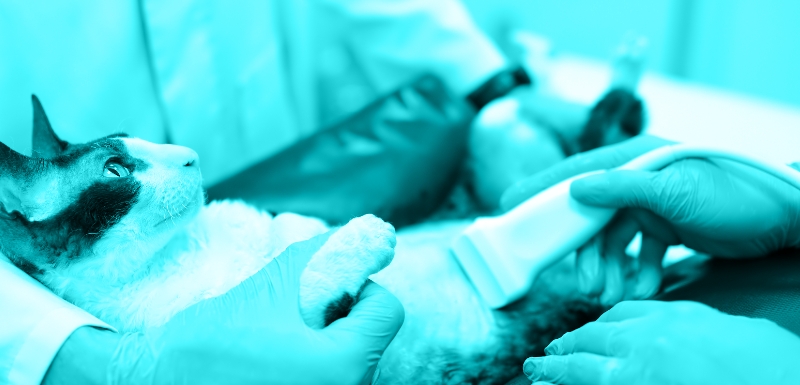
As amphibians become more and more popular as pet, the owners request good medicine and pay for adequate clinical work up. One of the most useful clinical tools in the daily practice of seeing exotic pets is radiology or other imaging methods such as ultrasound.

News on the oil spill; on-site reports from Times Square and the Kansas City Zoo.
When anesthetizing a pot-bellied pig, we use a mask made from a plastic gallon jug.
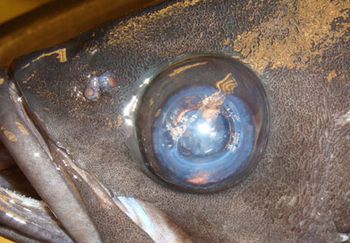
You are asked to evaluate a rockfish at a local aquarium that has a bulging left eye. The animal seems to navigate well around obstacles in the fish tank. What is the primary cause of the buphthalmia?
Despite Disney's popular movie, kissing a frog won't turn you into one. But some frog owners have developed salmonellosis from contact with their amphibian friends.
A sound preventive medicine program is the foundation of an animal health program because it is difficult to perform diagnostic tests or treat sick animals successfully; wild animals often mask signs of illness until late into the disease process; and disease outbreaks can have devastating population effects.
This presentation focuses on a disease proventricular dilatation disease (PDD) that many people have heard about, may have had bird's affected, but know little about. The same may be said for veterinarians.
One of the most common avian presentations at our veterinary hospital is the predator attack. These cases often present with severe lacerations, limb amputations and crushing injuries.
Invertebrate animals comprise 95% of the animal kingdom's species, yet non-parasitic invertebrates are vastly underrepresented in the typical veterinary school curriculum. These notes and the accompanying lecture provide a brief introduction to some of the more prominent invertebrate groups (coelenterates, mollusks, crustaceans, echinoderms, insects, the horseshoe crab, and spiders) and review the state of the science with regards to clinical techniques.