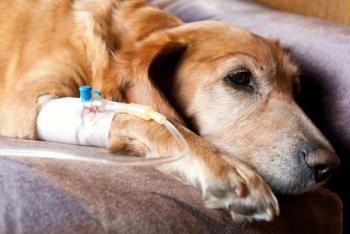
A nationwide recall of thousands of compounded veterinary medication listings, the first New World screwworm detection in US wildlife since the parasite’s return, and a new FDA-approved antibiotic formulation for certain skin infections in dogs.
The 2026 RECOVER guidelines expand beyond CPR to include evidence-based first aid recommendations for dogs and cats, adapting familiar human interventions to species-specific anatomy and physiology.
In an emergency, the minutes before reaching the nearest hospital can change the outcome, regardless of whether the patient has 2 or 4 legs. First aid provides immediate medical assistance in the preclinical setting, helping stabilize and reduce morbidity and mortality in a patient until professional care becomes available. Traditionally, first aid guidelines are routinely reviewed and updated as new evidence emerges for humans. However, evidence-based guidelines for dogs and cats have been limited.
The Reassessment Campaign on Veterinary Resuscitation (RECOVER) Initiative cardiopulmonary resuscitation (CPR) guidelines were first published in 2012.1 The 2012 guidelines evaluated the scientific evidence relevant to CPR for dogs and cats.2 In August 2026, the guidelines expanded beyond CPR.3 The new guidelines have 10 population, intervention, comparator, and outcome questions pertaining to first aid in dogs and cats and provide 38 treatment recommendations covering a variety of conditions. The original guidelines were intended for veterinary professionals. The 2026 version is designed for veterinary professionals, owners, handlers, and paraprofessionals. It was developed using a systematic, transparent evaluation framework and the Grading of Recommendations, Assessment, Development, and Evaluation approach to translate available evidence into practical pharmacological and nonpharmacological recommendations.
It is important to highlight that the recommendation in RECOVER draws parallel to human first aid while it is adapted to the anatomy and physiology of dogs and cats. This includes treatments for suspected/opioid exposure, thermal burn, heat stroke, and more.3 In each emergency, the goals are familiar across species: recognize the emergency immediately, initiate an appropriate pharmacological or nonpharmacological intervention, and get professional help as soon as possible.
Veterinary first aid should begin before a small animal arrives at a veterinary hospital or veterinary emergency department, if possible. Under RECOVER terminology, a first aid provider may be a client, a bystander, a pet handler, or a paraprofessional. Paraprofessionals include boarding facility employees, dog walkers, groomers, pet sitters, and more.3 RECOVER is not intended to transform these first aid providers into medical professionals. Rather, it provides a framework for teaching others what to do until proper care becomes available. In human first aid, safety comes first, and RECOVER highlights this as well. It recommends against performing first aid intervention when there is perceived danger to the provider. RECOVER provides online CPR courses for all first aid providers.
Opioid exposure is typically viewed as a human health emergency, but it can also affect dogs and cats. Prescribed and illegal opioids are available in various forms, such as tablets, powder, and liquids. Dogs and cats may encounter these substances in homes, outdoors, or workplaces. Working dogs, especially in military and law enforcement settings, are at higher risk during detection, patrol, tracking, and search-and-rescue assignments.
Opioids affect the central nervous system, cardiovascular system, and respiratory system.5 In dogs and cats, observable signs may include ataxia, collapse, vomiting, constipation, and more. Additionally, miosis is seen in dogs, and mydriasis is seen in cats.3
The connection between human and veterinary emergency medicine is that naloxone can be lifesaving in both species. The American Heart Association and American Red Cross recommend naloxone for suspected opioid overdose in a patient who is unresponsive and not breathing normally, along with activation of emergency medical services and high-quality CPR.6 Naloxone, a mu opioid receptor competitive antagonist, reverses opioid-induced central nervous system and respiratory depression.7
RECOVER applies the same pharmacological principle to dogs and cats. For animals with suspected opioid exposure along with altered mental status or a respiratory rate of less than 10 breaths per minute, the guideline recommends naloxone by intramuscular (IM) or intranasal (IN) in the prehospital setting. The reasonable veterinary dose is 0.1 to 0.2 mg/kg for either IM or IN. IN may be administered using an atomizer to disperse the medication across the nasal mucosa while the dog is inhaling, whereas IM may be administered into the epaxial musculature over the lumbar region or the lateral aspect of the quadriceps muscle group of a pelvic limb. It is advised to avoid the caudal thigh or rump because of the risk for sciatic nerve injury.3 Both the IN and IM routes of administration result in a similar reversal of sedation.8
Naloxone formulations for humans may be used off-label in dogs and cats, as there is no veterinary-specific formulation. Currently, naloxone is available as 0.4-mg/mL, 1-mg/mL, and 5-mg/0.5 mL prefilled syringes, with most containing a total volume of 2 mL, and an IN actuation solution of 0.1 mL in volume, with concentrations ranging from 3 mg/0.1 mL, 4 mg/0.1 mL, and 0.8 mg/0.1 mL.9 Unlike recommended dosing in humans, the guidelines don’t mention providing any further doses of naloxone beyond the initial 0.1 to 0.2 mg/kg IM or IN dosing.10 Furthermore, the guidelines don’t elaborate on what weight to use when dosing naloxone, unlike dosing for adolescent and adult humans, where it is a fixed dose. Therefore, it is advisable to have on hand the most appropriate formulation and concentration based on the dog’s or cat’s actual body weight.
Thermal burn is another example of similar first aid principles. Burns may occur from contact with flames, hot liquids, hot gases, or hot surfaces. In dogs and cats, common exposures include hot surfaces (such as streets), grooming styling tools, hot environments, and more. Because an animal’s fur can hide underlying skin damage, burns may not always be immediately visible.
For both humans and animals, one of the most essential interventions is surprisingly simple: immediately cooling the burn with running water. The American Burn Association recommends immediate cooling of burns using clean running water, not cold or icy water, for at least 5 minutes if within 3 hours of the injury. Human patients may also use an over-the-counter pain reliever such as acetaminophen or ibuprofen, apply aloe vera to soothe small, minor burns, and more.11
RECOVER recommends a more specific approach. It recommends applying cool, clean running hose or tap water for at least 20 minutes as soon as possible, preferably within 3 hours of injury. Cool water is preferred over ice water, and water should be kept away from the animal’s face to avoid drowning.
In humans and animals, heat stroke occurs when the heat production and heat exposure overwhelm the body’s ability to dissipate heat. Thus, it can lead to nervous system disturbance, systemic inflammatory response syndrome, and more.3,12
Dogs are vulnerable because their primary ability of heat dissipation differs from that of humans. Humans rely on sweating across the skin to restore normal body temperature.13 Dogs depend on panting to regulate their body temperature.14 Therefore, dogs with upper airway disease may have an impaired ability to dissipate heat. Heat stroke in dogs is characterized by a high core body temperature (> 41 ºC or > 105.8 ºF) in conjunction with central nervous system dysfunction.3 Heat stroke can be environmental, such as when an animal is left in the car or when exertion (eg, running, playing, or working) occurs. However, heat-related illness is not restricted to hot temperatures. Dogs can develop heat-related illness during physical activity in moderate and cool environments.
Although heat-related illness is most common in summer months, it is also reported year-round in dogs. Warning signs include persistent panting in dogs or cats, unusual/abrupt reluctance to play or engage in activity, anxious expression or restlessness in dogs, excessive salivation, vomiting or diarrhea, collapse, and more.3
According to RECOVER, the nonpharmacological interventions are passive and active cooling. Passive cooling involves moving the animal from the heat source and into a cooler environment when possible. The next step is active cooling. Cool running water should be applied from the tail to the neck, focusing on areas with less fur, and the skin should be soaked for 15 minutes. Stop active cooling once the temperature is less than or equal to 104 ºF, and then pat the animal dry. Running water is recommended over single dousing, as the latter may result in the development of an insulating thermal plane, reducing the cooling rate. Although there is no reported harm or hypothermia with the use of cold water immersion, it may be difficult to apply in the field because it requires routine rectal temperature monitoring.
The 2026 RECOVER First Aid Guidelines illustrate an important relationship between human and veterinary emergency medicine. Animals and humans share similar emergencies: opioids suppress respiration, excessive heat affects bodily systems, and burns damage tissue. Thus, it is not surprising that some fundamental interventions apply across species. Naloxone can reverse opioid effects, cool running water limits injury after burns, and active cooling is important during heat stroke. However, similarity does not mean interchangeability. Doses, routes of administration, anatomical landmarks, techniques, and more must be adapted to each patient. However, the 2026 RECOVER guidelines provide a framework for recognizing and understanding how to act in critical situations before professional veterinary care is available.
Overall, effective first aid in either human or veterinary medicine follows the same principles: recognize the emergency, intervene immediately if possible, and transit to professional care. The details vary with each species, but the value of timely action does not, making a difference for patients at both ends of the leash.
References