New guidelines from RECOVER are written for veterinary teams to teach owners, handlers, and other caregivers what to do in the minutes before a pet reaches the clinic.
Vlad the Impaler was brought to Texas A&M after presenting to his local veterinarian and emergency room with vomiting, lack of appetite, and lethargy.
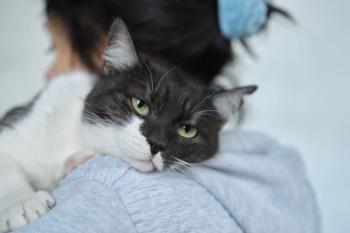
Vlad the Impaler, a 4-year-old tuxedo cat, is the opposite of his name, which comes from the infamous 15th century ruler of current day Romanie, who was known for his brutality. So when Vlad suddenly started vomiting and stopped eating, his owners Danielle and David Hardt new something was not right immediately. Then, when he became extremely lethargic, another thing out of character for the playful and outgoing cat, they rushed him to their local veterinarians.
While with their veterinarian, he was treated for dehydration and nausea, but he did not improve, and the Hardt’s brought him to a local emergency hospital. As he continued to get worse within 24 hours, his owners made the decision to bring him to Texas A&M College of Veterinary medicine & Biomedical Sciences’ Small Animal Teaching Hospital (SATH).
Vlad was brought to SATH’s Emergency and Critical Care service where Shayna Doyle, DVM and Molly Haman,DVM, worked together with other professionals to diagnose and treat Vlad. He was very sick and dehydrated upon arrival and his bloodwork was similar to patients who have had an upper gastrointestinal obstruction.1 The bloodwork also indicated Vlad had a kidney injury.Through the night, Vlad became very weak and developed neurologic signs while in the emergency room. HE also started to have trouble breathing. Because of this, the team did not want him to go to surgery right away because of his critical condition.
The team performed X-rays that showed he may have a blockage, and an abdominal ultrasound revealed the exact location of the object lodged in his small intestine.
“The ultrasound confirmed Vlad had a foreign body obstruction,” Haman said, in an organizational release.1 “It explained all his clinical signs and the complications he developed from having a foreign object stuck in his GI tract for 4 days. Unfortunately, his platelet count, or the number of cells that clot blood, was extremely low, making surgery risky.”
Since his ability to form clots was impaired, the team had to prepare Vlad special blood products in case he needed a transfusion as well as set up continuous blood pressure monitoring to keep a close watch on him. Vlad’s team then started a procedure to find the blockage.
While in surgery, his team found the source of his blockage, a wine cork. The team said they found little pieces of cork material in his intestine and since the owner’s drink wine, they believe Vlad got into a cork that was left outside in the backyard.1 The cork had completely blocked Vlad’s intestine, but did not damage his intestinal wall and the tissue was healthy enough to be fixed. The team removed the cork, cleaned his belly to prevent infection, and then placed several stitches before moving him to intensive care to begin his recover journey.
Even though Vlad had a bumpy journey, he gradually regained his strength and became a favorite at the hospital. He stayed for about 10 days at the hospital and his bloodwork returned to normal, he regained his appetite and was determined to be strong enough to go home.
Now, Vlad is fully recovered and back to his normal self.
“He plays fetch with little sparkle balls and drops them in our hands like a dog,” David said. “He’ll climb — the other day he had to be a good 30 feet up in one of our oak trees. He just runs up there and runs back down. He recovered like absolutely nothing happened,” he said. “All his fur grew back in, and he’s had a 100% rebound.”
Reference