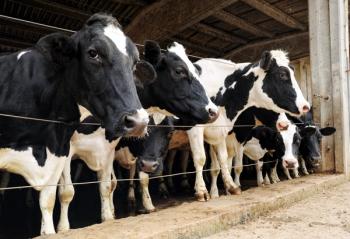
The state is the 22nd to report the virus in cows, and the outbreak next door has been linked to 3 human infections, including 1 death.
Polymer and carbon filter columns caused no serious adverse events in a small group of healthy research goats, though the animals needed more heparin than horses to keep blood flowing.
Veterinarians treating goats with toxicosis or sepsis may eventually be able to filter toxins and inflammatory mediators directly from a patient’s blood. A prospective experimental study by researchers at the Texas A&M College of Veterinary Medicine & Biomedical Sciences (VMBS) and Cornell University College of Veterinary Medicine found that hemoperfusion, a blood purification technique that uses adsorbent columns, can be performed safely in healthy adult goats.1
The study, published in the American Journal of Veterinary Research, evaluated 2 columns, the polymer-based VetResQ (CytoSorbents Inc) and the activated carbon Cytoclear (AimaLojic).1
“Hemoperfusion using both polymer-based and carbon-based adsorptive columns is feasible and appears safe in goats, although higher heparin doses are required compared to other species,” the investigators concluded.1
The authors noted that more goats are entering the pet population and that the species tends to consume harmful substances, including toxic plants and trace mineral–rich feed formulated for cattle and horses. According to the paper, “[c]onventional treatments, such as activated charcoal, lipid emulsion, fluid therapy, antimicrobials, and supportive care, may be insufficient, specifically in cases where access to treatment is delayed and rapid removal of circulating toxins or inflammatory mediators is critical for survival.”1
Kallie Hobbs, DVM, PhD, DACVIM, an assistant professor in the VMBS Department of Large Animal Clinical Sciences and the study’s corresponding author, pointed to pet goats in a university news release.
“If a goat gets into Advil or something similar, it can become a problem,” she said in a Texas A&M news release.2
Healthy adult goats from the Texas A&M research herd were treated between April and September 2025 through a jugular catheter placed without sedation. Four goats completed the targeted 2 blood volumes of treatment, which took 60 to 90 minutes. One session stopped after a single blood volume because of equipment failure.1
No serious adverse events, such as jugular vein thrombosis, abnormal bleeding, or altered cardiovascular status, occurred. Physical examination parameters stayed within normal ranges, and the goats stood tied and ate hay throughout the procedure.1
The authors reported that hematology and biochemistry values remained within reference ranges. Total protein and albumin declined during filtration and only partially recovered by 24 hours, which the authors said suggests goats with protein-losing conditions may require added monitoring during hemoperfusion.1
IL-1β and tumor necrosis factor–α decreased after treatment in all goats, although cytokine data were not statistically analyzed.
“No increases in plasma cytokine concentrations were seen following either polymer or carbon filtration techniques, supporting the conclusion that hemoperfusion did not incite an inflammatory response in the study population,” the study’s authors wrote.1
An activated clotting time (ACT) target of 700 to 900 seconds was needed to establish consistent blood flow through the circuit.
“Increasing the initial target ACT to 700 to 800 seconds required a starting bolus of up to double the UFH required in horses,” the investigators reported, referring to unfractionated heparin. No clinical adverse effects of the higher doses were observed.1
The authors noted that a larger sample size may have allowed a comparison of the 2 columns, and the cost of therapy was not considered. They also cautioned that “a significant learning curve may be present for all extracorporeal therapies and hemoperfusion in particular.”1
The paper lists sepsis, intoxications, traumatic myositis, ischemia-reperfusion injury, hyperbilirubinemia, and liver disease as conditions for further investigation in goats.1 The team is also working to determine which substances the filter can remove most effectively, according to Texas A&M.2
The study was funded by an unrestricted grant from CytoSorbents USA, with research columns donated by AimaLojic.1
References