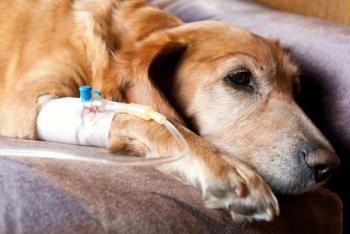
From catheter size and vessel selection to common placement mistakes, Alyssa Mages, BS, CVT, FVTE, shares practical guidance on venipuncture and IV catheter placement for veterinary technicians.
Purina has announced the 3 recipients of its 2026 Sponsorship for Human-Animal Bond Studies.
Purina has awarded research funding to 3 international scientific teams as part of its 2026 Sponsorship for Human-Animal Bond Studies, a biennial program that supports research on the bond between people and pets and how it can affect the wellbeing of both. Each selected project will receive up to $40,000 to develop research on the role of pets in supporting survivors of intimate partner violence (IPV), separation-related disorders in cats, and the use of remote canine-assisted therapy for underserved pediatric oncology patients.
"These studies stand to deepen our understanding of the human-pet bond in some of life's most challenging moments. What these researchers discover could lead to more compassionate interventions, stronger behavioral and emotional support for pets, and improved resources for the people who depend on them every day,” Annie Valuska, PhD, CAAB, principal scientist on the Pet Behavior Team at Purina, said in a news release by Purina.1
According to Purina, the organization reviewed more than 100 research proposals when selecting the 2026 research grant recipients. This funding round, the recipients are based in the United States and Hungary. The following studies are the recipients of the 2026 grant:
The project will be an 18-month mixed-methods study looking at how the human-animal bond supports psychological resilience and healing among survivors of IPV, while also analyzing effects on companion animal welfare. The study will incorporate survivor interviews, informant insights, and human-animal bond questions in a statewide survey of approximately 1000 California residents who have experienced IPV.1
The findings could help guide more pet-inclusive trauma support services where sheltering options are limited, Purina said. Investigators will collaborate with the RedRover, a nonprofit organization, to share its results through publications, training materials, and webinars for the community.
"Receiving this research grant from Purina is an honor for our team," said Jennifer A. Wagman, PhD, MHS, associate professor at UCLA Fielding School of Public Health, and the study’s principal investigator.1 "The grant will provide crucial support to study how pets can help survivors of intimate partner violence heal, while also ensuring that the animals themselves are safe and supported. We are excited for the ways this work can make a real difference in people's lives."
The research, which will use a global citizen science model, will be the first large-scale, direct observational study of feline separation-related disorders. Specifically, researchers will collect video submissions and survey data from cat owners across the globe and investigate risk factors for feline separation disorders. The study will result in the first high-resolution ethogram of feline separation behavior.
“These insights will support international veterinary professionals, behaviorists and cat owners in identifying and addressing [separation-related disorders] and strengthening the human-cat bond,” Purina wrote.1
Researchers will assess a Remote Canine-Assisted Therapy (RCAT) model that allows for safe, real-time interaction between trained dogs and pediatric oncology patients who are unable to complete in-person therapy due to being immunocompromised or at risk for infection. Investigators will use a counterbalanced crossover design to measure psychosocial outcomes like motivation, mood, and anxiety.
According to Purina, the model has the potential to be adopted worldwide, potentially helping children in rural regions or underserved communities obtain greater access to therapy. The technology could also have implications for countries that currently do not have an established therapy dog infrastructure.
Together, the funded studies highlight the expanding role of the human-animal bond for humans and animals alike. The bond has been widely recognized for its benefits to both parties, with the American Veterinary Association describing the bond as having a “major significance for veterinary medicine.”2
References