

News|Articles|January 20, 2026
Overcoming patient and client barriers in dermatology
Author(s)Caitlin McCafferty, Content Producer
Fact checked by: Yasmeen Qahwash
Learn effective strategies for managing canine pyoderma, emphasizing root cause identification and responsible antimicrobial use in dermatology.
Advertisement
Although the discovery of antimicrobial products and their use in fighting disease and infection was a massive advancement in medicine, their effectiveness can be difficult to maintain if they are not used appropriately and responsibly. Great power comes with great responsibility, so how do you treat a patient without jumping straight to prescribing an antibiotic?
During his lecture, “Fighting the Good Fight: A Complete Approach to Antimicrobial Therapy in Dermatology,” Darin Dell, DVM, DACVD, shared more on antimicrobial therapy in dermatology. Throughout the lecture, Dell broke down how veterinarians can manage canine pyoderma more effectively by treating underlying causes, prioritizing topical therapy, and using antibiotics only when truly indicated.
Understanding pyoderma
“Pyoderma is never primary,” Dell explained to attendees. “So, your client's going to be concerned, usually, about the hair loss. Maybe it's the odor. Maybe it's the crust that's all over their wood floor. That's great, but it's never primary.
“You can treat the pyoderma, and you should, but you need to be thinking: What's that primary cause? We're going to use our physical exam findings and cytology to diagnose and monitor our pyoderma, and that's how we're going to decide [whether] I’m done treating or not,” he continued.
Dell went on to explain that there are multiple types of pyoderma. The first is surface pyoderma. Cytology can be extremely helpful for veterinarians facing this level because it will show bacteria and keratinocytes, but no eosinophils, neutrophils, or macrophages. Dell explained that the best way to think about this type of pyoderma is as an overgrowth of bacteria on the skin’s surface.
Next is superficial pyoderma, which clinicians see most often. Signs include folliculocentric pustules and spreading crusts; hair often becomes trapped in the crust and falls out. Clients often do not notice their pet has superficial pyoderma until the hair starts to fall out.
Last is deep pyoderma, which Dell shared is one of his least favorite conditions to treat. With this type, there is a severe underlying issue. Patients can present with deep folliculitis, furunculosis, cellulitis, chin pyoderma, pyogranulomas, and callus pyoderma.
Because pyoderma is secondary, there are multiple primary reasons it could be occurring. One of the most common, if not the most common, according to Dell, is allergy, because it represents a genetically programmed barrier defect. Besides allergies, other common causes include the following:
- Hypothyroidism
Advertisement
- Diabetes
- Trauma
- Immunosuppressive medications
- External parasites
- Stress
Understanding the primary cause is crucial because it dictates how veterinary teams treat and prevent recurrence. Teams should use both physical exam findings and cytology to diagnose and monitor the condition. If a practitioner is struggling to resolve pyoderma, it is usually because the primary cause has not been addressed.
Treating patients with pyoderma
When treating pyoderma, the first line of topical therapy is often chlorhexidine. Dell explained that its residual activity can last up to 7 days post application, it has faster bacterial activity than other options, and it is bactericidal at lower concentrations. Chlorhexidine is available in 2%, 3%, and 4% concentrations, all of which are effective against bacteria. However, which one should veterinary teams choose?
“Four percent will definitely kill bacteria faster and has some antifungal properties, but it's also more likely to cause skin irritation, and it's never going to work as well as a miconazole antifungal,” Dell said. “I actually like the lower percentage combined with miconazole because there's a synergy against Staphylococcus bacteria. I’d much rather use a lower-percentage chlorhexidine to get less skin irritation, combined with miconazole for that extra synergy.”
Topical therapies, such as shampoos, wipes, sprays, and mousses, are all options to explore. Shampoo is ideal because it removes pollen, inflammatory mediators, and microbes. When shampooing, contact time is vital; 10 to 15 minutes is ideal. Dell explained that the goal is not just to wash the hair but also to treat the skin. He recommends telling clients to listen to 2 or 3 songs to measure time rather than counting minutes, especially if they struggle to keep the pet in the tub.
If first-line topical options are insufficient, systemic antibiotics are the next step. However, clinicians must consider drug properties and patient factors. Ask whether the pet has a sensitive stomach, as adverse events are typically gastrointestinal. Veterinary teams should also ask whether the patient (and owner) prefers tablets, liquids, or capsules, as formulation preference significantly influences adherence.
Client communication is key
It is also important to consider client lifestyle factors. Can the client physically give the pill or injection? Do they have a space to bathe the pet? Will they actually perform the treatment? An older couple may struggle to lift a dog into a bath, and a single parent with 3 kids may find a complex regimen impossible.
“Ask these questions: Is this possible? Can you get it done reliably? Let's talk about that now, before we prescribe something that's not going to work. If the medication you send home doesn't work, they're going to blame you, not themselves. It happens to specialists, too,” Dell said.
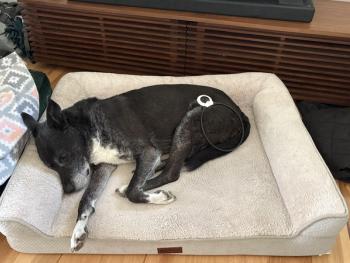
A new treatment option Dell discussed was a generic cefovecin sodium product (Solovecin; Dechra). Approved by the FDA in June 2025, Solovecin is a generic long-acting injectable antibiotic used to treat canine and feline skin infections. Dell shared a case involving "Baby Girl," a 12-year-old spayed female Chihuahua mix. After months of unresolved dermatitis, she was referred to Dell.
The owner explained she could not bathe the dog due to a bad back and a lack of a suitable sink. She had tried wipes, but Baby Girl fought her. Dell treated her with Solovecin and planned a follow-up in 2 weeks. He also started the dog on gabapentin in the evenings to help the owner wipe the dog's feet without conflict.
“A month later, the dog is doing well. [She] came back at the 2-week mark looking better, and we gave a second Solovecin injection. Baby Girl began to feel better within days because she received the medication without a fight,” Dell said. “Now they have a great evening routine. They don’t even need the gabapentin anymore because they practiced while the dog wasn't in pain. It improved their bond, as well.”
Baby Girl now receives ilunocitinib (Zenrelia) once a day for her underlying allergies and is doing great. In this case, the issue wasn't a resistant infection; it was patient and client factors.
Conclusion
Pyoderma is always a secondary condition. To provide lasting relief, veterinary teams must identify the root cause. This approach allows teams to avoid jumping straight to systemic antibiotics and to use a multimodal strategy to help fight antimicrobial resistance.
References
- Dell D. Fighting the good fight: a complete approach to antimicrobial therapy in dermatology. Presented at: 2026 Veterinary Meeting & Expo; January 17-21, 2026; Orlando, FL.
- Crossley KC. A new cefovecin sodium injectable therapy is now available in the US. dvm360. November 4, 2025. Accessed January 20, 2026. https://www.dvm360.com/view/a-new-cefovecin-sodium-injectable-therapy-is-now-available-in-the-us
Advertisement
Related Content
Advertisement




Latest CE





















Advertisement
Advertisement
Trending on dvm360
1
Moving the Needle - Helping Pet Owners Through Vaccine Hesitancy
2
FDA emergency authorizes Capstar, generic nitenpyram to prevent and treat New World screwworm in dogs and cats
3
Using combination diets to tackle joints, derm, and kidneys together
4
AAHA releases new diabetes management guidelines for dogs
5