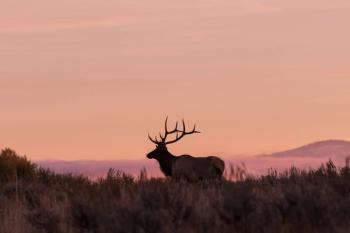
An elk harvested on a Texas game ranch marks the first wildlife case of the parasite in the US, prompting expanded surveillance and a call for hunters and wildlife professionals to report suspicious wounds.
Whether you practice in an affected region or hundreds of miles away, this episode delivers the surveillance, reporting, and prevention guidance you need, with the right level of urgency.
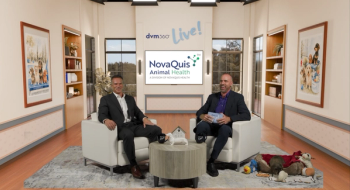
New World screwworm is back in the headlines, which means it is also back on the radar for veterinarians across the US. In this episode of Vet Watch from dvm360, host Christopher Lee, DVM, MPH, DACVPM, DACVM (Parasitology), welcomes Kathryn E. Reif, PhD, MSPH, associate professor and Bailey-Goodwin Endowed Chair in Parasitology at Auburn University College of Veterinary Medicine, to separate science from panic on one of the most talked-about emerging animal health threats.
The conversation covers the parasite's temperature-driven spread across the US; current documented cases in cattle, sheep, goats, and dogs; and the looming risk to wildlife. Reif also explains the sterile insect technique behind past eradication successes, the race to scale sterile fly production, FDA-authorized and conditionally approved treatments, and the real-world impact on beef prices and food safety.
Below is a partial transcript, edited lightly for clarity.
Christopher Lee, DVM, MPH, DACVPM, DACVM (Parasitology): Which animals are at risk? Is this mainly a cattle thing, or should pet owners, shelters, horse owners, or even wildlife teams be paying attention, too?
Kathryn E. Reif, PhD, MSPH: We hear about it most commonly in the context of cattle, because that's probably the species where it has the potential for the greatest economic impact. Just in the cattle/Texas economy alone, they estimate that the impact of New World screwworm annually [on] the Texas cattle economy could be close to $2 billion per year—1.8 or 1.9 billion, I think, is what the experts are estimating—so we oftentimes hear about it in the context of cattle.
But it's important to note that these flies are not picky, and as long as it is a living, warm-blooded host, it is susceptible. So…in the US so far, we have 29 cases that have been documented. About 17, if my counting is correct, are cattle, but we also have cases in sheep, we have cases in goats, and we even have cases in a couple dogs. So again, any warm-blooded living creature…with an open wound is a potential host for this really terrible fly, and even humans aren't immune.
There have been over 2000 cases of humans being infested with New World screwworm in Mexico, and last year, we actually had a human case. A gentleman [who] was reportedly infested with New World screwworm went to a clinic in Maryland. They found the maggots in the back of his head, but he had a recent travel history to El Salvador, which is a country that is endemic for New World screwworm. So, pretty much any living warm-blooded creature is at risk for this.
Lee: Katie, you make me want to stay indoors.
Reif: Well, the good thing is they do have certain temperature requirements, and for those people loving to live in air conditioning, you probably won't get infested indoors.
Lee: Speaking of that environment, how far can this theoretically spread in the United States? How fast?
Reif: So this fly is really temperature dependent. It really thrives in…areas where the temperature is over 80 ºF. And for most of the US…we're experiencing this crazy heat wave. We can exceed 80 ºF in that summertime season.
It starts to do less well when we get between 60 and 75 ºF, and it doesn't do very well at all under 60 ºF. So really, the threat of where we may see this fly is quite [seasonal] in the US…. Many areas in Texas, and maybe even some areas in the southernmost regions of Florida, like the Florida Keys, for example, may have [a] year-round suitable habitat for this fly. But as we go further northward, it becomes less suitable on a year-round basis. But seasonally, certain states or regions may be able to support this fly, should it be introduced, for many months.
The fly can overwinter in its…pupa life stage…in that top layer of soil for about 3 months, unless that temperature persistently stays below about 48 to 49 ºF. So it does have a little bit of cold tolerance in that pupal stage, but the adult flies, the larvae, and those wounds really require that warmer weather. So we can say anywhere from about 75 to 95 [ºF] is really that moderate- to high-risk temperature, with humidity being about 30% to 70%, so kind of a wider acceptable humidity range.