Under a new city council law, dog owners in Turin, Italy, can face fines up to $650 a day if they fail to walk their pets at least three times a day. What's more, residents will be banned from dyeing their pets' fur or "any form of animal mutilation" for aesthetic motives. Said the city's daily paper, La Stampa, "In Turin it will be illegal to turn one's dog into a ridiculous fluffy toy."
Advertisement
The Council of State Governments issued a policy statement against state legislative proposals that sought to change the wording of pet owner to guardian after hearing concerns from veterinarians.
The Illinois Appellate Court has ruled that pet owners may be able to claim compensation for the sentimental value of their pets, rather than just the animal's fair market value.
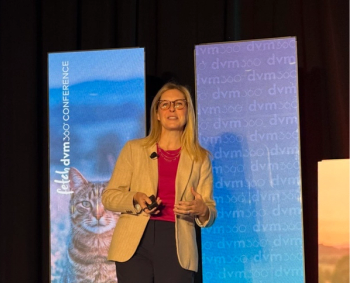
In a keynote address at the 2026 Fetch National Harbor Veterinary Conference, Jessica Pritchard, VMD, MS, DACVIM (SAIM), shared research showing that many owners decline vaccines because they do not think their pet needs them, and discussed ways veterinary teams can address those concerns.
Alyssa Mages, BS, CVT, FVTE, outlines key considerations for veterinary technicians during triage, from rapid patient assessment and prioritization to client communication and team coordination, in this interview from the Fetch National Harbor Veterinary Conference.
In a session at the 2026 Fetch National Harbor conference, Nathanael Oster, VMD, MBA, walked attendees through the biology, diagnosis, and treatment of the flea tapeworm in dogs and cats, including why cats are affected more often than dogs.
SNAP-P is a proposed high-impact program that would provide at least $4.4 billion in benefits to low-income pet owners at marginal cost to federal and state governments.
In a slideshow drawn from an onsite dvm360 interview at Fetch National Harbor, a veterinary oncologist and a veterinary social worker walk through how the role supports owners and staff across a pet's cancer diagnosis, treatment, and end-of-life care.
The five-year Big Bet for Pets initiative targets what the foundation calls a care gap affecting 50 million dogs and cats in the US, opening two new grant programs for nonprofit veterinary clinics.