Two notable pet-industry acquisitions closed in September. One bringing AI-powered clinical documentation into IDEXX's software ecosystem, the other marking the first acquisition for fresh-food brand The Farmer's Dog.

In this interview with dvm360, Lydia Love, DVM, DACVAA, shares practice safety tips, including building psychological safety and using checklists to trap errors in veterinary teams.
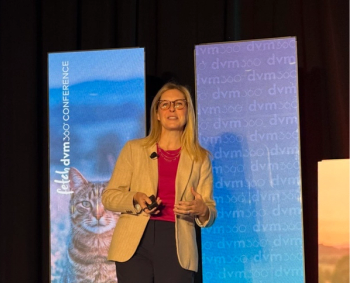
In this video interview with Lydia Love, DVM, DACVAA, at the 2026 Fetch Charlotte conference, she emphasizes that in veterinary medicine, even the most skilled and conscientious professionals will inevitably mistakes, so the focus must shift from blaming individuals to understanding and improving the systems in which they work.
She highlights the importance of psychological safety and creating a team culture where people can speak up, ask questions, and suggest solutions without fear of retribution, noting that leaders can foster this by openly modeling vulnerability and uncertainty.
Below is a full transcript, edited lightly for clarity.
dvm360: Starting with your name, can you tell me a little bit about yourself?
Lydia Love, DVM, DACVAA: My name is Lydia Love, and I'm a veterinary anesthesiologist. I currently work at [North Carolina] State [University] in Raleigh, North Carolina.
dvm360: What are 3 tips you can provide to practitioners to help get better safety in their clinic?
Love: As veterinary professionals, we are all here for the animals. We do this work because we care about our patients, and the work we do is risky. The provision of health care is a high-risk industry. People cannot be perfect—no matter how smart, educated, conscientious, or vigilant I am, things will go wrong, and I will make mistakes.
So what we need to do is look at human error as the starting point when things go wrong. But really, what is the system behind that error, and what has set us up to fall into those traps? Part of that is going to be through creating psychological safety in your team. Essentially, psychological safety is the emotional quotient of an organization. It's the ability to speak up, ask questions, [and] propose solutions without fear of retribution. So modeling that in your team and showing your own vulnerability in situations of uncertainty can be really important in making the team feel psychologically safe.
The other thing I would really emphasize is using human factors tools to help control the environment in which we work and trap error. Some of examples that are widely used these days include surgical safety checklists and other cognitive aids that allow you—under potentially difficult and time-pressured situations—to not only remember all the little things but also enhance communication among the team and create a shared mental model. Where are we going? What are we doing? How are we getting there? And then making sure that everybody on the team has the same information and is working toward the same goals.